Dr. Khaled El-Enany, Minister of Antiquities, and Eng. Hesham El-Saeed, Governor of Gharbia, opened the Tanta Antiquities Museum after 19 years of closure, as part of the Ministry of Antiquities’ plan to restore, develop and reopen closed museums across the country. To celebrate the event, El-Enany announced that the Tanta Museum will be open to visitors free of charge for two weeks, at the request of Gharbia Governorate’s members of parliament.

El-Enany said the Tanta Antiquities Museum is the oldest regional museum established in Egypt, founded in 1913, and is of great importance to the governorate because it will help create new tourist attractions there, in addition to spreading archaeological awareness among the people of the governorate.
For his part, Eng. Waad Abul Ela, head of the Projects Sector, explained that the museum’s development work began in December 2017 and included restoring the museum building and treating it structurally, changing the wall paint, cleaning and polishing the floors, in addition to installing new display cases and changing the museum display scenario.

In a related context, Elham Salah, head of the Museums Sector, said the museum building consists of 5 floors displaying archaeological collections numbering up to 2,005 artifacts, including 1,208 coins, covering all periods, from prehistoric times through the ancient Egyptian, Greco-Roman, Coptic and Islamic eras, up to the modern era.


She added that the first floor of the building has been allocated to services and the second and third floors to displaying the archaeological collections, while the fourth floor contains a lecture and conference hall and the fifth floor houses the museum’s administrative offices.
She noted that the new museum display scenario is divided into two sections. The first, on the second floor, displays archaeological discoveries in the Delta, which has a rich history through the ages, including “Tell El-Farain” (Buto), Egypt’s first political capital and the capital of Lower Egypt in the Predynastic period; “Quesna,” where a group of mudbrick tombs and a cemetery of sacred animals were found; “San El-Hagar” (Tanis), the capital of ancient Egypt in the Third Intermediate Period; “Tell Basta”; “Sa El-Hagar” (Sais), the capital of ancient Egypt during the 26th Dynasty; and finally “Behbeit El-Hagara,” which houses the largest temple of the goddess “Isis” in the Delta.

The third floor houses artifacts reflecting the ancient Egyptian’s concepts and beliefs about the afterlife, including his attention to the tomb as the first and most important stage in the journey of resurrection and immortality. The exhibits include false doors, offering tables, statues, stelae showing the relationship of the deceased with the deities, a collection of vessels of different shapes, sizes and materials used to preserve food, drink and perfumes, headrests and coffins, in addition to canopic jars used to preserve the deceased’s viscera after embalming.

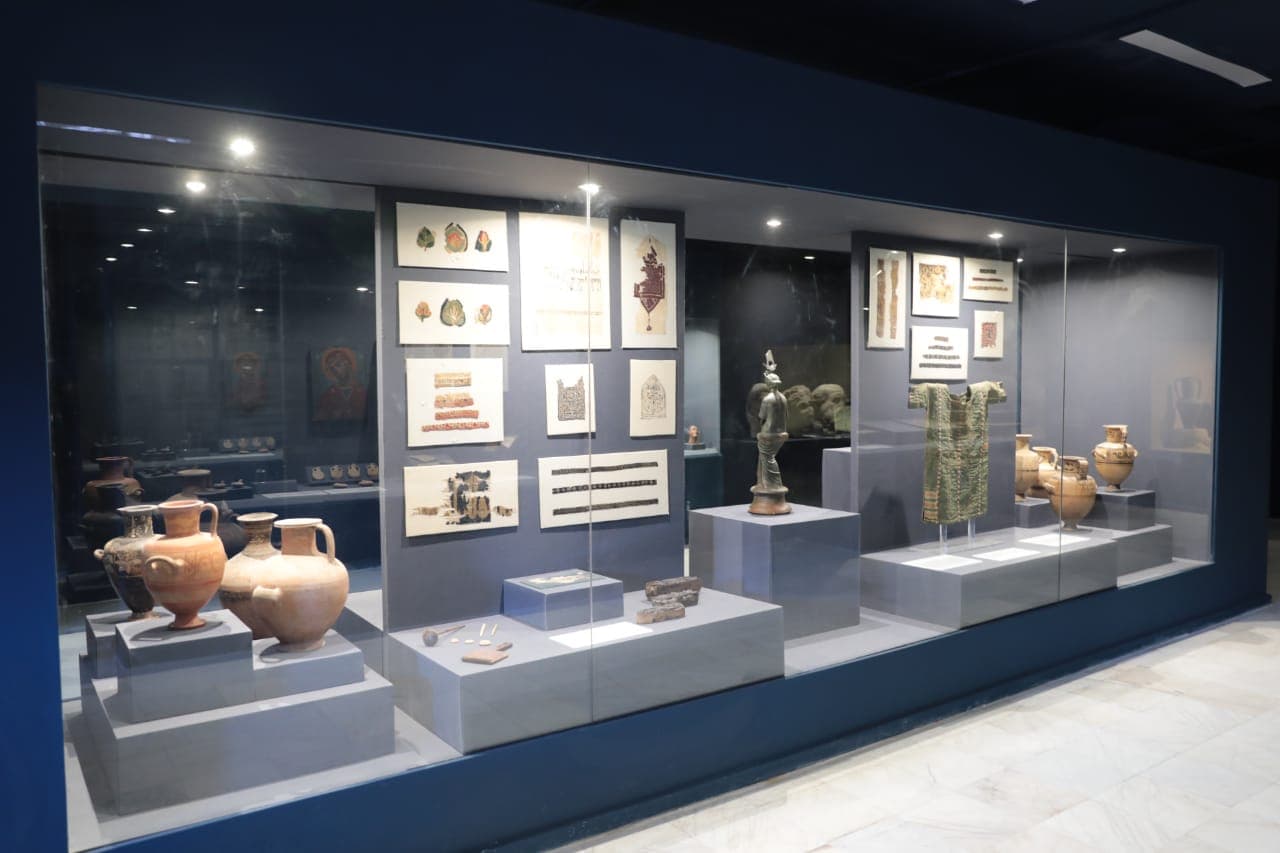
This section also displays a collection of boats, which gained great importance due to the presence of the Nile River and the Mediterranean and Red seas. In another view of the concept of the afterlife, a collection of artifacts from the Greco-Roman era is displayed, represented by “Hadra” vessels, named after the place where they were found in Alexandria and used to preserve the ashes of the deceased, in addition to statue heads and a collection of oil lamps and metals.


The third floor also includes a collection of artifacts expressing Coptic art, such as icons, textiles and manuscripts, as well as Islamic art, such as ceramic vessels, qulla filters and textiles, along with a distinguished collection of artifacts dating back to the modern era, specifically the reign of the Alawiyya (Muhammad Ali) dynasty. It also addresses trade and its impact on Egyptian society through a collection of coins, as well as the tangible and intangible folk heritage of the governorate and the development of the tradition of holding mawlids, which began thousands of years ago and continues to the present day, the best example being the mawlid of “El-Sayed Ahmed El-Badawi” in the city of Tanta, which is celebrated twice every year.


On another note, Dr. Nevine Nizar, Assistant Minister of Antiquities for Museum Affairs, noted that the idea of establishing an antiquities museum in Tanta is one of the oldest regional museum projects in Egypt. The city’s municipal building was chosen to be the governorate’s first antiquities museum, but it soon closed and its antiquities were moved to the entrance of the municipal cinema in 1957. The idea of establishing the Tanta Museum then returned in the early 1980s, and it opened to the public on October 29, 1990, but because of problems the building faced it closed again in 2000, though it continued to provide some of its cultural and educational services to the people of the governorate.