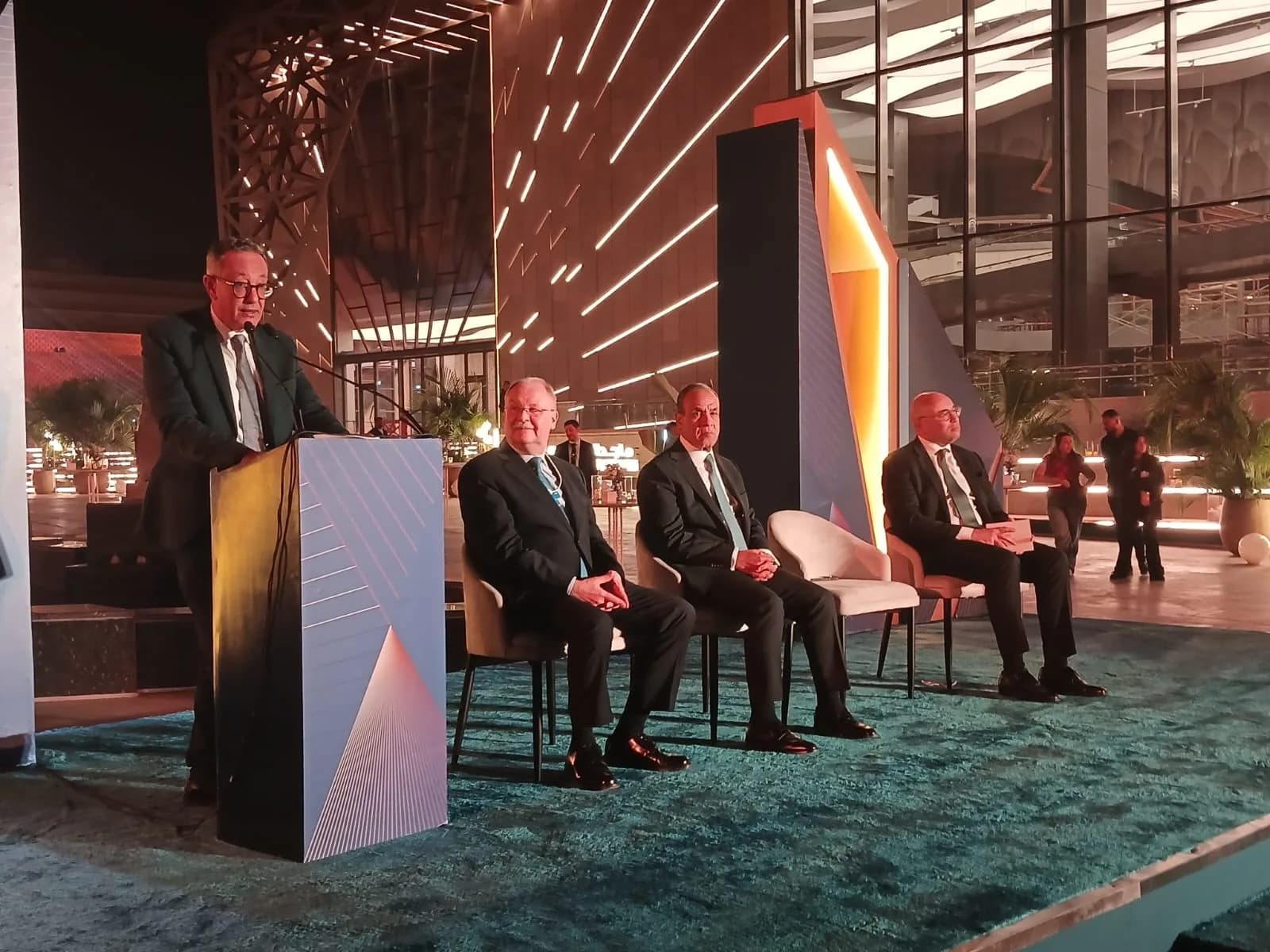
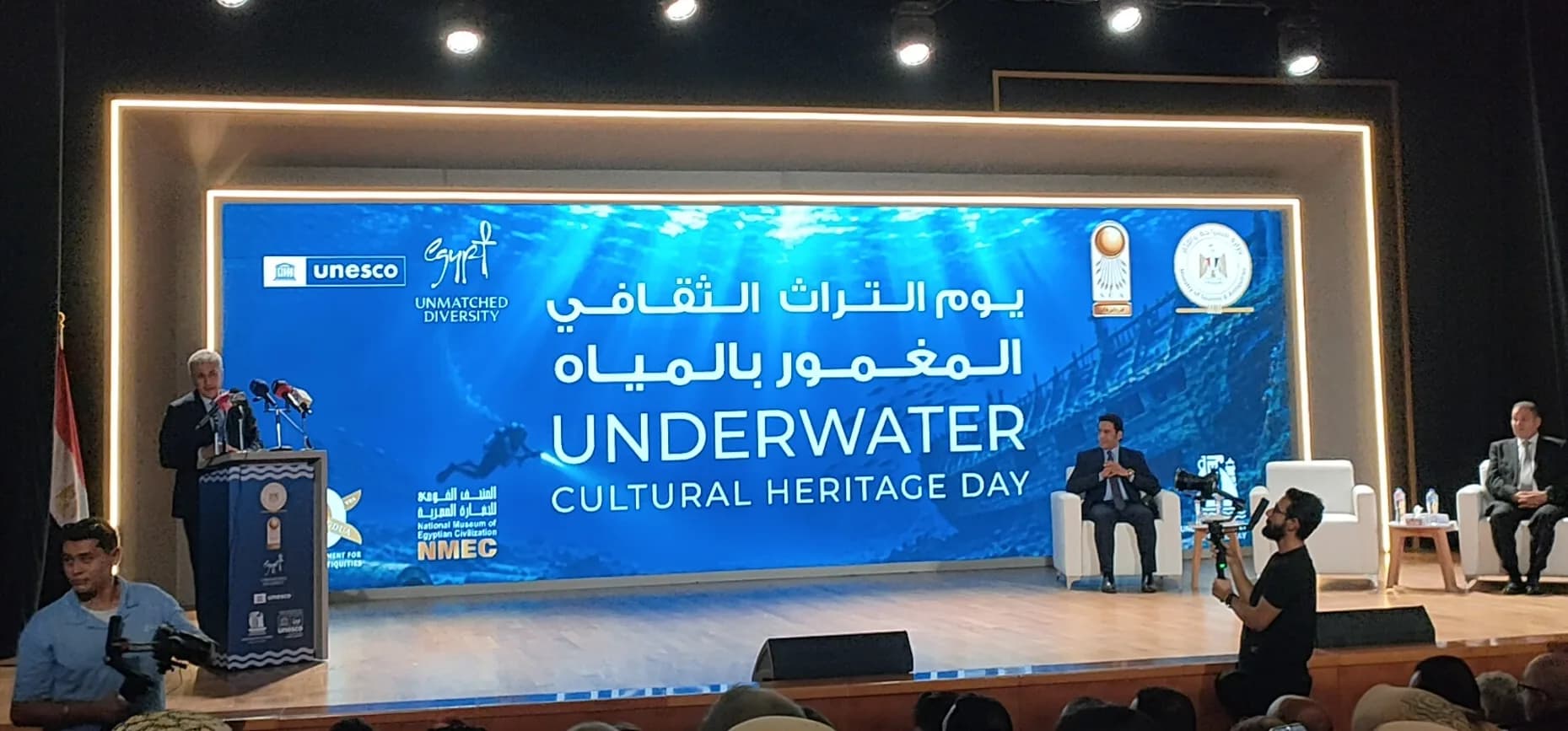
Egypt’s Ministry of Tourism and Antiquities celebrated the 30th anniversary of the establishment of the General Administration of Underwater Antiquities at the National Museum of Egyptian Civilization (NMEC) yesterday evening. The celebration coincided with the 25th anniversary of the UNESCO Convention on the Protection of the Underwater Cultural Heritage and the first celebration of Underwater Cultural Heritage Day, established by UNESCO’s Executive Board in 2024.
In his speech at the event, Dr. Bassem Ibrahim, Director General of the Ministry of Tourism and Antiquities’ General Administration of Services at Tourist and Archaeological Sites and Museums, said: “Not everything that disappears from our sight disappears from history, and not everything concealed by time loses its value.” He expressed his pleasure at taking part in the occasion, which highlights an important aspect of Egypt’s archaeological heritage and opens a window onto a part of history that still holds many stories worth telling.
He explained that many people associate history and archaeology with temples, tombs, ancient buildings and monuments found above ground. However, a large and significant part of human heritage remains submerged underwater, including sunken ships, cities destroyed by water, and ports that once served as centers of trade, movement and communication between peoples.
He stressed that underwater antiquities are not merely material remains, but evidence of entire ways of life. They document human movement, travel, trade and interaction with others, while reflecting the nature of civilizations that were never isolated but remained in a state of continuous interaction.
He added that, by virtue of its geographical location, Egypt has always been an essential part of this human movement. The Mediterranean and Red Seas, he noted, were not merely geographical boundaries for the country; rather, they have long served as spaces for civilizational communication and cultural exchange.
He pointed out that archaeological discoveries represent important moments for archaeologists, but that weaving stories around these discoveries is even more important. Specialists, he explained, are accustomed to presenting their research findings in scientific language aimed at international peer-reviewed journals and publications. At times, however, they may overlook another audience: non-specialists who also need to learn about and hear these stories.
He noted that museums play an important role in telling stories associated with antiquities, including underwater heritage. He stressed that the National Museum of Egyptian Civilization does not view its role as limited to displaying archaeological objects; rather, it sees itself as a space for telling the true story of Egyptian antiquities, whether submerged or not, and whether found underground or in the depths of the seas.
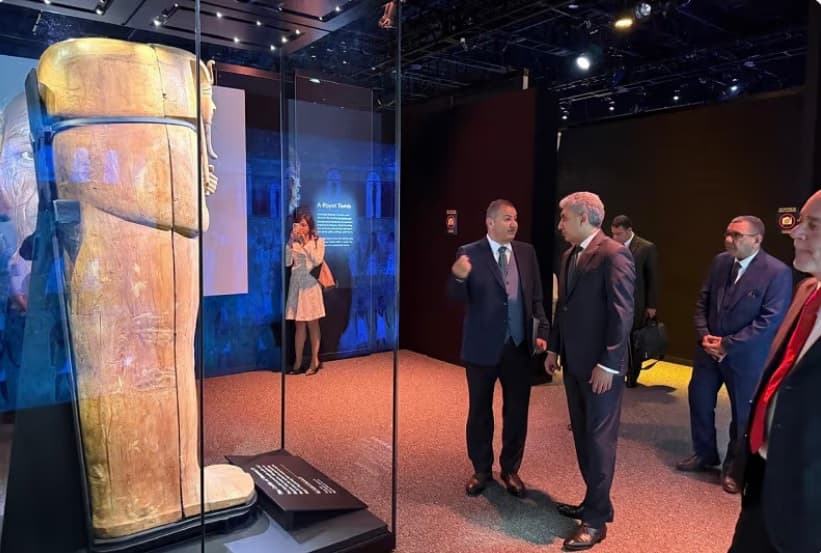
He explained that the exhibition inaugurated on the sidelines of the celebration goes beyond displaying a collection of archaeological objects. It seeks to present a chapter of human history and give these archaeological remains an opportunity to tell their stories. He also thanked his colleagues at the Supreme Council of Antiquities for their cooperation with the museum in hosting the event.
In his speech, Minister of Tourism and Antiquities Sherif Fathy affirmed that Egypt’s history speaks for itself and that generations have been learning about and studying it since primary school. He also expressed his appreciation for the foreign archaeological missions working in the field of underwater antiquities.
He said he was pleased with the time he had spent with one of the missions and with the considerable efforts made by researchers in cooperation with the Egyptian team. He thanked them, saying: “I would like to thank you very much for the day I spent with you and all the team members. I thoroughly enjoyed it and witnessed the serious work you are carrying out in cooperation with the team.”
He added that he had spent time with members of the French mission in Alexandria’s Eastern Harbor, where he witnessed the scale of their efforts in cooperation with their Egyptian counterparts, as well as the extensive collaboration, hard work and precision required in this field.
Fathy noted that the ministry had organized a celebration about a year ago to mark the recovery of three distinctive underwater antiquities. He said further discoveries may be announced in the coming period and that the field offers opportunities for new events and activities. He stressed that Egypt plays a leading role in underwater archaeology, not only in the Mediterranean Sea but also in the Nile River, despite the challenges and difficulties associated with this work.
The minister concluded his speech by expressing his pleasure at participating in the celebration, the ongoing cooperation with foreign missions and the efforts made by his colleagues in the Underwater Antiquities Department. He emphasized the importance of using the department’s correct name rather than referring to it as the Department of Sunken Antiquities. He also expressed his hope that meetings and celebrations highlighting Egypt’s leading role and achievements would continue, with the participation of the various archaeological missions working in the country.
Achievements in the discovery of underwater antiquities
For his part, Dr. Hisham El-Leithy, Secretary-General of the Supreme Council of Antiquities, said the exhibition inaugurated at the National Museum of Egyptian Civilization does more than display archaeological objects; it documents an aspect of the Battle of Abukir Bay in 1798 through the story of the ship “Orient” and three other vessels that were part of Napoleon’s fleet during the French campaign in Egypt.
He explained that his colleagues at the General Administration of Underwater Antiquities, in cooperation with several French archaeological missions, had succeeded in recovering cannons, weapons, ammunition, coins, vessels and tools used in the soldiers’ daily lives, in addition to some of the ships’ equipment. He added that the 30th-anniversary celebration provided an opportunity to display a collection of these artifacts to the public.
El-Leithy reviewed the administration’s most notable achievements over the past three decades, explaining that it had succeeded in discovering entire cities once considered mythical, including the city of Heracleion, where 64 shipwrecks have been found, representing the largest number of ships discovered at a single site in the ancient world. The discoveries also include temples, buildings, colossal statues, some measuring approximately five meters in height, and a stela of King Nectanebo I.
He also referred to the discovery of the city of Canopus, the Ptolemaic royal quarter in Alexandria’s Eastern Harbor, and more than 4,000 fragments of the Lighthouse of Alexandria, one of the Seven Wonders of the Ancient World.
He added that the administration’s efforts have extended beyond archaeological discoveries to documentation and preservation. It established Egypt’s first comprehensive digital map of underwater archaeological sites and the first underwater antiquities restoration laboratory in Alexandria. It also worked to connect museum storage facilities through a unified database.
The administration has also contributed to training an entire generation of Egyptian archaeological divers in diving, surveying, excavation and underwater documentation. In addition, it has made antiquities accessible to the public through museums, virtual tours and educational programs, based on the principle that underwater heritage belongs to every Egyptian and every human being.
He stressed that these achievements would not have been possible without the support of the Ministry of Tourism and Antiquities, the minister, the Supreme Council of Antiquities, UNESCO, partners from the European Institute of Underwater Archaeology, and Egyptian and foreign research missions.
Honoring those involved in underwater antiquities discoveries
The Secretary-General of the Supreme Council of Antiquities also outlined the celebration’s program, explaining that it included honoring a number of pioneers who established the administration in 1996, divers who worked underwater to recover antiquities, as well as restorers and documentarians who contributed to preserving the artifacts.
He added that a new memorandum of understanding had been signed with partners in the field of underwater cultural heritage, as part of efforts to intensify work on underwater antiquities. An exclusive version of a documentary film about underwater cultural heritage in Egypt will also be screened. For the first time, the film explores the city of Canopus and Napoleon’s fleet through the accounts of people who took part in discovering these antiquities. He noted that the following day would see the opening of the Egyptian Scientific Forum on Underwater Heritage.
He also referred to his participation in last year’s celebration of Underwater Cultural Heritage Day, which featured the opening of a temporary exhibition at the National Museum of Alexandria. The exhibition, titled “Secrets of the Sunken City of Alexandria,” remained open for one year. This coincided with the recovery of a collection of ancient Egyptian and Roman statues at the West Abu Qir site, discovered by the administration, in a celebration that attracted considerable attention from local and international media.
El-Leithy addressed a message to his colleagues at the General Administration of Underwater Antiquities, saying: “Thirty years ago, we were searching for a sunken city. Today, we are the ones teaching the world how to search. Thirty years ago, the sea concealed our secrets. Today, the sea itself tells our stories.” He concluded by thanking everyone who contributed to recovering antiquities and bringing chapters of history back to life.
For his part, Dr. Ahmed Rahima, Assistant Minister of Tourism and Antiquities for Human Resources Development and Supervisor of the Underwater Antiquities Project, explained that underwater archaeological surveys differ considerably from the surveys conducted by specialists in traditional land excavations, given the varying conditions of each body of water, including underwater visibility and the nature of the equipment used.
He added that once the survey work is completed, the team identifies specific areas to be targeted for excavation. The archaeological findings resulting from this work are then assessed to determine whether they reveal archaeological evidence or discoveries, which in turn guides the next steps in the research process.
Rahima also discussed the fieldwork involved in discovering underwater antiquities. He explained that the team begins each working day by identifying the diving site in cooperation with the relevant department at the Supreme Council of Antiquities. It then develops a work plan and determines the routes divers will follow within the site according to a prearranged schedule. Once the fieldwork is completed, the team returns to present its findings and share the latest developments.