Ruins of Residential Buildings, Churches and Tombs Uncovered... and a Mural Depicting Christ Healing the Sick
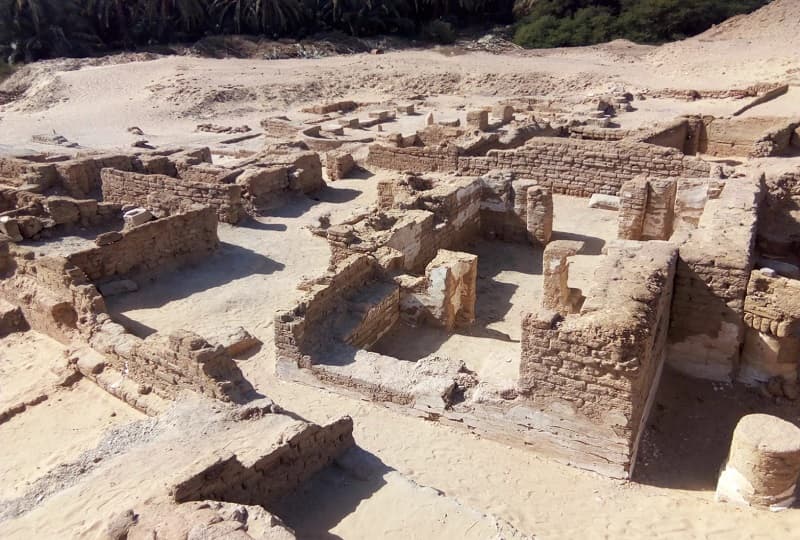
The Egyptian archaeological mission of the Supreme Council of Antiquities working in the Ain El-Kharab area of the Islamic and Coptic Antiquities of Kharga Oasis in New Valley has uncovered the remains of the main residential city of Kharga Oasis, which witnessed the period of transition from paganism to Christianity.
Minister of Tourism and Antiquities Sherif Fathy stated that this discovery reflects the richness and diversity of the ancient Egyptian civilization during precise and influential historical periods, enhances understanding of the period of religious transition in Egypt, and highlights the tolerance and cultural and religious diversity that characterized Egyptian civilization. He affirmed the ministry's continued full support for archaeological missions working in various governorates, praising the efforts of Egyptian teams and their achievements, which help strengthen Egypt's position on the global cultural tourism map.
For his part, Dr. Mohamed Ismail Khaled, Secretary General of the Supreme Council of Antiquities, stressed the importance of the discovery, as it sheds light on an important era in the history of the Kharga Oasis region, namely the beginnings of the Coptic era in Egypt, underlining the importance of Egypt's Western Desert oases as a center of religious and social life in different eras.
He explained that the mission uncovered the remains of the entire city, including residential buildings consisting of mudbrick rooms with some walls covered in plaster; service areas with ovens for daily use; a number of mudbrick storage bins and large pottery vessels fixed in the ground that were used to store grain and food; as well as a collection of diverse artifacts, including ostraca, pottery vessels, stone and glass pieces and a number of burials, in addition to a mural depicting Christ healing a sick person.
Dr. Siham Ismail, Director General of Kharga Antiquities and head of the mission, said the remains of two churches were also uncovered, one of them a mudbrick basilica-style church with remains of foundation stones showing that it consisted of a large hall and two aisles separated by three square columns on each side, while the southern area of the church contains a group of service buildings.
The second church is small, with a rectangular layout surrounded by the remains of seven external columns, and some of its interior walls were decorated with Coptic inscriptions. Remains of service buildings were also found on its western side.
She added that most of the buildings uncovered at the site during previous excavation seasons indicate that the area was used across multiple historical eras, as buildings from the Roman era were uncovered that were reused in the early Coptic period, as well as in the Islamic era.