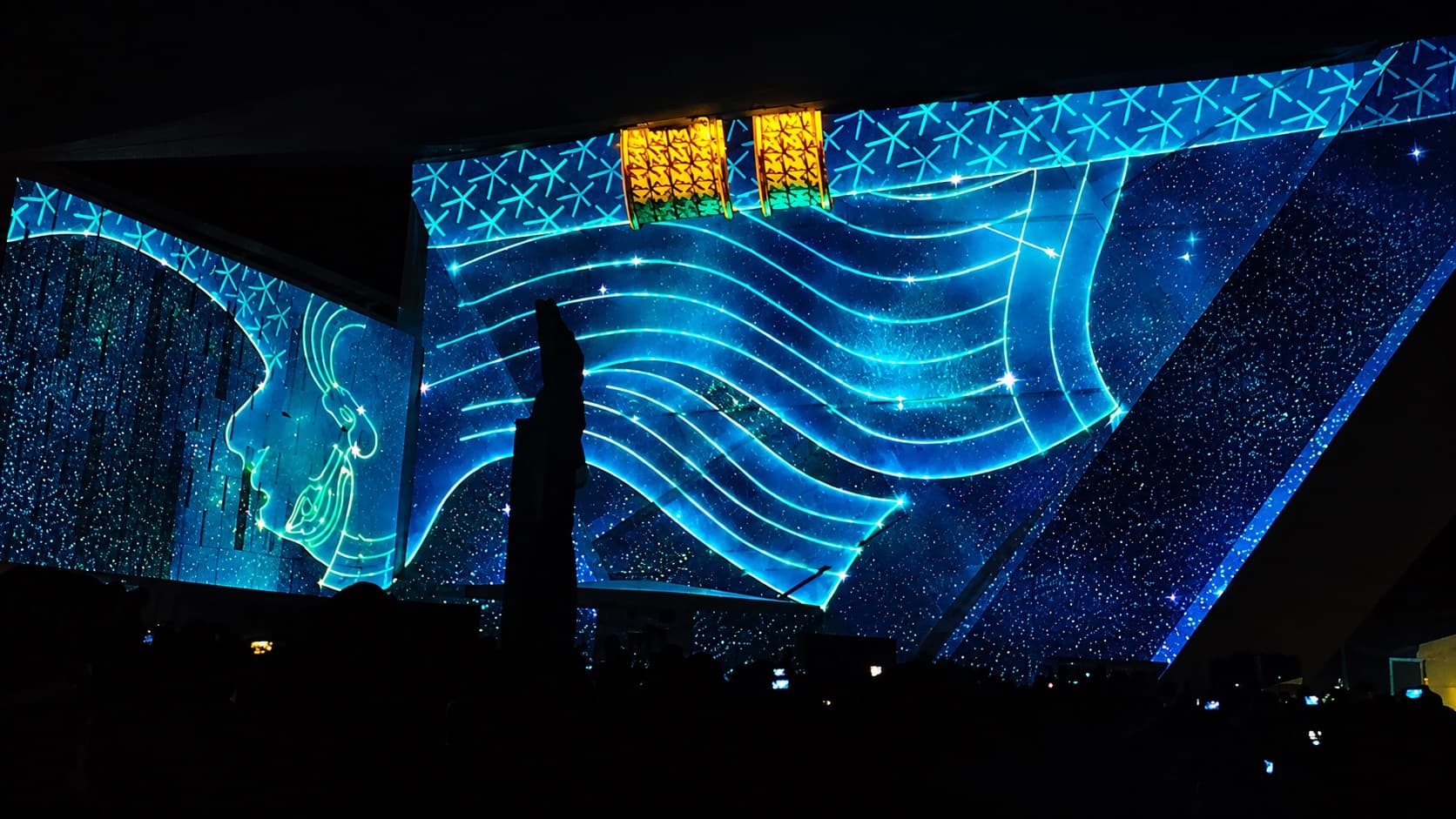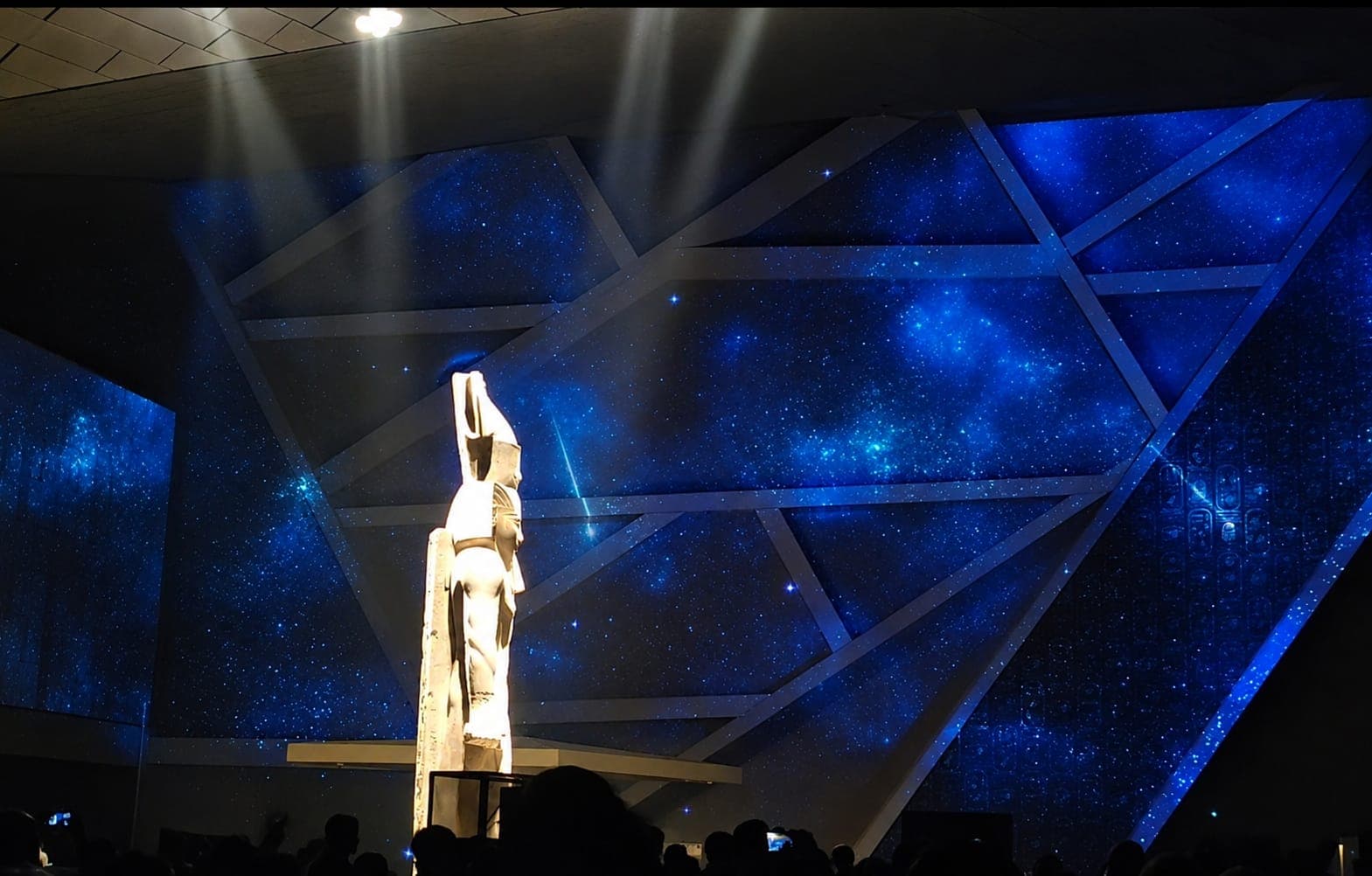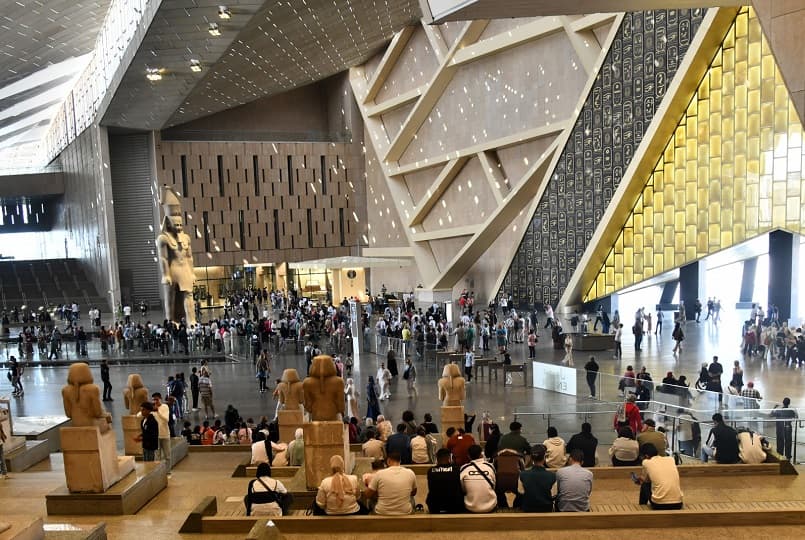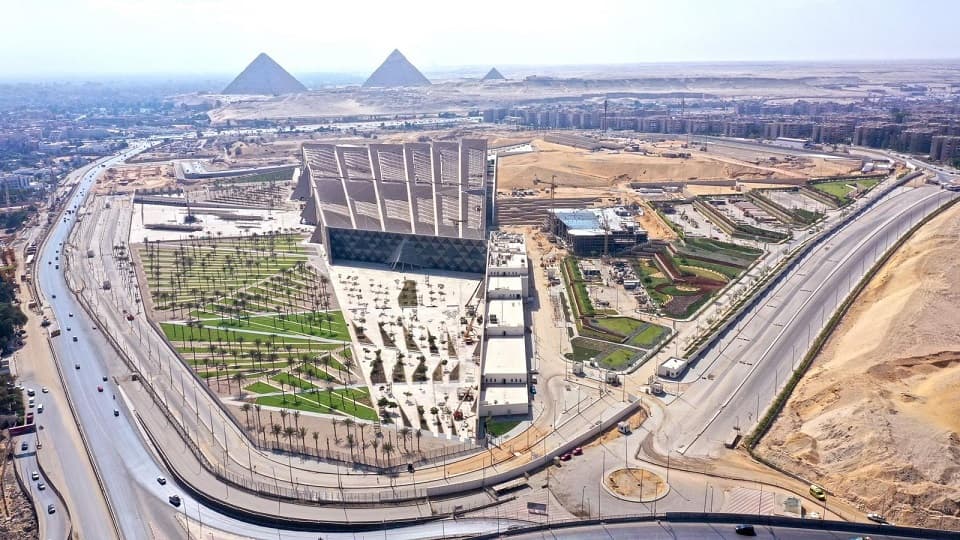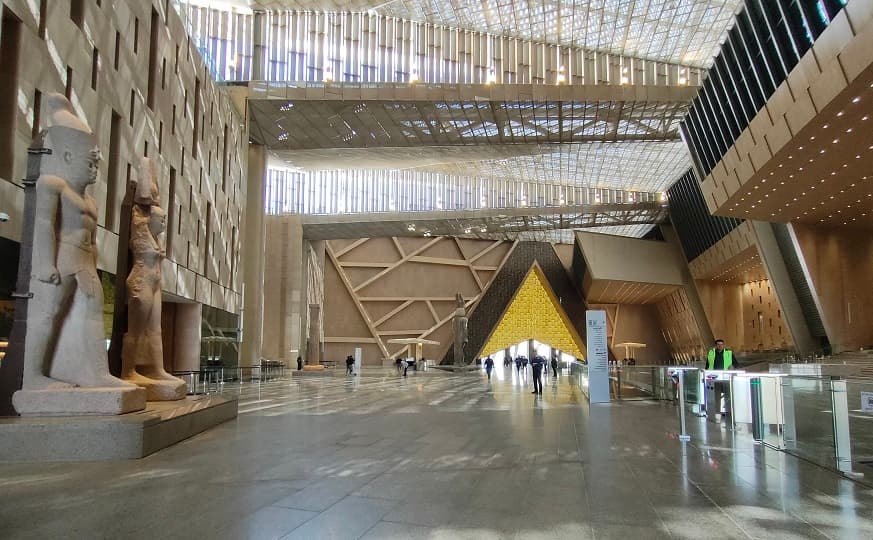
Today, the world awaits the legendary opening ceremony of the Grand Egyptian Museum, attended by President Abdel Fattah El-Sisi with the participation of 79 delegations of kings, presidents, heads of government and prominent international figures from around the world. This cultural landmark embodies an idea that is more than 30 years old.
The idea of establishing the Grand Egyptian Museum began in the 1990s, under former Minister of Culture Farouk Hosny, and came about by chance in 1992, according to his television statements, as the Egyptian Museum in Tahrir had become crowded and full of antiquities. He also felt jealous when one of Italy's leading architects described the museum as a warehouse. At the time, Farouk Hosny replied that there were plans to build the largest museum in the world next to the pyramids, although there was in fact no such plan. When he returned to Egypt, he presented the idea to former President Hosni Mubarak, and the executive procedures for the project began, from the feasibility study to the construction stages.
According to the website of the Ministry of Tourism and Antiquities, the foundation stone of the museum project was laid in 2002 on a prime site overlooking the timeless Pyramids of Giza. The Egyptian state, under the auspices of the United Nations Educational, Scientific and Cultural Organization (UNESCO) and the International Union of Architects, announced an international architectural competition for the best design for the museum. The current design submitted by the Irish firm Heneghan Peng Architects won; it is based on the idea that the sun's rays extending from the peaks of the three pyramids converge to form a conical mass, which is the Grand Egyptian Museum.
Construction of the museum project began in May 2005 in Giza Governorate at Al-Remaya Square overlooking the Giza Pyramids, where the site was leveled and prepared. In 2006, the largest antiquities conservation center in the Middle East was established, dedicated to the restoration, preservation, maintenance and rehabilitation of the artifacts to be displayed in the museum's halls, and it was opened in 2010.
Prime Ministerial Decree No. 2795 of 2016 was issued establishing and organizing the Grand Egyptian Museum Authority, and in February 2020, President Abdel Fattah El-Sisi issued Law No. 9 of 2020 on the Grand Egyptian Museum Authority, which stipulates that the Grand Egyptian Museum is an economic public authority affiliated with the minister in charge of antiquities, and that it is an integrated global cultural complex aimed at introducing Egyptian civilization and providing the necessary cultural services and activities for visitors.
Construction of the museum building, which covers more than 300,000 square meters, was completed in 2021. The museum is one of the most important and greatest achievements of modern Egypt, an integrated global cultural, civilizational and entertainment landmark and the first destination for everyone interested in ancient Egyptian heritage, as the largest museum in the world telling the story of the history of ancient Egyptian civilization.
It contains a large number of distinctive and unique artifacts, including the treasures of the golden King Tutankhamun, displayed in full for the first time since the discovery of his tomb in November 1922, as well as the collection of Queen Hetepheres, mother of King Khufu, builder of the Great Pyramid of Giza, the King Khufu Boats Museum, and various archaeological holdings from the Predynastic Period to the Greek and Roman eras.
In March 2021, Legacy for Development and Management, a subsidiary of Hassan Allam Holding, was selected to operate services at the Grand Egyptian Museum complex.