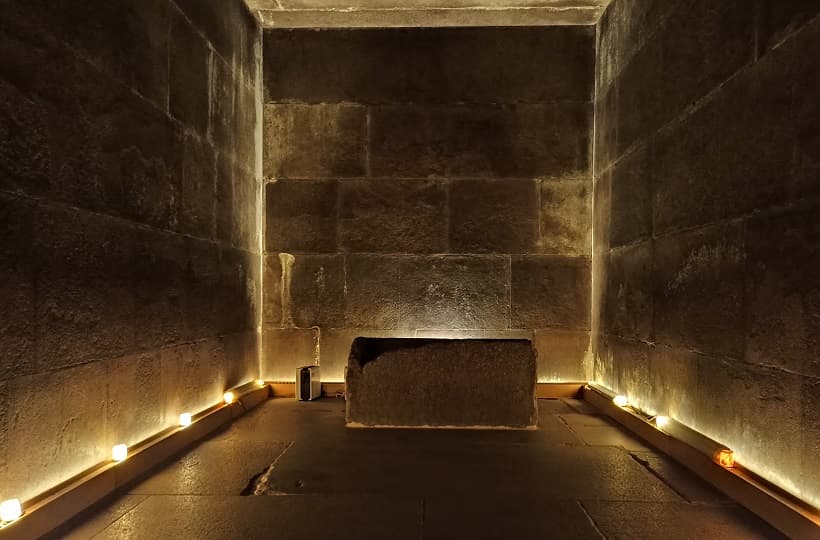
The Supreme Council of Antiquities, in cooperation with the Spanish government, has completed the project to upgrade the interior lighting system of the three Giza Pyramids (Khufu, Khafre and Menkaure) using the latest eco-friendly lighting technologies (LED), highlighting the grandeur and genius of the pyramids' interior design.
Sherif Fathy, Minister of Tourism and Antiquities, noted that this project comes as part of the ministry's ongoing efforts to raise the quality of services provided at archaeological sites and museums, with the aim of improving the visitor experience and enhancing the appeal of Egypt as a tourist destination, especially among cultural tourism lovers from target global markets, stressing the ministry's commitment to protecting and preserving Egypt's civilizational heritage in line with international standards.
Dr. Mohamed Ismail Khaled, Secretary General of the Supreme Council of Antiquities, explained that the new lighting system relies on cool lighting units that are completely safe for the original archaeological components used in building the pyramids, ensuring the preservation of these unique landmarks. He noted that the project was implemented in cooperation with a team of specialized archaeologists and engineers from Spain, after completing all the necessary scientific, technical and engineering studies.
The Secretary General of the Supreme Council of Antiquities stressed that this modern system not only contributes to preserving the monument but also reinforces concepts of sustainability and offers visitors a unique visual experience inside the pyramids, highlighting the aesthetics and extreme precision of ancient Egyptian architecture, which embodied the concept of eternity in the beliefs of the ancient Egyptians.
For his part, Ashraf Mohie El-Din, Director General of Giza Antiquities, said that the lighting project covered all the interior passages of the three pyramids, in addition to the burial chambers and the inner ascending and descending corridors, adding more excitement to the visit experience while fully preserving the archaeological character of the site.