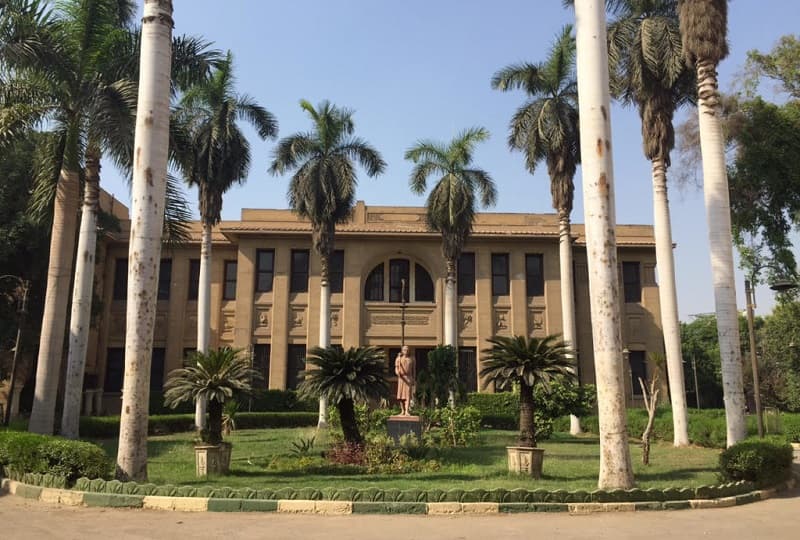
Alaa Farouk, Minister of Agriculture and Land Reclamation, announced the start of the trial operation of the Egyptian Agricultural Museum as of Saturday, August 16, 2025, as part of the ministry's comprehensive plan to develop its cultural facilities, paving the way for the museum's official opening. Renovation and development work has been completed on the museum, which is considered the second-oldest agricultural museum in the world, through great effort and in cooperation with various relevant bodies and international organizations, including UNESCO.
The Minister of Agriculture stressed the museum's historical importance, describing it as a living witness to the long heritage of Egyptian agriculture throughout the ages. The opening falls within the state's strategy of caring for the cultural heritage of the agricultural sector.
Farouk noted that the museum is one of the most important specialized museums in the world, as it is the second-oldest agricultural museum worldwide, and that it tells the story of Egyptian agriculture from the Pharaonic era to modern times. He expressed hope that it would become a prominent cultural and tourist destination, as the museum is a tourist, cultural and heritage landmark, in addition to being an "important record" of the history of Egyptian agriculture and a scientific and cultural center that contributes to spreading knowledge and highlights Egypt's rural and agricultural standing through the ages. It is also an important platform for researchers and for university and school students.
For his part, Major General Amgad Saada, Assistant Minister of Agriculture and General Supervisor of the museum, said the museum's trial opening will be on August 16, 2025, and will last for two weeks.
He added that the public will be received daily from 9:00 a.m. to 3:00 p.m., and entry will be free for all visitors during this period, which will be devoted to testing services and receiving feedback from the public.
Saada explained that the museum houses rare historical treasures, such as ancient farming tools, historical documents and archaeological plant specimens, in addition to specialized exhibition halls illustrating the development of Egyptian agriculture over the ages. The museum comprises 8 museums, including the Greek and Roman museums, the Chinese Friendship Museum and the Museum of Scientific and Royal Collections, as well as the Royal Cinema and the Heritage Library.
The Egyptian Agricultural Museum, founded in 1930 in the palace of Princess Fatma Ismail in Dokki, is the second-oldest agricultural museum in the world after the Agricultural Museum in Budapest, Hungary, and is one of the most important cultural landmarks telling the story of the long-standing relationship between Egyptians and their land, according to the official Facebook page of the Egyptian Cabinet.