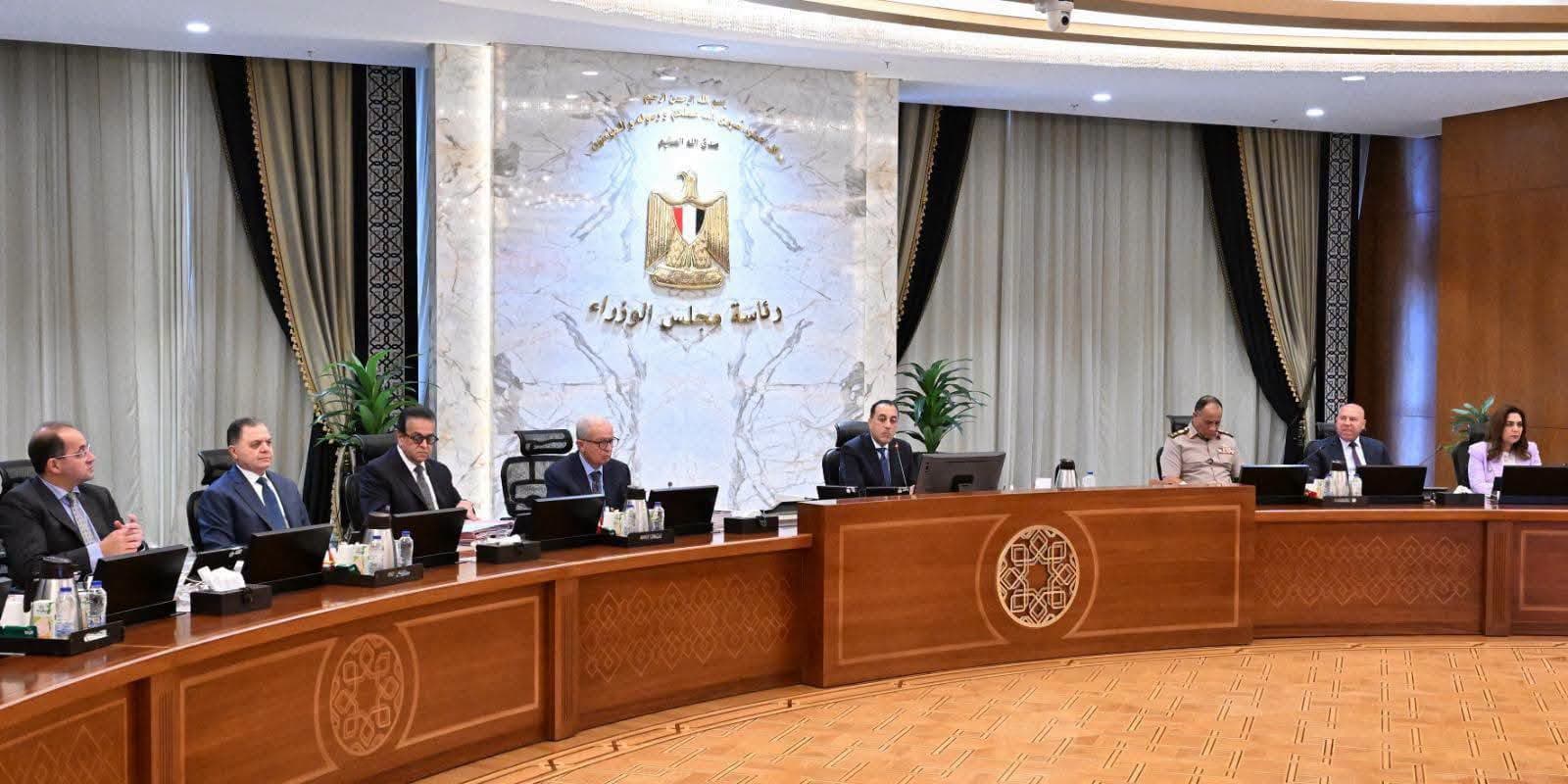
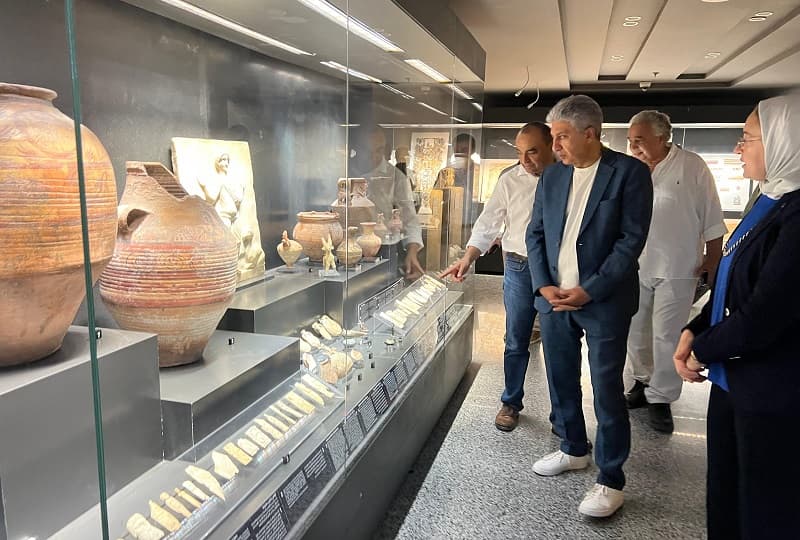
Sherif Fathy, Minister of Tourism and Antiquities, began his current visit to Alexandria with a tour of the Graeco-Roman Museum and the archaeological Citadel of Qaitbay, accompanied by Deputy Minister Yomna El-Bahar and Dr. Mohamed Ismail Khaled, Secretary General of the Supreme Council of Antiquities. Also attending the tour were Moamen Othman, Head of the Projects and Restoration Sector at the Supreme Council of Antiquities; Dr. Mohamed Abdel Badie, Head of the Egyptian Antiquities Sector; Dr. Ahmed Hamida, Head of the Museums Sector; Dr. Hossam Ghoneim, Director General of Alexandria Antiquities; Dr. Walaa Mostafa, Director General of the museum; and Dr. Mohamed Shaaban, Assistant Minister for Digital Services.
During his inspection tour of the museum, the minister listened to a detailed explanation of the museum's history, the development of its halls, its display scenario and the most prominent holdings on display, with the Secretary General of the Supreme Council of Antiquities reviewing the mechanisms for preserving artifacts, especially sunken antiquities, and highlighting the features of distinctive Alexandrian art.
The minister expressed his admiration for the museum's unique archaeological holdings, describing it as one of the most important tourist attractions in Alexandria. He also directed the preparation of a new tourism promotion plan for the city that includes featuring the museum more prominently in tourism programs, while capitalizing on the growing tourist flow to the North Coast and linking it with visits to Alexandria's archaeological landmarks.
The minister stressed that the ministry's strategy focuses on highlighting the diversity of tourism assets across Egypt's governorates, strengthening Egypt's position as a leading global tourist destination, noting that Alexandria, with its civilizational and cultural legacy, deserves to be at the forefront of international tourism programs.
During the visit, the minister made a point of meeting a number of museum staff, listening to their views and suggestions and praising their prominent role in preserving and managing this archaeological landmark.
He also directed the organization of scientific and research forums and international events specializing in Egyptology, helping to strengthen Egypt's position as a global center for scientific and academic activity in this field.


At the end of his tour, the minister wrote a message in the museum's visitors' book expressing his delight at the visit and at getting to know the museum's contents, describing the museum display as impressive and new and the pinnacle of innovation and modernity while preserving heritage and antiquities, and wishing every success to the museum's successful management and everyone in charge of this distinctive place.

The Minister of Tourism and Antiquities and the accompanying delegation then visited the Citadel of Qaitbay, where he listened to a detailed explanation from Dr. Mohamed Metwally, Director General of Alexandria Antiquities for Islamic and Coptic Antiquities, on the latest developments in the citadel's restoration project and the set timelines for its completion. The tour also included visits to the inner and outer walls, the main tower, the mosque and the cistern, in addition to inspecting the tourist services at the citadel, including signage and the visitor center, which was recently opened after being upgraded to present the necessary information about a number of unique archaeological monuments in Alexandria and the development of the city's defensive fortifications, focusing on the historical role of the Citadel of Qaitbay, as well as the fortifications built during the reign of Muhammad Ali Pasha along the northern coast.
During his tour, Fathy met a number of Russian and Italian tourists, who expressed their admiration for the tourist and archaeological sites they had seen during their visit to Alexandria and Cairo.


It is worth noting that Prime Minister Dr. Mostafa Madbouly opened the Graeco-Roman Museum in Alexandria in October 2023 following the completion of its development and rehabilitation work.
The museum is one of Egypt's most important archaeological landmarks, telling the history of ancient Egypt in general and Alexandria in particular through an integrated display scenario that covers political life during the Ptolemaic and Roman eras, patterns of daily life in ancient Alexandria, religious beliefs and funerary rituals, Alexandria's role as a beacon of science, thought and culture in the ancient world, the development of art in the Byzantine and Coptic eras, and Egyptian trade and handicrafts that reflected Egypt's connections with other civilizations.
As for the Citadel of Qaitbay, it was built by Sultan Al-Ashraf Abu al-Nasr Qaitbay al-Mahmudi between 882 AH/1477 AD and 884 AH/1479 AD. The citadel is located in the Anfoushi district (formerly Pharos Island) in western Alexandria and consists of a rectangular area surrounded by the sea on three sides. Muhammad Ali Pasha added renovations to the citadel's northern wall, which was rebuilt to suit the development of weapons.