The Egyptian archaeological mission of the Supreme Council of Antiquities has uncovered a necropolis whose roots go back to the Predynastic period and continue until the Greek and Roman periods, along with a residential area dating to the Second Intermediate Period, during excavations at the Kom El Khilgan archaeological site in Dakahlia Governorate. The new discovery sheds light on the cultural and settlement development of the eastern Delta over thousands of years.
Minister of Tourism and Antiquities Sherif Fathy praised the mission's efforts, stressing that the discovery is an important scientific addition that deepens understanding of the Delta's history and cultural development. It also reflects the scientific competence and outstanding expertise of Egyptian archaeologists, who continue to achieve major archaeological discoveries with purely Egyptian hands, and supports the ministry's efforts to highlight the richness and diversity of Egypt's cultural heritage.
Dr. Hisham El Leithy, Secretary-General of the Supreme Council of Antiquities, said the discovery highlights the archaeological importance of Kom El Khilgan as one of the promising sites in the eastern Delta, providing a complete record of the development of settlement patterns, funerary practices and human interaction with the natural environment from prehistoric times to the Greek and Roman periods, enriching knowledge of the history of ancient Egyptian civilization. He said excavations are continuing at the site, with all forms of support provided to the mission to uncover more of its secrets.
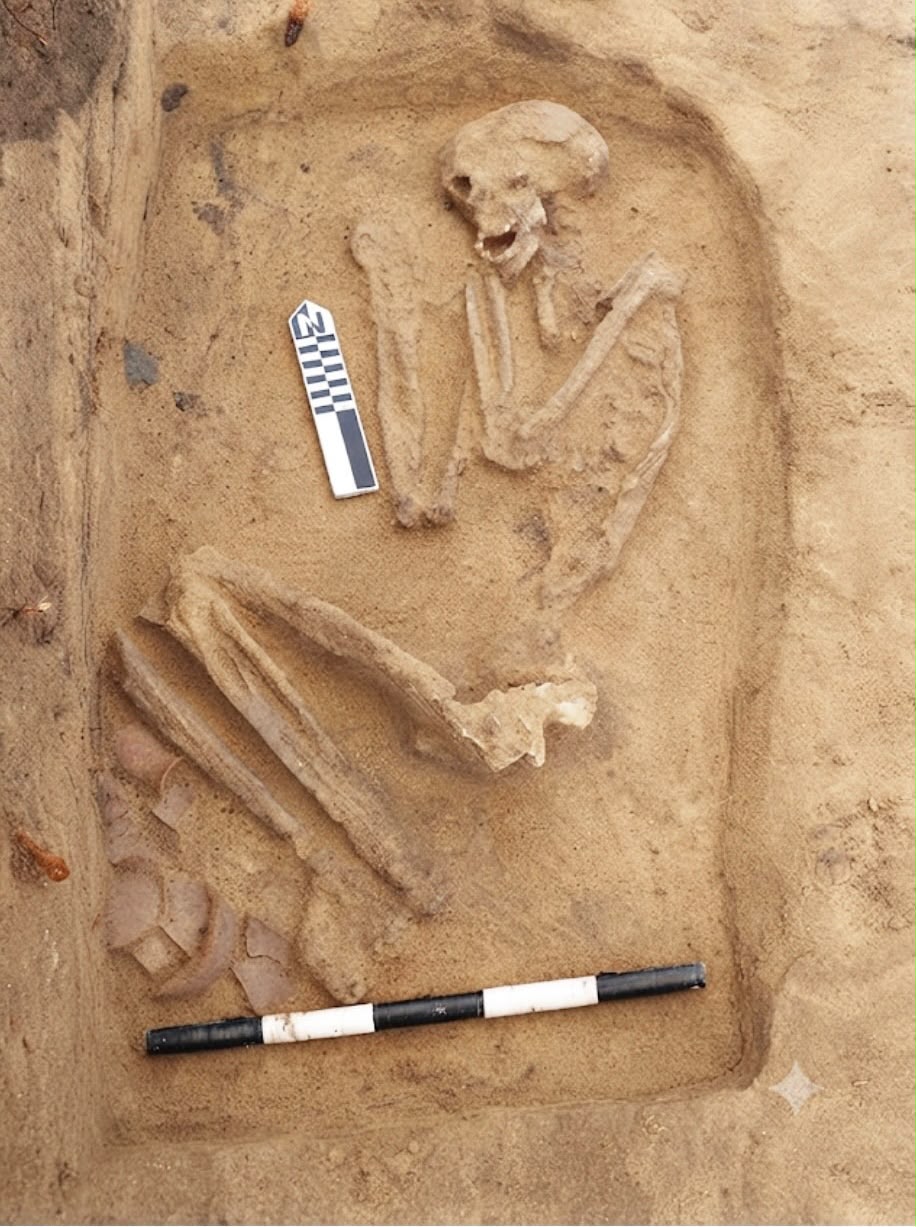
Mohamed Abdel Badie, Head of the Egyptian Antiquities Sector at the Supreme Council of Antiquities, said the oldest finds at the site date to the Lower Egyptian culture (Buto I and Buto II) of the first half of the fourth millennium BC. A group of simple oval pit graves cut into the sand layer was found, containing burials in various positions, reflecting differences in burial rituals during that period.
He added that these graves were distinguished by the simplicity of their funerary goods, limited to small handmade pottery vessels and some seashells, while the density of burials points to a large population at the site during that early era.
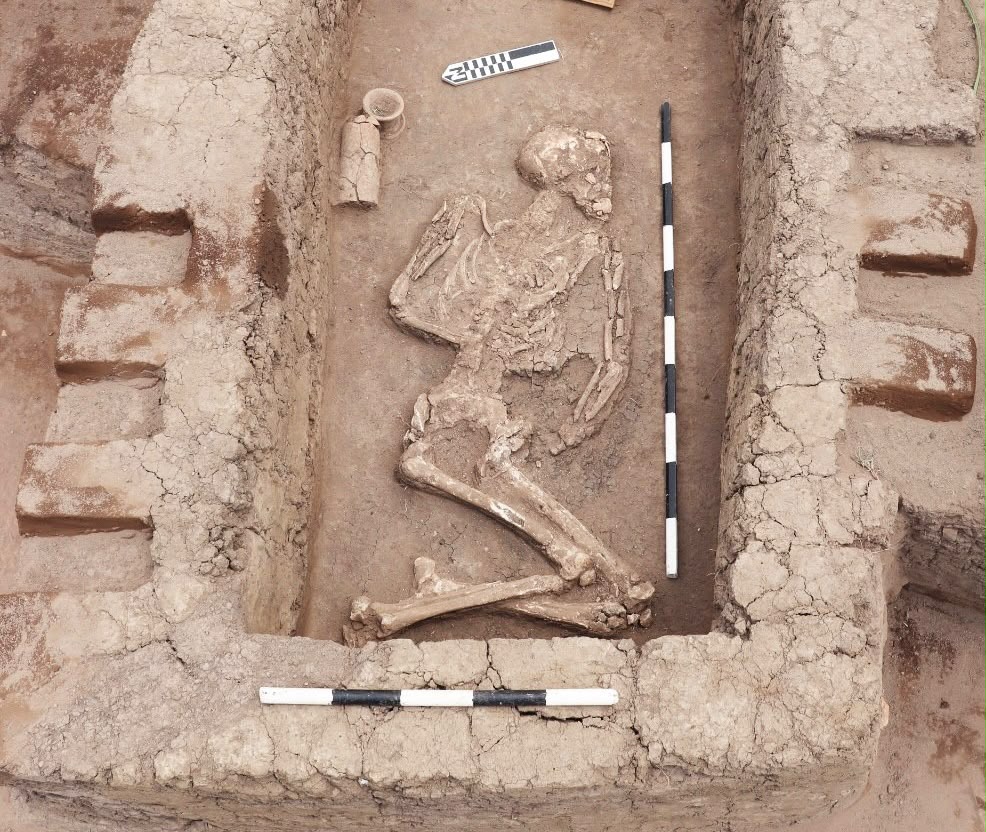
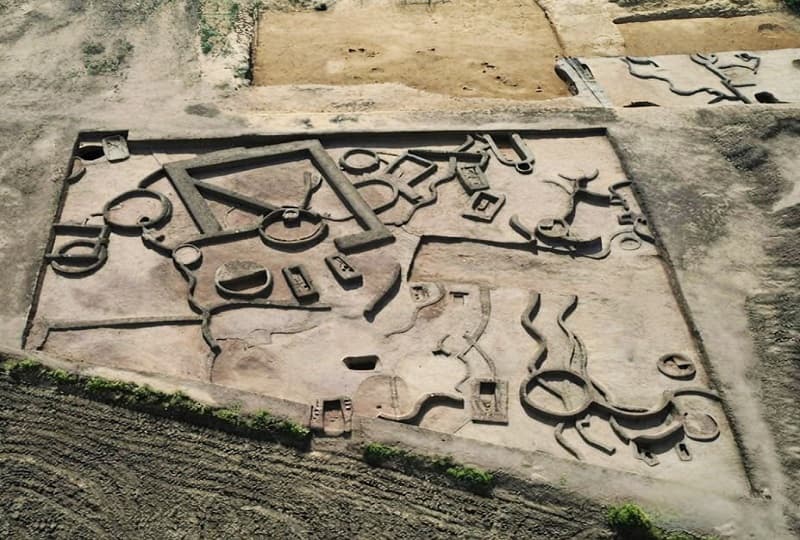
The head of the Egyptian Antiquities Sector said the mission also uncovered a residential area and a group of tombs dating to the Second Intermediate Period and continuing into the New Kingdom, including the remains of mudbrick buildings, grain silos, ovens and hearths, reflecting aspects of the daily life and economic activities of the site's inhabitants at the time.
A number of sinusoidal walls surrounding the residential and funerary buildings were also uncovered, a distinctive architectural feature that spread from the Middle Kingdom to the New Kingdom.
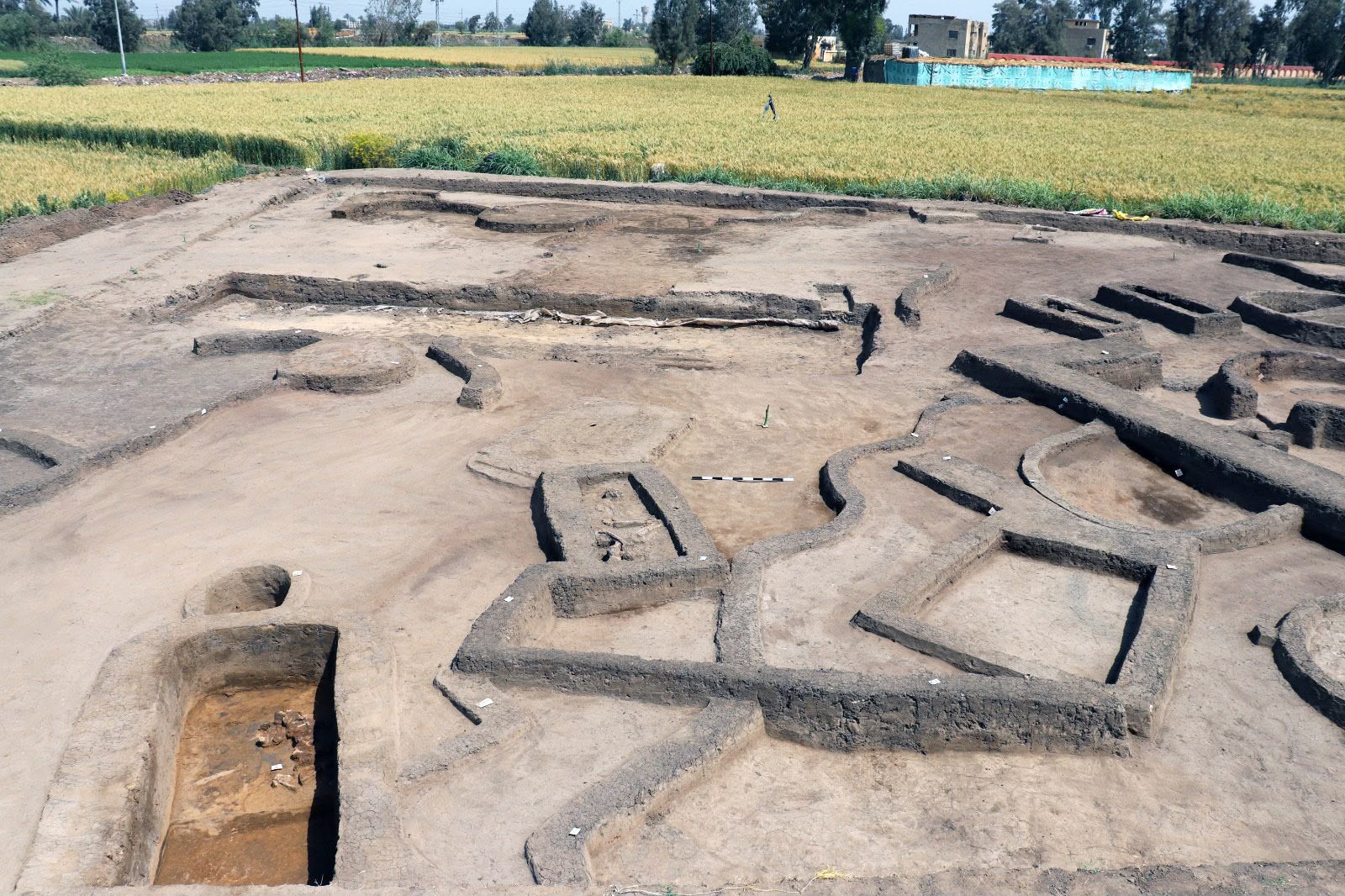
The excavations also yielded a variety of artifacts, including pottery vessels, stone tools and large quantities of fish, bird and animal bones, which provide important information about the diet and living habits of the area's inhabitants during the Second Intermediate Period.
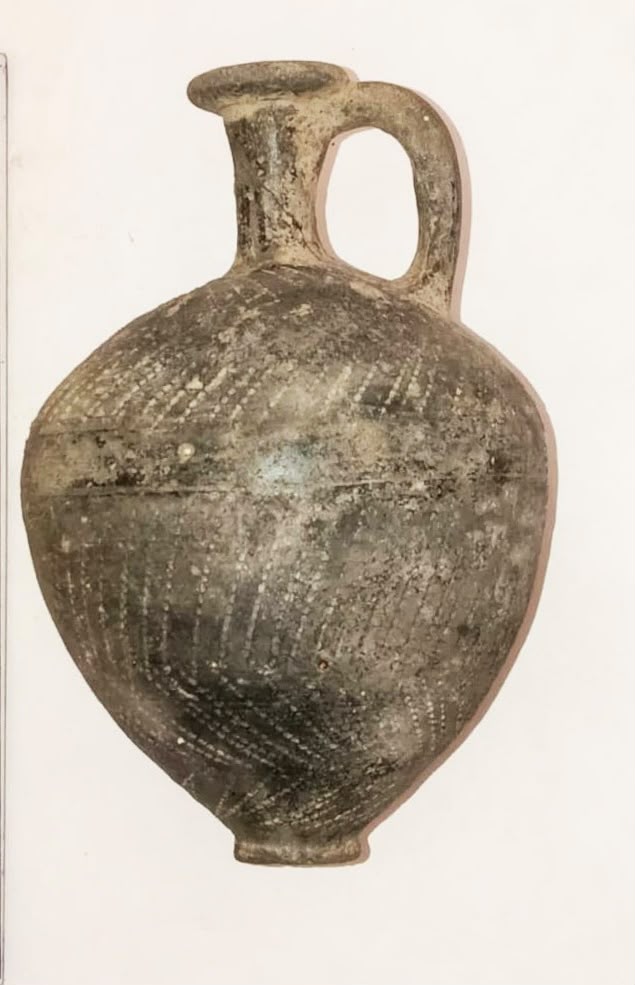
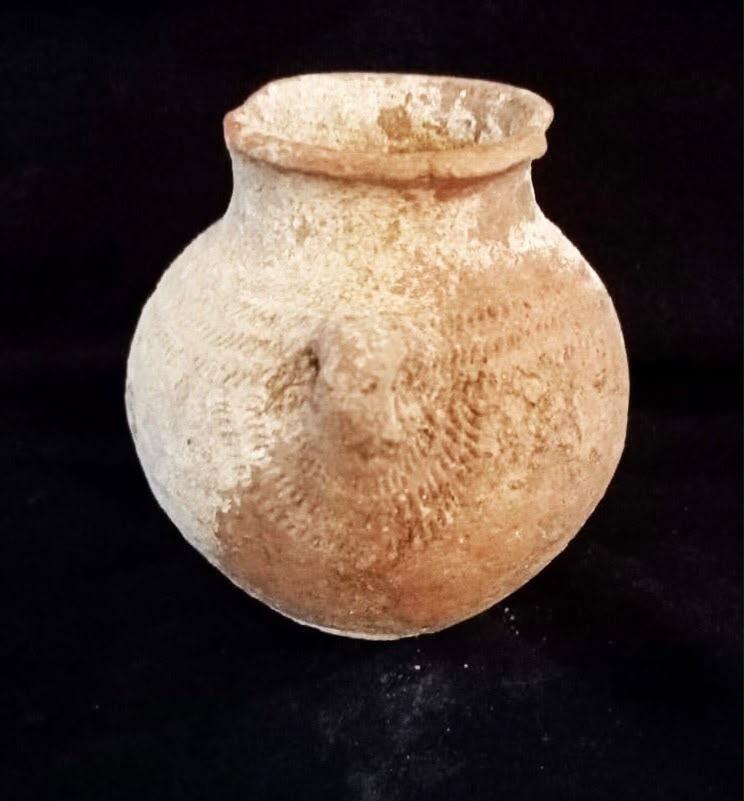
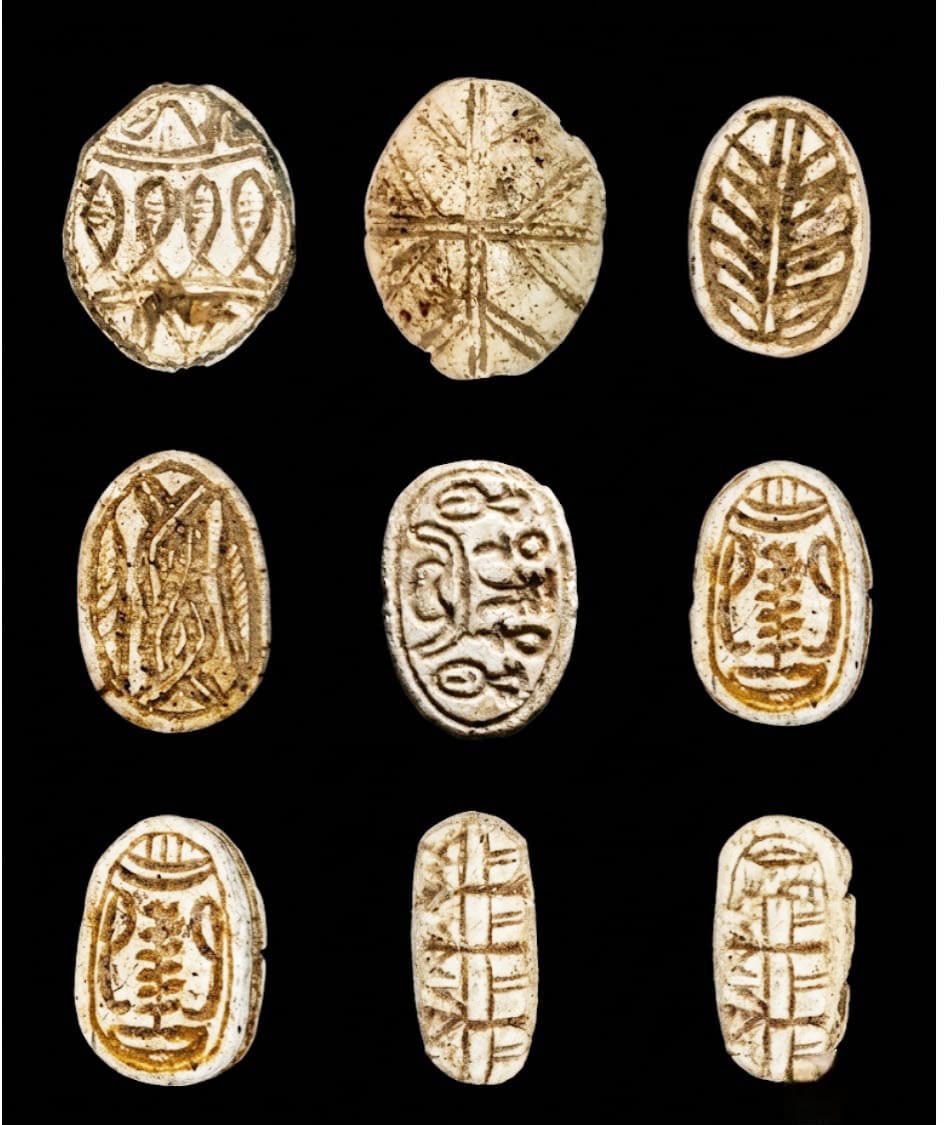
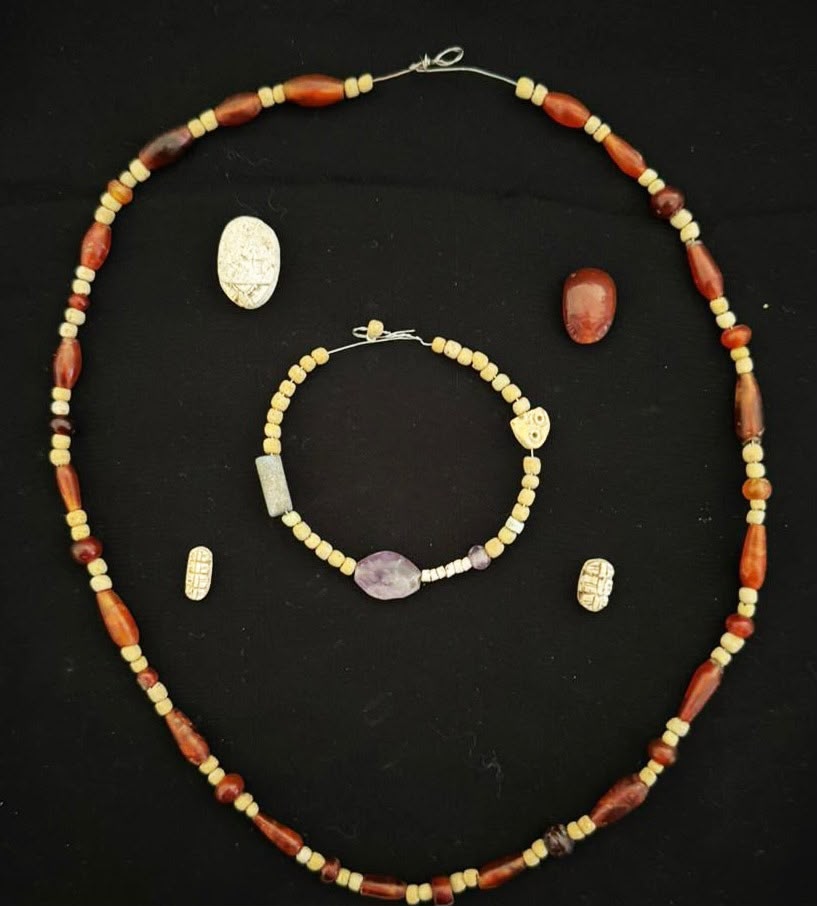
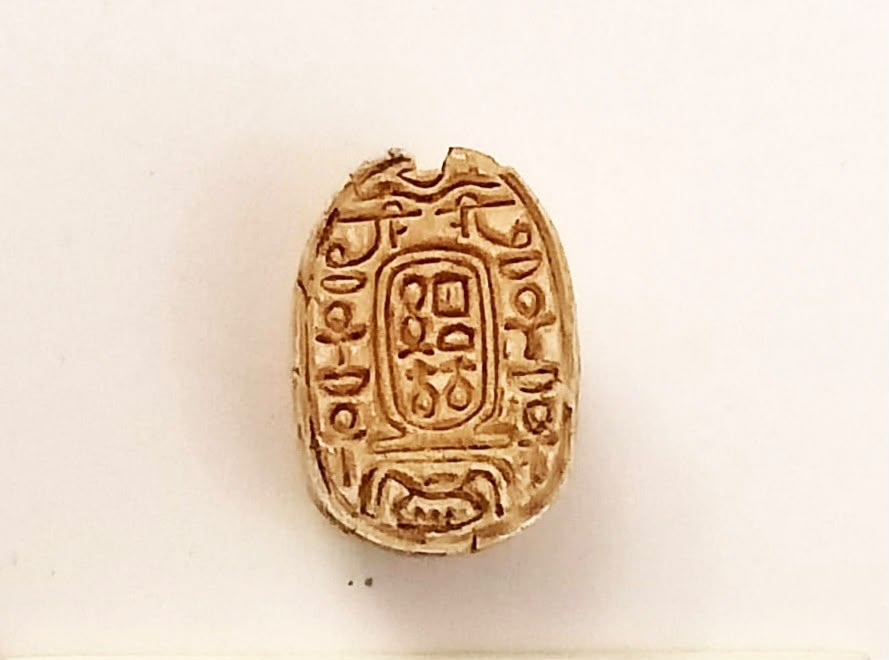
He noted that the mission found a number of tombs dating from the 15th to the 17th Dynasties and the early New Kingdom, confirming settlement of the area during the Hyksos period, given its proximity to their capital, Avaris, in the eastern Delta. The tombs ranged from mastabas to corniche tombs, and preliminary studies revealed clear diversity in burial positions, age groups and funerary customs. These tombs contained varied funerary goods, including jewelry, amulets, scarabs, bronze tools and weapons, as well as pottery vessels and Tell el-Yahudiya ware juglets, one of the distinctive features of this period.
Dr. Hisham Hussein, Head of the Central Administration for Lower Egypt Antiquities, said the mission recorded outstanding scientific results, including the discovery of a mudbrick tomb dating to the early 18th Dynasty containing pottery vessels and bronze tools, as well as the foundations of a building with thick mudbrick walls, on whose floor pottery sherds and stone tools dating to the early New Kingdom were found.
As for the Ptolemaic period, the excavations revealed a number of simple burial pits, including a child's burial inside two amphorae reused as a burial container, one of the known funerary methods of that period, providing new evidence of the site's continued use through different historical eras.