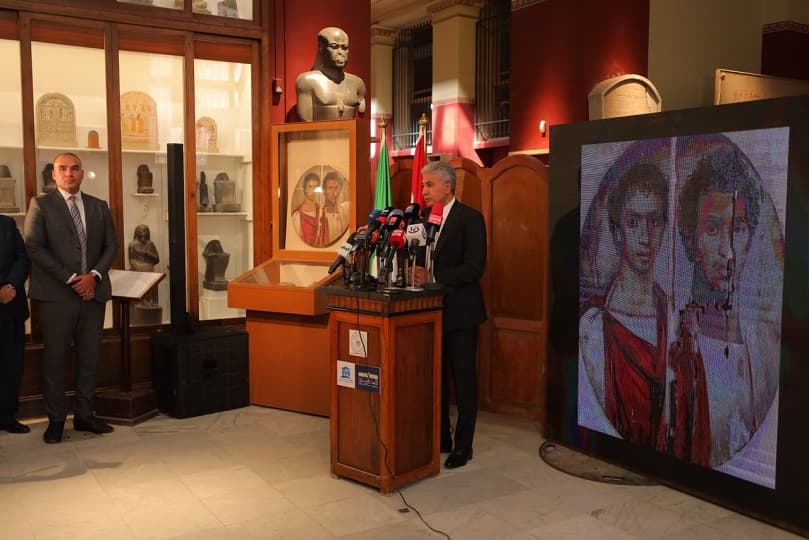
Tourism and Antiquities Minister Sherif Fathy announced the completion of restoration work on the “Two Brothers” painting, one of Egypt’s outstanding examples of Roman-era portraiture. The work was carried out through an Egyptian–Italian cooperation project involving conservators from both countries.
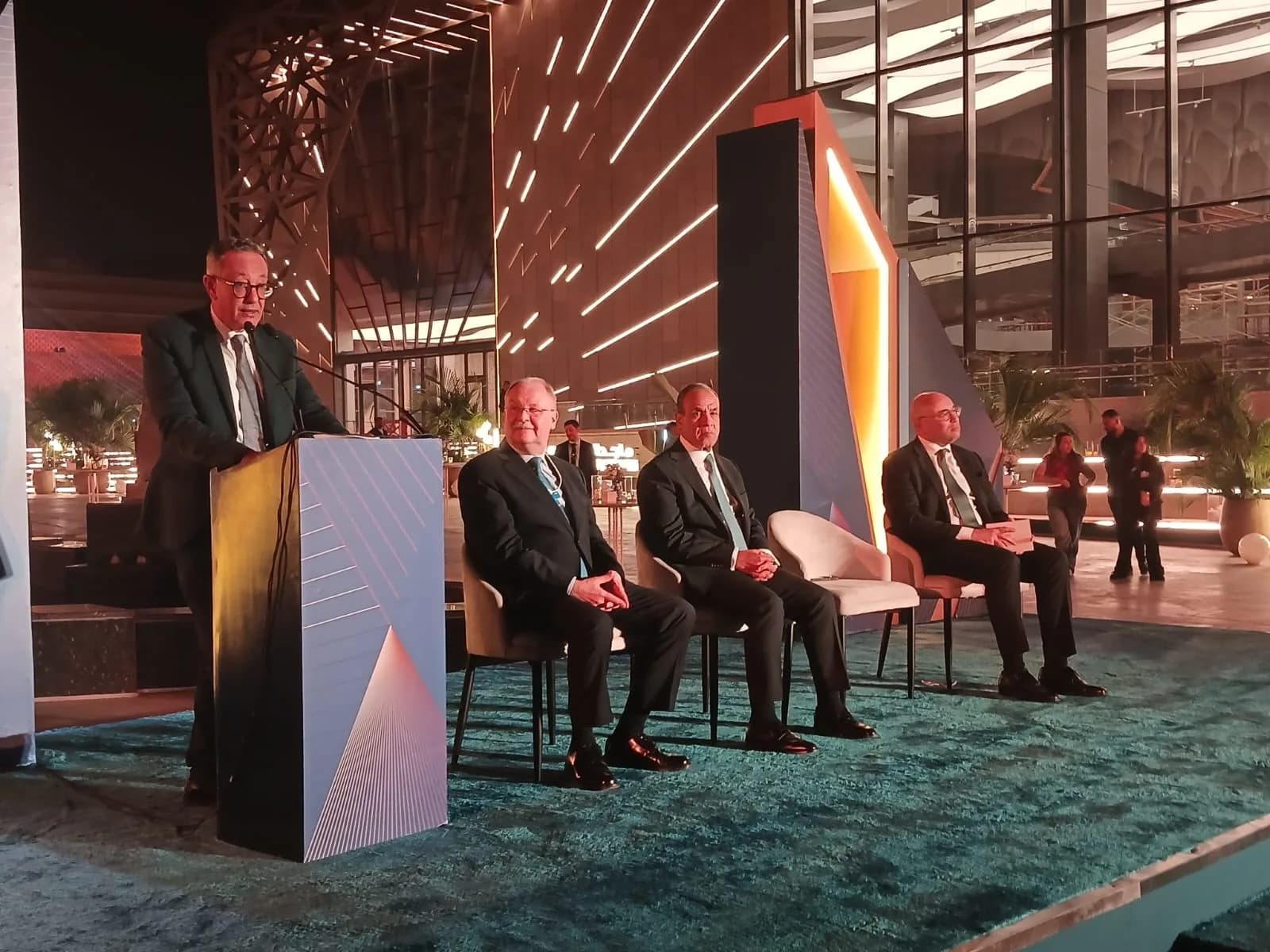
The announcement was attended by Italy’s ambassador to Cairo, Agostino Palese; Dr. Hisham El-Leithy, secretary general of the Supreme Council of Antiquities; Dr. Ahmed Hamida, head of the council’s Museums Sector; Dr. Ali Abdel Halim, director general of the Egyptian Museum; Dr. Tommaso Radaelli, head of exhibition organizer MondoMostre; and Dr. Claudio Parisi, superintendent of cultural heritage in Rome.
The painting is scheduled to leave Egypt for the first time for display at Rome’s Ara Pacis Museum in the temporary exhibition “The Power of Portraiture: Egypt and Rome—Faces of the Fayum”, running from November 5, 2026, to May 2, 2027.
The exhibition will also present, for the first time, a selection of Fayum portraits from Egyptian archaeological museums, including the Egyptian Museum in Tahrir, Kom Oshim Museum and Hurghada Museum. The “Two Brothers” portrait will be a highlight of Egypt’s contribution. The conference opened with a documentary showing the restoration work, which took approximately three weeks.
In his address, Fathy said the project reflected the depth of cultural cooperation between Egypt and Italy and the important role of cultural heritage in promoting dialogue and mutual understanding. Restoring the portrait, he said, was an outstanding example of international cooperation in heritage conservation and study, enabling Egyptian and Italian specialists to exchange expertise and preserve an exceptional artwork for future generations.
He added that exhibiting the portraits in Rome would introduce international audiences to a distinctive aspect of Egyptian civilization and illuminate the unique cultural and artistic interaction that took place in Egypt during the Roman period. It also demonstrates Egypt’s commitment to sharing its cultural heritage with audiences worldwide through cultural exchange, while maintaining the highest standards of protection and conservation.
Ambassador Palese welcomed the opportunity to attend the announcement at the Egyptian Museum in Tahrir and celebrate the completion of this important conservation project. He described it as an example of Egyptian–Italian cooperation and affirmed that productive collaboration would continue.
The “Two Brothers” is a circular wooden panel approximately 62 centimetres in diameter and no more than one centimetre thick. Painted using the encaustic technique, which mixes pigments with molten wax, it depicts two young men side by side. Its unusual circular shape, large size and depiction of two people within a single composition make it an exceptional example among known Fayum portraits.
Fayum portraits are among the most important surviving examples of portrait painting from the ancient world. Most were painted on thin wooden panels and placed over the deceased’s face within mummy wrappings, reflecting the interaction between Egyptian funerary traditions and Greek and Roman artistic influences.
Dr. Hisham El-Leithy emphasized the painting’s exceptional archaeological and artistic importance. Its significance extends beyond the quality and precision of its artistry to its form, technique and condition, offering valuable evidence for the study of portraiture in Roman-period Egypt.
He said restoration required extremely delicate intervention because both the wooden support and paint layer were fragile. Cooperation between Egyptian Museum conservators and their Italian counterparts provided an important opportunity to exchange scientific and professional expertise. The work followed a minimal-intervention approach that preserved the object’s authenticity, restoring its visual coherence while retaining evidence of its history and condition over time.
Dr. Ali Abdel Halim said the three-week conservation programme was undertaken by specialists from Rome’s Fabrica Conservazione e Restauro in cooperation with the Egyptian Museum’s restoration team. The painting had suffered from an old infestation of wood-boring insects, while parts of the paint layer had become fragile. Earlier restoration work had also reattached some fragments of the mouth and chin of the figure on the right in incorrect positions.
During treatment, the paint layer around missing areas was carefully consolidated and weakened sections secured. Conservators also treated tunnels left by insects beneath parts of the painted surface. Previously misplaced fragments were levelled and reinforced before being returned to their original positions using delicate supports.
Ultraviolet examinations during the project revealed traces in the hair of both figures indicating that the ancient artist had applied a transparent varnish layer to deepen dark tones. This provides additional information about painting techniques used by artists in Roman-period Egypt.
Tommaso Radaelli said the restored “Two Brothers” would be one of the highlights of “The Power of Portraiture: Egypt and Rome—Faces of the Fayum”. The exhibition brings together more than 110 archaeological and artistic objects, including painted panels, funerary shrouds, masks, marble portraits, plaster casts and ancient jewellery. Nearly 60 painted portraits from Egypt will offer visitors a deeper understanding of the artistic and cultural exchanges of the Roman period.
Dr. Claudio Parisi said the Egyptian objects would be displayed alongside important works from international museums and collections, including the Louvre, the J. Paul Getty Museum, the Württemberg State Museum in Stuttgart and the Metropolitan Museum of Art, as well as several Italian collections.
He explained that the exhibition would present Fayum portraits within the wider cultural environment in which they emerged and developed, rather than as an isolated artistic phenomenon. This environment brought together Egyptian funerary traditions, Greek artistic culture and Roman approaches to portraiture.
At the end of the conference, Fathy, Ambassador Palese and El-Leithy honoured the Egyptian and Italian restoration team members and presented certificates of appreciation in recognition of their work to conserve this important example of Egypt’s ancient heritage.