Emirates achieved a net profit of AED 19.7 billion, equivalent to USD 5.4 billion, in the 2025-2026 fiscal year, up 3% from AED 19.1 billion in the previous year, with a profit margin of 15%.
Emirates' revenue grew by 2% to AED 130.9 billion, equivalent to USD 35.7 billion, supported by the strategic deployment of capacity to meet growing demand across markets, while operating cash flow reached AED 32 billion during the fiscal year.
Passengers
Emirates carried 53.2 million passengers during the past fiscal year, with a slight 1% decrease in seat capacity, while the seat load factor reached 78.4% compared with 78.9% the previous year, and passenger yield per kilometer rose by 4% to 38.1 fils.
Emirates' total capacity, passenger and cargo, grew by 1% to 60.6 billion available tonne kilometers by the end of the 2025-2026 fiscal year. During the year, the airline continued to expand its global network by launching 4 new destinations: Da Nang, Hangzhou, Siem Reap and Shenzhen.
Destinations
By 31 March 2026, Emirates' network spanned 152 cities in 80 countries, while it strengthened its partnerships to include 32 codeshare agreements and 117 interline partners, giving customers access to more than 1,700 cities beyond its direct network.
Fleet
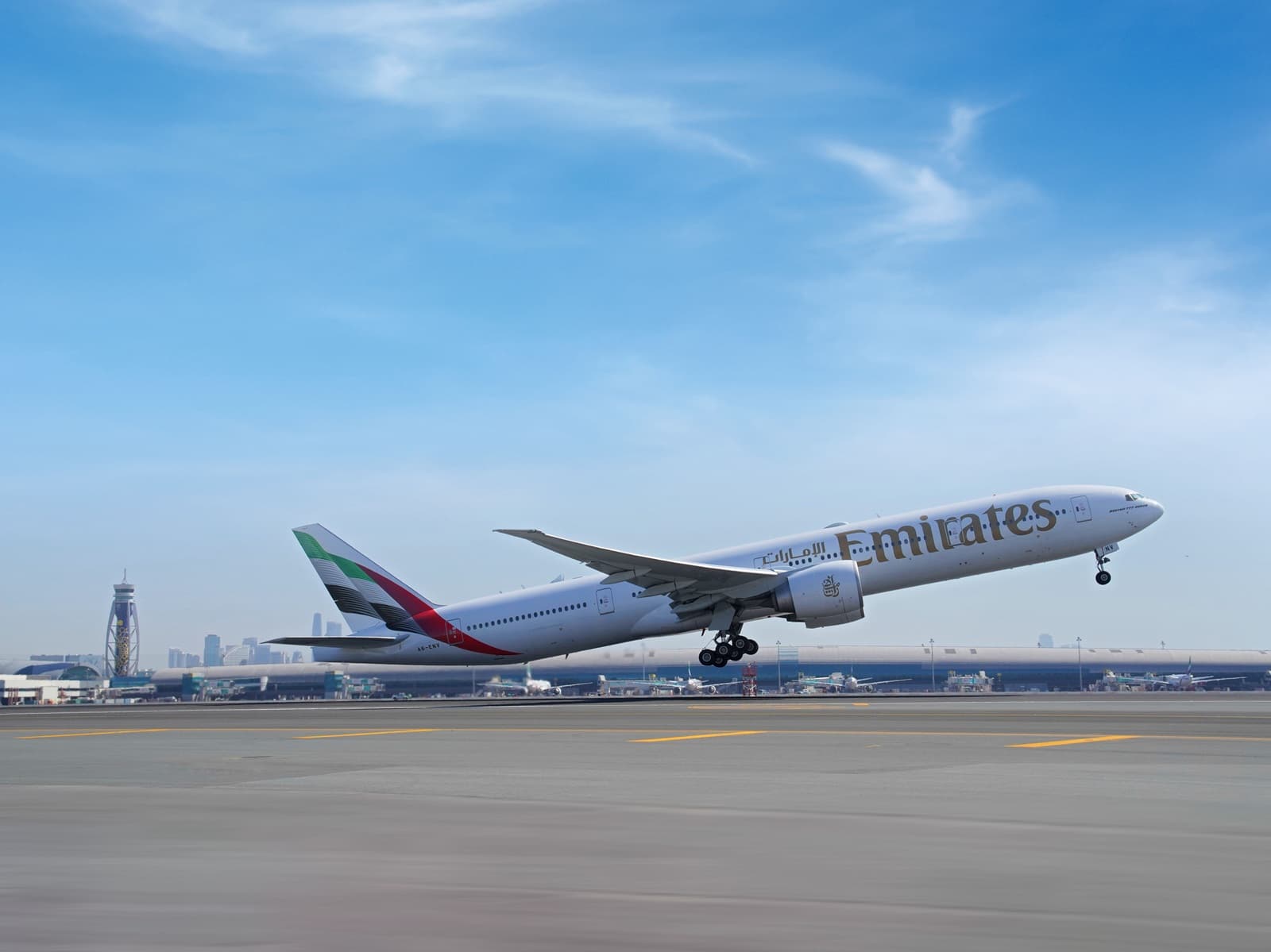
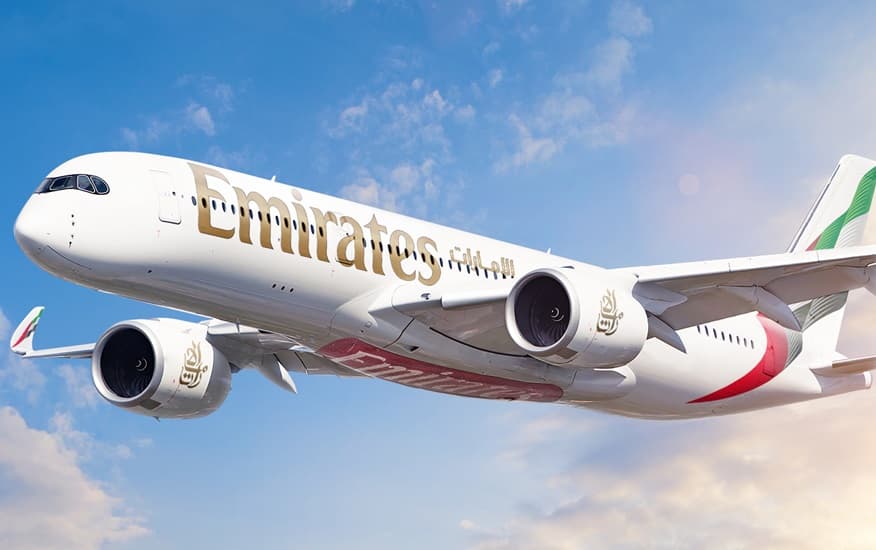
On the fleet front, Emirates received 15 new Airbus A350 aircraft during the year, allowing it to offer its latest products to a wider segment of customers, including Premium Economy and its new-generation inflight entertainment system. By the end of the fiscal year, 19 aircraft of this type were in service, operating to 21 destinations.
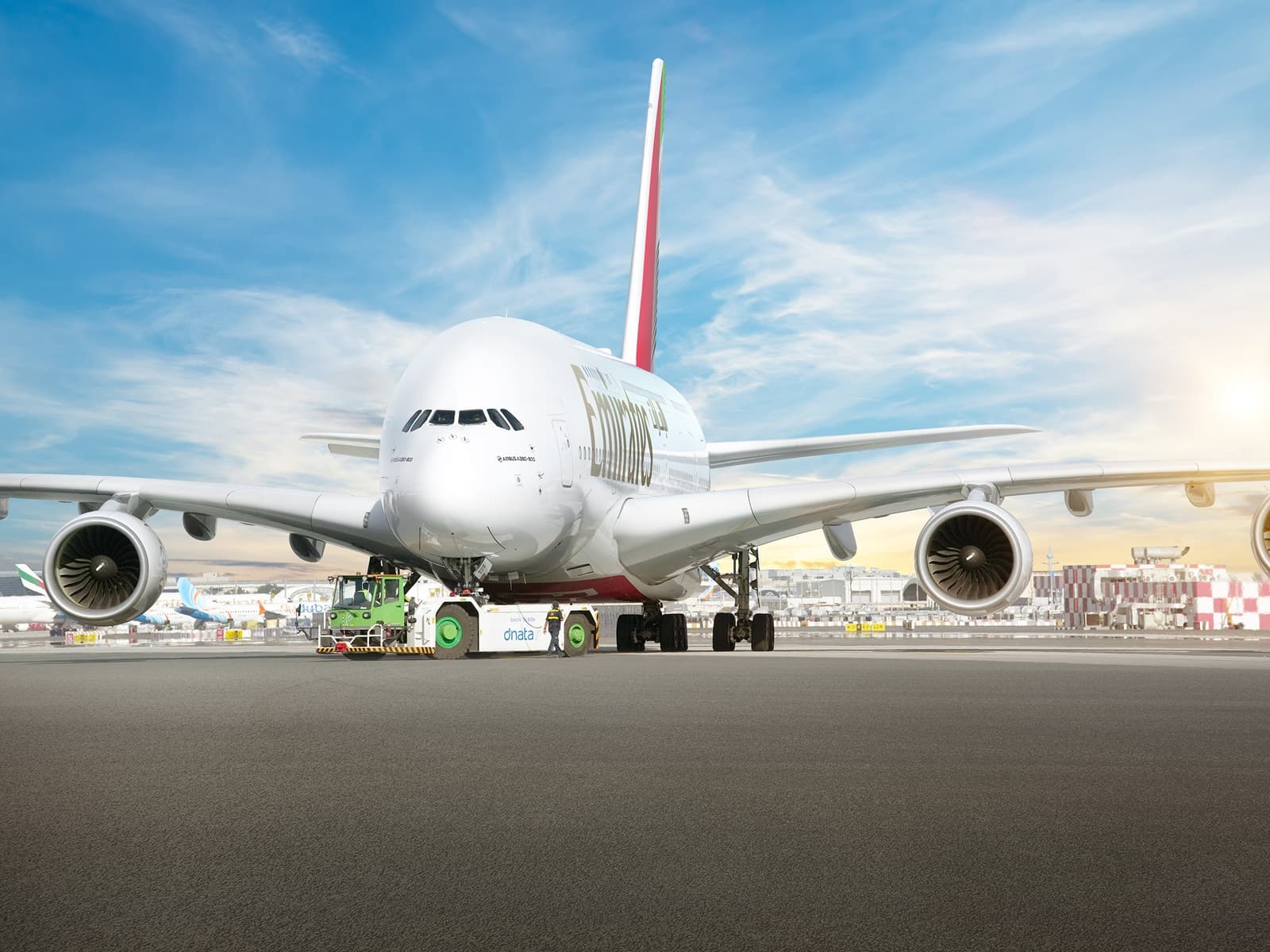
In total, Emirates received 20 new aircraft during the year, including 15 Airbus A350s and 5 Boeing 777 freighters, bringing the airline's total fleet to 277 aircraft with an average age of 10.8 years.
At the Dubai Airshow 2025, Emirates announced additional fleet investments worth USD 41.4 billion at list prices, including orders for 65 additional Boeing 777-9 aircraft and 8 Airbus A350-900 aircraft. By the end of March, total outstanding orders reached 367 aircraft, with deliveries scheduled through 2038.
In the cargo sector, Emirates SkyCargo delivered a strong performance during the fiscal year, carrying 2.4 million tonnes of cargo worldwide, up 3% on the previous year, with revenue of AED 16.2 billion, representing 12% of Emirates' total revenue.
The delivery of 5 new Boeing 777 freighters during the year raised the cargo fleet's capacity by 13%, while Emirates SkyCargo expanded its network of dedicated freighter destinations to 44, adding Bangkok, Budapest, Liège and Tokyo Narita.
On the customer experience front, Emirates continued its USD 5 billion fleet retrofit program, with 91 of the 215 targeted aircraft retrofitted so far to feature the airline's latest products, including Premium Economy seats.
Emirates also announced an agreement with Starlink to equip its fleet with high-speed internet, with 21 aircraft fitted with the service by 31 March and plans to expand it to the entire fleet in the coming period.
These results reflect Emirates' ability to continue its operational and financial growth, benefiting from strong travel demand, the expansion of its global network and continuous investment in its fleet and customer experience, alongside the strong performance of its air cargo operations.
To view the post on the Emirates website, click here.