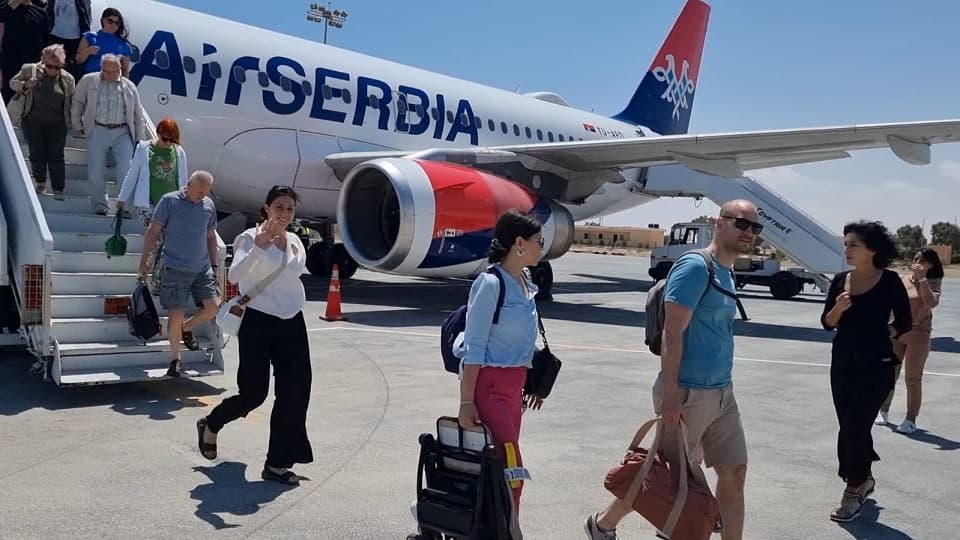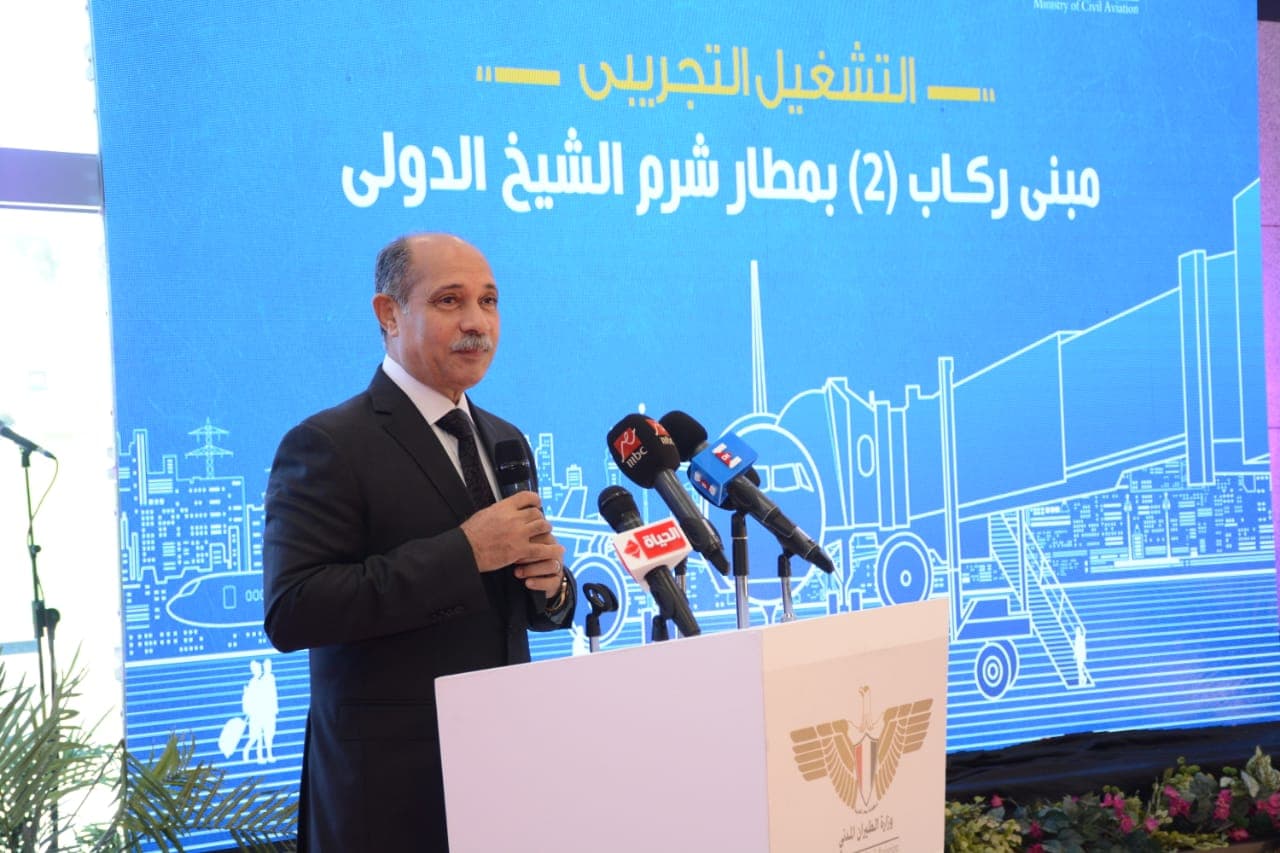
Lt. Gen. Younis Al-Masry, Minister of Civil Aviation, today witnessed the trial operation of Passenger Terminal No. (2) at Sharm El-Sheikh International Airport, following the completion of development works that included upgrading the building's efficiency and increasing its capacity to serve international and domestic flights to 9 million passengers a year, in implementation of the political leadership's directives on the importance of developing Egypt's civil aviation sector to reach the best international standards, enabling Egyptian airports to compete with the world's leading airports and boosting inbound tourist traffic to Egypt.

In his speech on the occasion, the Minister of Civil Aviation stressed that the trial operation of Passenger Terminal No. 2 at Sharm El-Sheikh International Airport comes as part of a series of projects being implemented by the Ministry of Civil Aviation to upgrade Egypt's civil aviation system, in line with the Egyptian state's Strategy 2030 and the accelerating pace of comprehensive development and the national projects implemented on the ground in the state's various sectors, including the aviation sector, which is one of the most important sources of national income. Accordingly, the Ministry of Civil Aviation has drawn up a giant expansion plan to develop the infrastructure and facilities at all Egyptian airports and raise the level of services provided to passengers, ensuring their comfort and convenience amid the growing number of travelers and the development of tourist traffic to and from the Arab Republic of Egypt.

He added that Sharm El-Sheikh Airport is one of Egypt's most important airports for attracting tourism, given the great importance of the city of Sharm El-Sheikh among tourist cities worldwide; it is therefore necessary to develop the airport constantly and continuously to accommodate the steady increase in the number of flights and the number of tourists flocking to the enchanting city from all over the world.

The Minister of Civil Aviation praised the development works carried out at Passenger Terminal No. 2 and the complete upgrade of the security system, as well as all employees at Egyptian airports for the great efforts they made to achieve these accomplishments in the sector and their keenness to bring the civil aviation system to the highest international levels. The minister also praised the continuous coordination and ongoing cooperation with all agencies operating at the airports, and commended the major role of the Interior Ministry's personnel and their honorable performance, which contributed to reaching the highest levels of security at Egyptian airports.
He stressed the integration and cooperation between the civil aviation sector and all state agencies in support of development and investment projects in various fields that contribute to driving the Egyptian economy forward.

In the presentation given by Captain Wael El-Nashar, chairman of the Egyptian Airports Company, he pointed out that the development of Passenger Terminal (2) at Sharm El-Sheikh International Airport was carried out in accordance with international standards, which helped strengthen the airport's regional and international standing, thanks to its capabilities and the high level of its systems, equipment and passenger services, and its ability to accommodate the growing number of arriving and departing travelers, in addition to increasing operational efficiency and generating significant revenues from commercial activities.

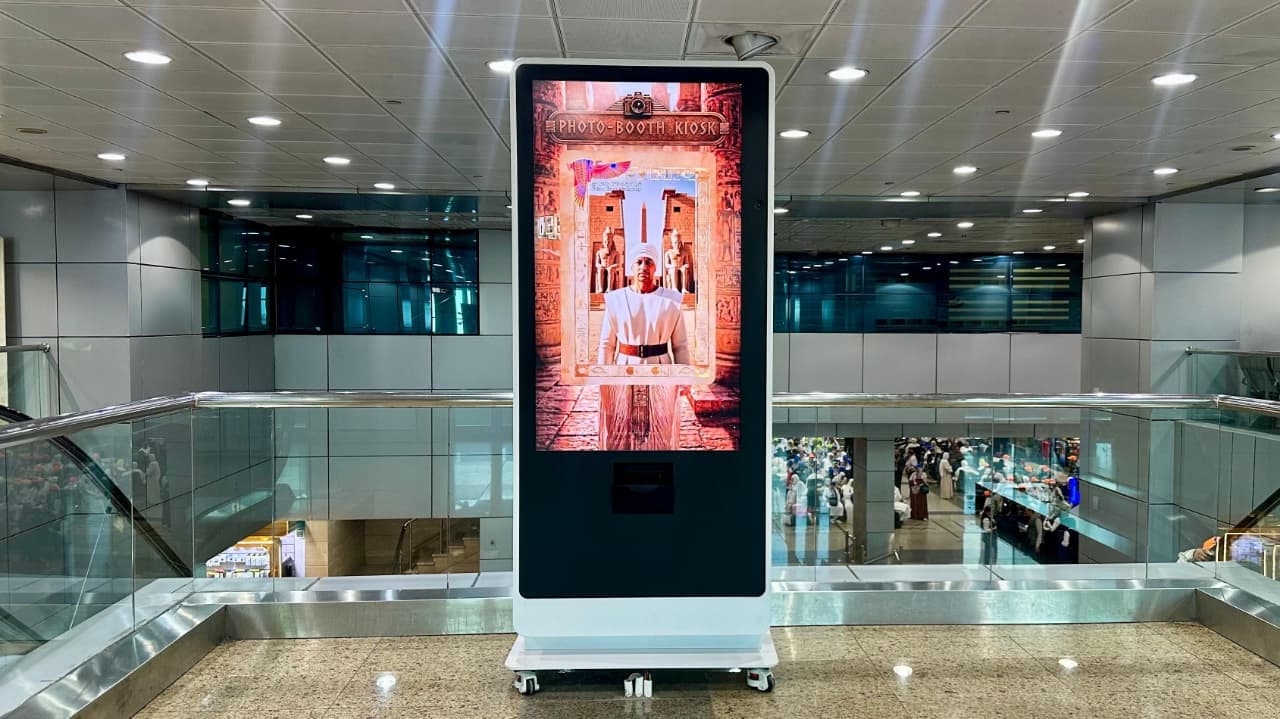
The presentation included a detailed explanation of the development works at Passenger Terminal (2) at Sharm El-Sheikh International Airport, including expansion works to increase the airport's total capacity from 7 million to 9 million passengers a year, which will be raised in the future to bring the airport's capacity to 10 million passengers a year. A security surveillance system of (209) cameras was also installed, covering the departure and arrival halls and the baggage belt area, along with an electronic door control system, the construction of a server room and the installation of (2) computed tomography (CT) scanning machines that allow high-precision three-dimensional detection (RTT) to achieve Level 3 explosives screening in line with international requirements, which helped raise the total capacity of the departure baggage belts to (3,600 bags/hour), in addition to installing information display screens in the baggage loading area and (56) flight information display screens in the international departures area.

Also installed were (2) biometric gates in the Sorting Area to serve as entry and exit points for workers to and from the airside area, and (2) ETD explosives trace detection devices were provided. The airport's automatic door systems were developed, and the automatic fire alarm network in the check-in area and the departure and arrival halls was upgraded in line with international safety and quality standards, equipped with a graphics feature to easily locate a fire and linked to the public address system in cases of evacuation, in addition to the automatic fire suppression system (FM200), which uses a gas that is clean for the environment and safe for health.

This is in addition to developing the baggage conveyor area by introducing the latest baggage conveyor system in the world and raising the total capacity of the departure belts to (1,800 bags/hour), with fast handling and secure baggage transfer.
The equipment at the check-in counters was also updated, and the old lighting system was replaced with (LED) lamps in all of the terminal's halls to save and rationalize electricity consumption.
Attending the trial operation ceremony were Captain Hassan Tohamy, Secretary General of the Ministry of Civil Aviation; Captain Ahmed Gunaina, Chairman of the Egyptian Holding Company for Airports and Air Navigation; and a number of ministry officials and aviation reporters.