El-Hefny: Offering of 11 airports to begin in early 2026 after the mechanism is determined in cooperation with the International Finance Corporation
The offering process will take 12 to 14 months to study all financial, technical and administrative aspects
Contracts with global companies specializing in airport management and operation will run for between 20 and 25 years
Egyptian airports achieved record profits in the last fiscal year (2024-2025)
Minister of Civil Aviation Dr. Sameh El-Hefny said studies are being finalized for offering 11 Egyptian airports, in cooperation with the International Finance Corporation (IFC), to global companies specializing in airport management and operation, including the form of the offering, whether as packages covering more than one airport or individually.
Speaking at a meeting with aviation reporters, El-Hefny said the mechanism being worked on includes multiple alternatives, including full management and operation or a concession, stressing that selling airports is completely ruled out. This comes as part of the state's drive to involve the private sector in developing infrastructure, raising the operational efficiency and profitability of Egyptian airports and reducing the investment burden on the state.
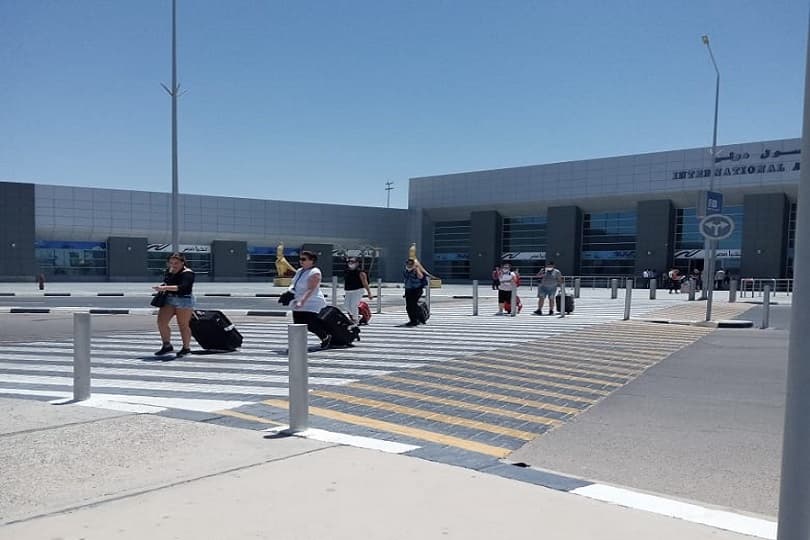
The minister revealed that Hurghada International Airport will be in the first phase of the plan to offer airports to international investment, as the largest and busiest tourist airport receiving inbound tourism to Egypt and the most active in terms of flights and passengers after Cairo International Airport, making it easier for investors to bring in new flights and achieve the targeted profits from the offering. The airport is also fully liberalized, meaning there are no restrictions on operating all types of flights, including scheduled flights by major airlines, charter, low-cost and private flights.
He added that the ministry has begun implementing a proactive initiative to attract investors amid intense regional competition in the air transport market, noting that in the coming period a request for qualifications (RFQ) will be opened to global companies specializing in airport management and operation, with evaluation to be carried out with full transparency and professionalism in cooperation with the International Finance Corporation (IFC).
He continued that the following stages will include comprehensive financial and administrative due diligence, followed by the signing of official contracts after the technical criteria are met, with terms ranging between 20 and 25 years, explaining that the full timeline for the offering procedures spans 12 to 14 months starting by 2026, while ensuring that the rights of both the state and investors are preserved.
The minister noted that the ministry is studying the best regulatory and administrative mechanisms for applying the new partnership models, so that each airport has a financial arm, a construction arm and a management and operation arm, achieving objective competition and raising the quality of services provided to passengers at hub airports, pointing out that the private sector has marketing arms to attract flights and to market and combine different products, and that it also controls operating costs.
In a related context, the Minister of Civil Aviation stressed that the Egyptian airports sector achieved record profits according to the business results indicators for the fiscal year (2024-2025), "which puts us on solid ground during the offering process."
On another note, El-Hefny said work is under way to restructure Egyptian airspace by modifying air routes to reduce flight times and transit times through Egyptian airspace, thereby lowering fuel consumption and reducing carbon emissions, noting that although financial returns would theoretically decline due to lower overflight fee revenues, it would in turn strengthen Egypt's ability to attract more transit air traffic over its airspace.
He noted that this step is part of an integrated vision to develop air traffic control and navigation infrastructure using the latest global systems and technologies, ensuring both operational efficiency and aviation safety.