Minister of Civil Aviation Dr. Sameh El-Hefny reviewed the latest developments in the state's drive to strengthen partnership with the private sector in managing, operating and developing Egyptian airports, in cooperation with the International Finance Corporation (IFC), the World Bank Group's private sector development arm. The aim is to draw on specialized technical and management expertise, raise operating efficiency, improve service levels and strengthen the competitiveness of Egyptian airports regionally and internationally.
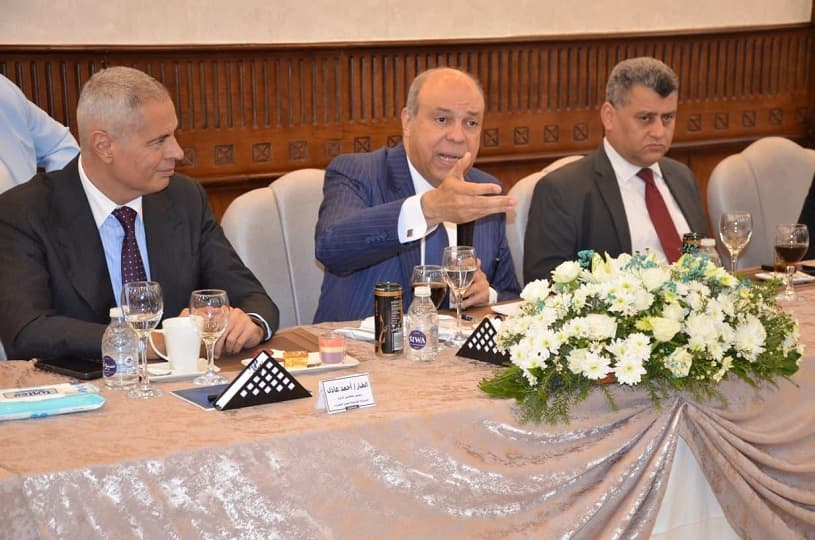
This came during a meeting between Dr. Sameh El-Hefny, Minister of Civil Aviation, and aviation sector journalists, attended by a number of civil aviation sector leaders. The wide-ranging meeting covered the latest developments in the sector, the results of Egypt's participation in the second edition of the Egypt International Airshow (EIAS 2026) in El Alamein, a number of files and projects under way at Egyptian airports and EgyptAir, and the development and expansion plans for the coming period.
The Minister of Civil Aviation said the partnership is based on achieving the best added value for the state and benefiting from specialized expertise and capabilities in management, operation and development, while fully preserving state ownership of and sovereignty over airport assets. He stressed that handing over management, operation and development does not mean selling Egyptian airports or giving up ownership, but rather provides a framework for drawing on specialized expertise in managing, operating and developing projects in line with the governing rules and legal frameworks.
On the project to manage, operate and develop Hurghada International Airport, he said it is the pilot project in this framework: 10 consortia applied for the pre-qualification stage, and after the applications and submitted documents were examined against the set conditions and criteria, 7 consortia were qualified to move to the next stage of the tender process.
He added that the next stage involves issuing the request for proposals (RFP) documents to the qualified consortia and setting the timetable and mechanisms for submitting bids, ahead of selecting the winning bid and completing the tender and award procedures in line with the governing rules and procedures.
El-Hefny said the term for handing airport management and operation to the private sector is targeted at about 30 years, after completing the necessary procedures and approvals, including the approval of the House of Representatives, giving the winning consortium an appropriate period to implement its development plans and achieve the targeted return according to the nature of each project and the size of the required investments.
He said the winning consortium for managing and operating the airports is expected to be announced about 6 to 8 months after the end of the tender documents stage, once the necessary technical, financial and legal studies and procedures are completed, followed by handover procedures and the start of work under the contract.
The minister stressed that private sector involvement in managing and operating airports does not mean laying off current staff; rather, it aims to retain and develop them through retraining, requalification and upskilling to meet modern operating requirements, adding that employees are a core element and a safety valve for the civil aviation sector.
He explained that the ministry is studying the possibility of dividing the airports to be offered into more than one package, allowing each package to be offered separately under mechanisms that balance the nature of the airports with their growth and operating prospects, noting that this approach is in line with previous international practice in airport tenders, both for Egyptian airports and for a number of regional and international airports.
The meeting also reviewed the plan to develop Egyptian airports and increase their capacity, led by Cairo International Airport, as well as development projects at Sphinx, El Alamein and Capital international airports, expanding terminals and raising their capacity by up to about 5 million passengers a year, in line with the Egyptian state's strategy of bringing the total capacity of Egyptian airports to nearly 100 million passengers a year.
He stressed the importance of integrating airport development projects with other transport networks, including rapid transit and electric rail projects, strengthening links between airports, tourist destinations and new cities, supporting the concept of multimodal transport, and offering passengers a smoother, easier experience from the moment they arrive at the airport until they reach their final destination.