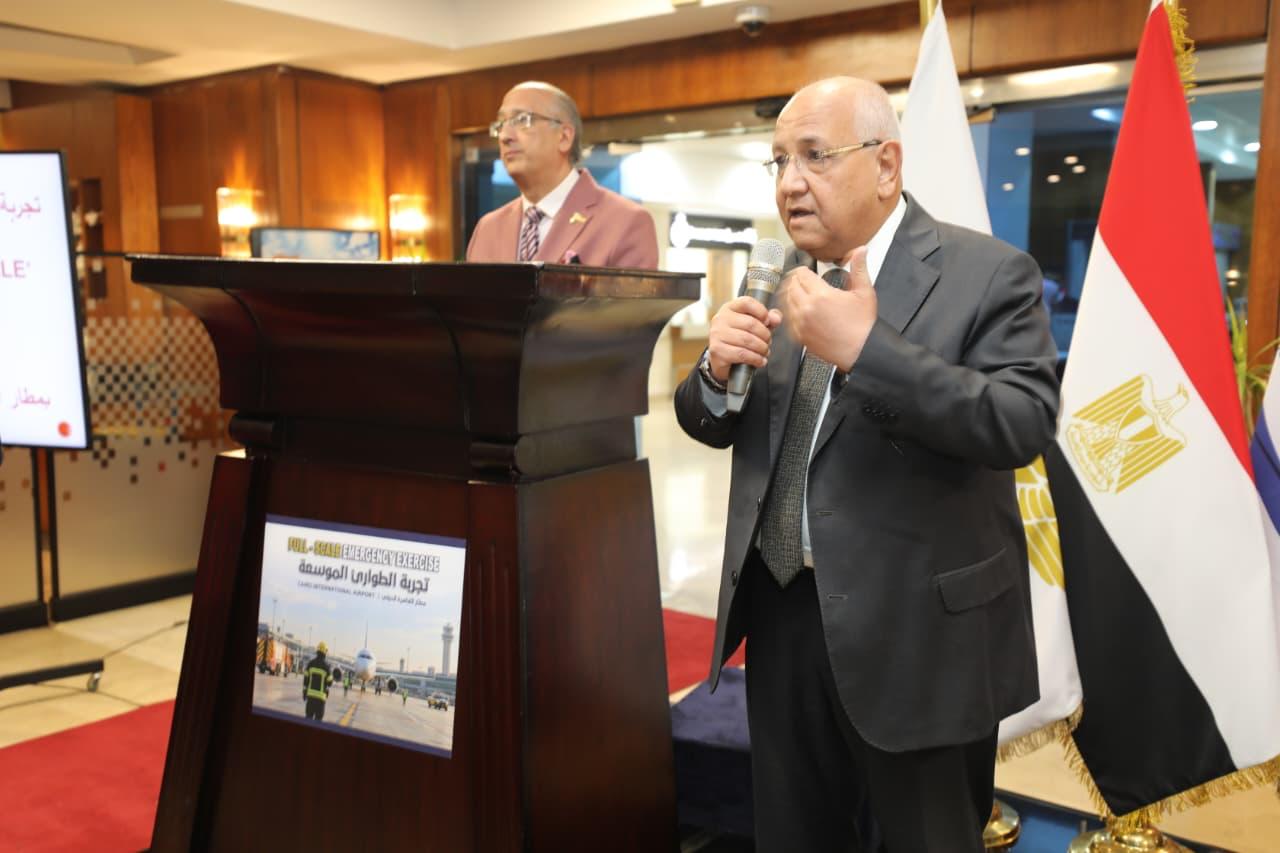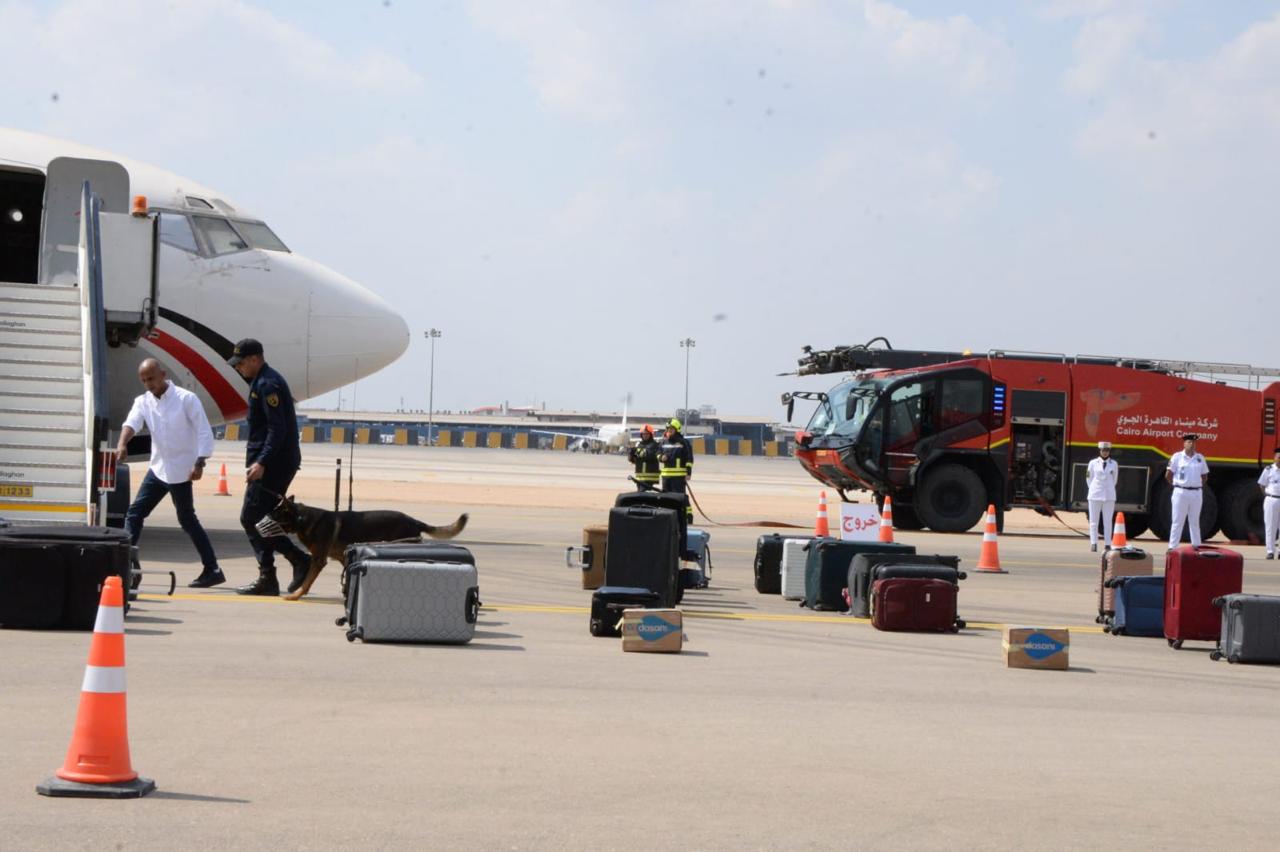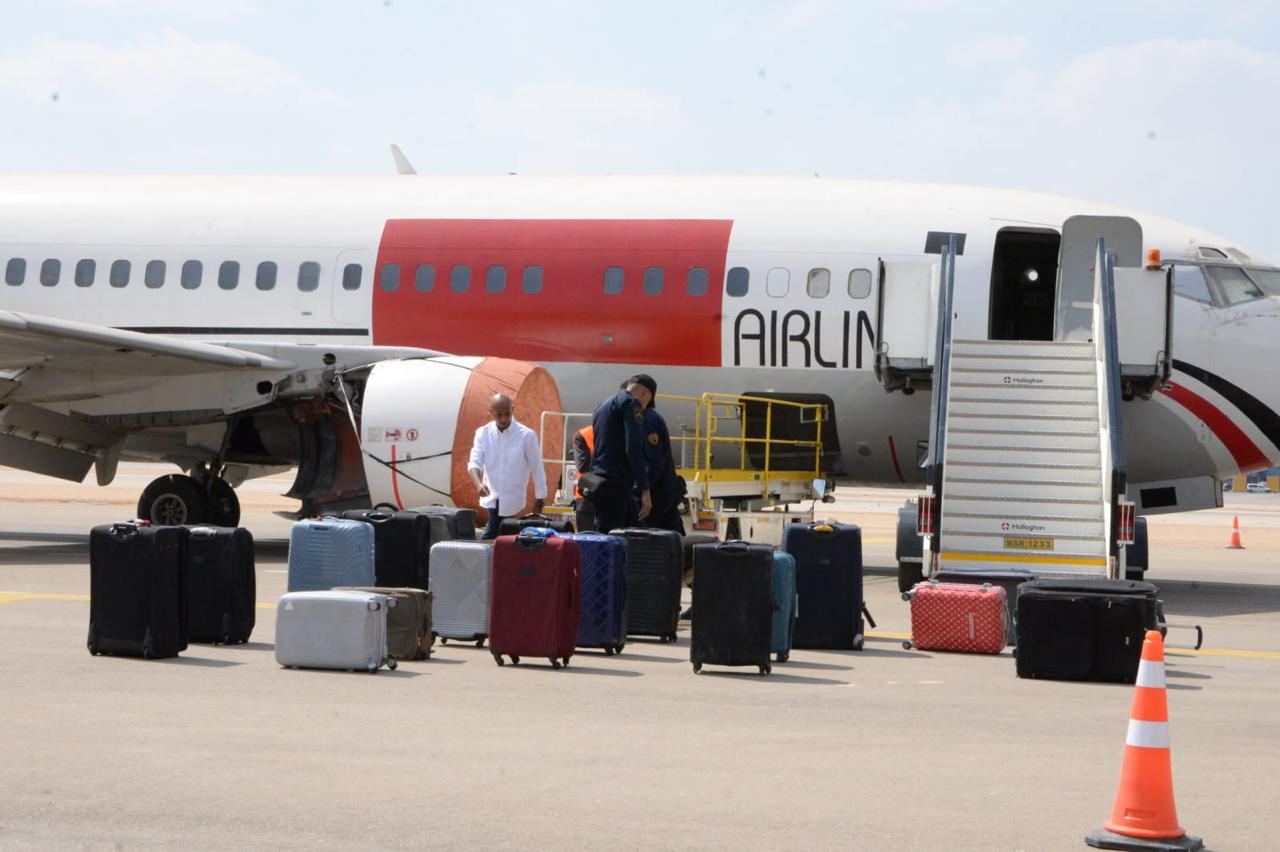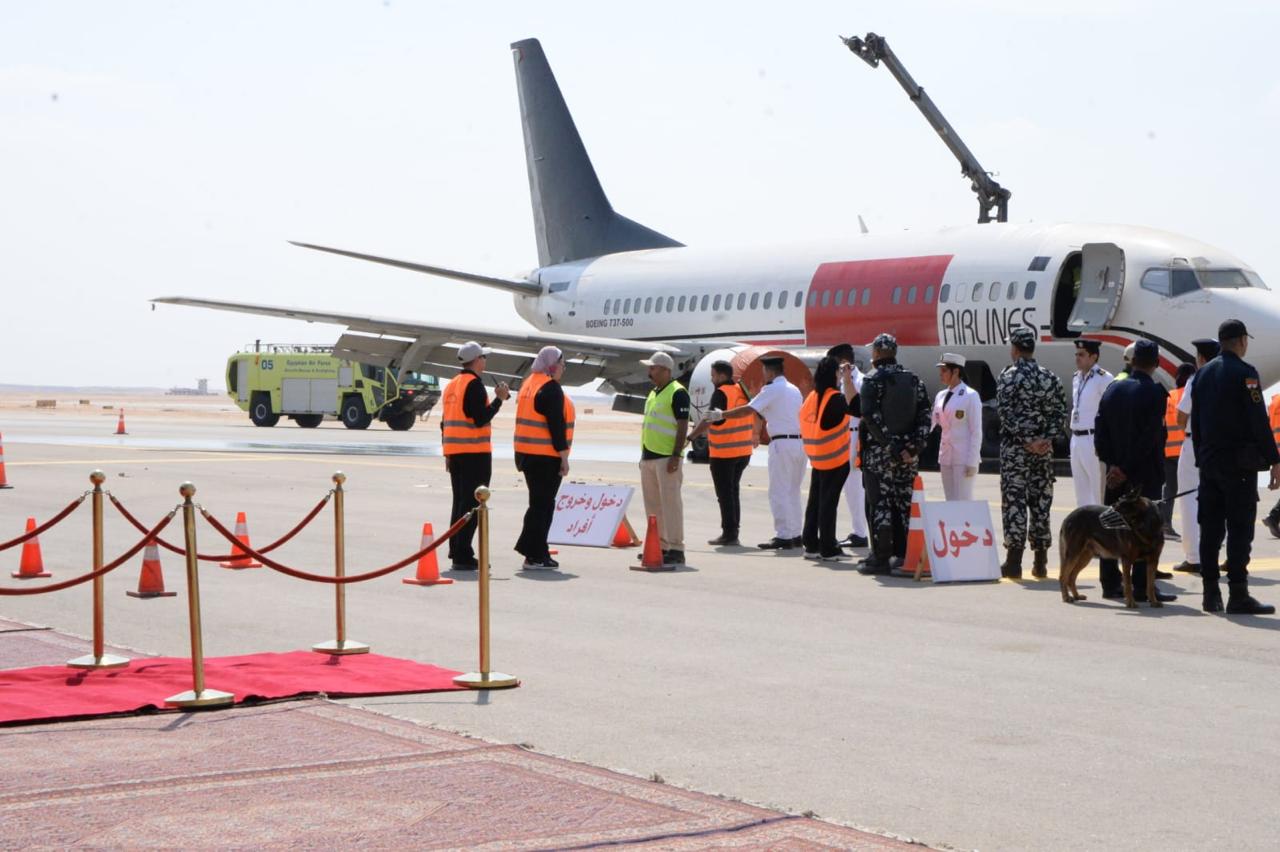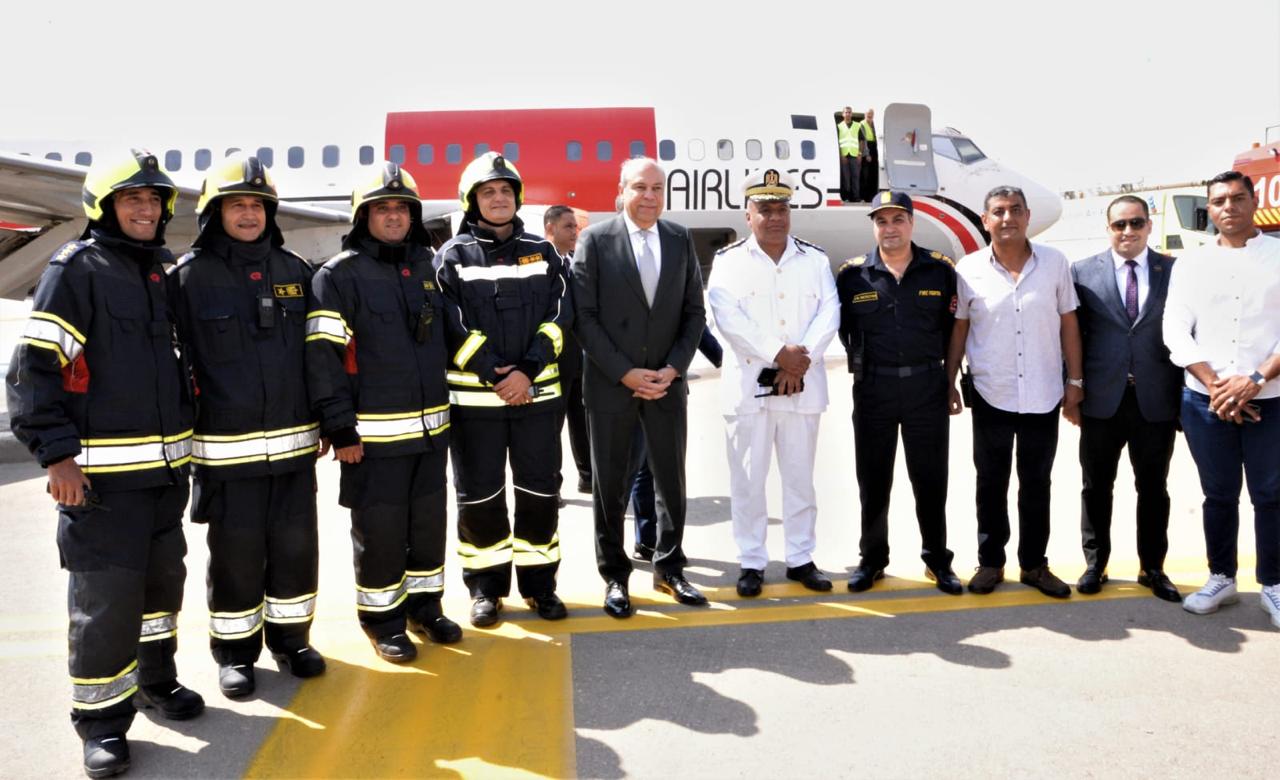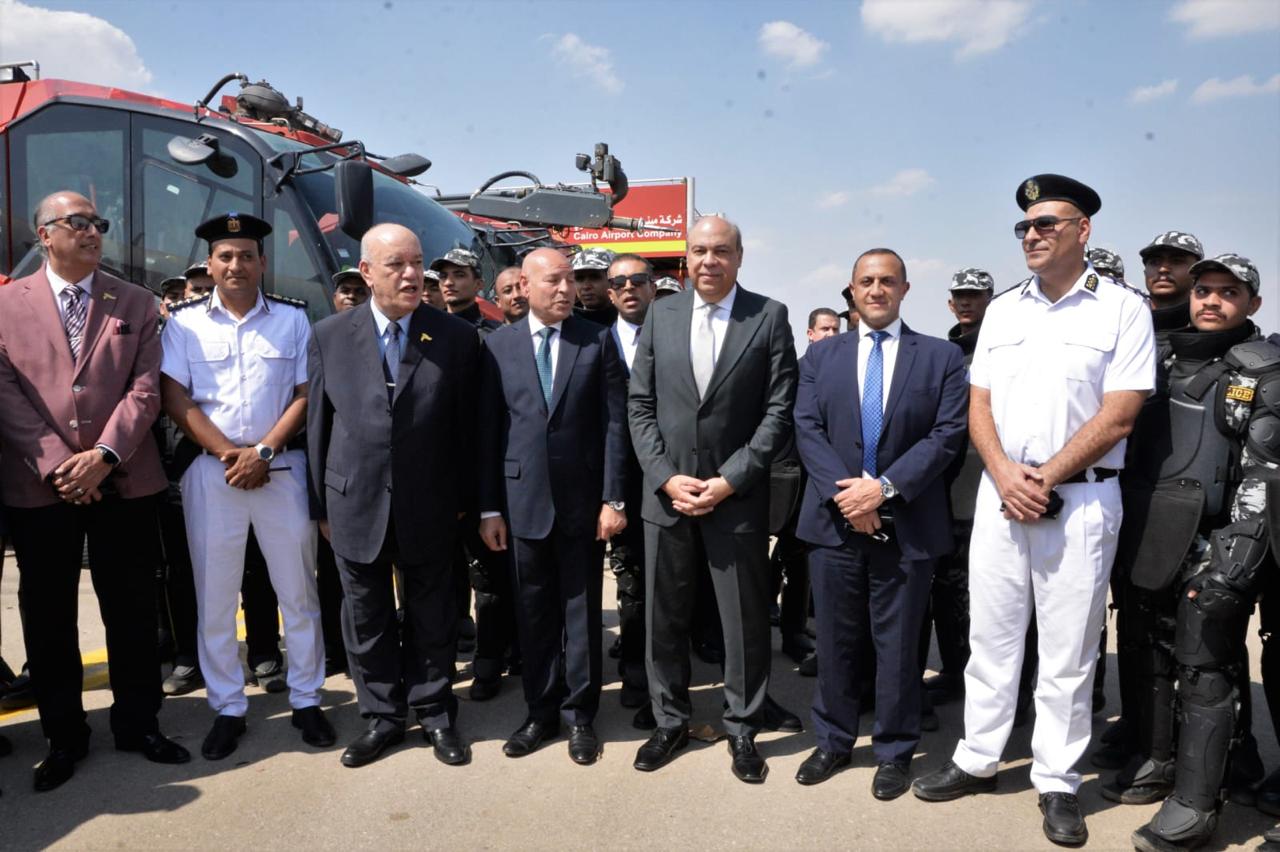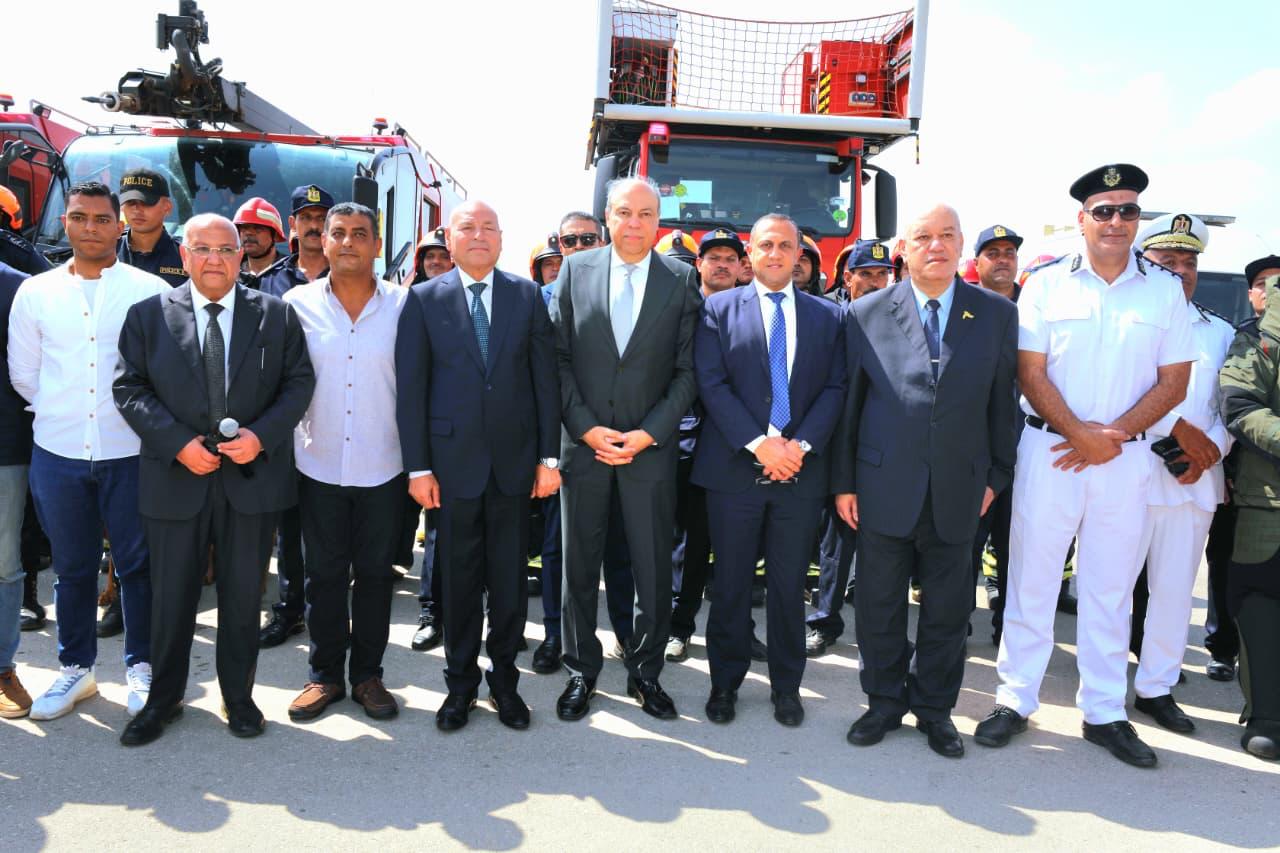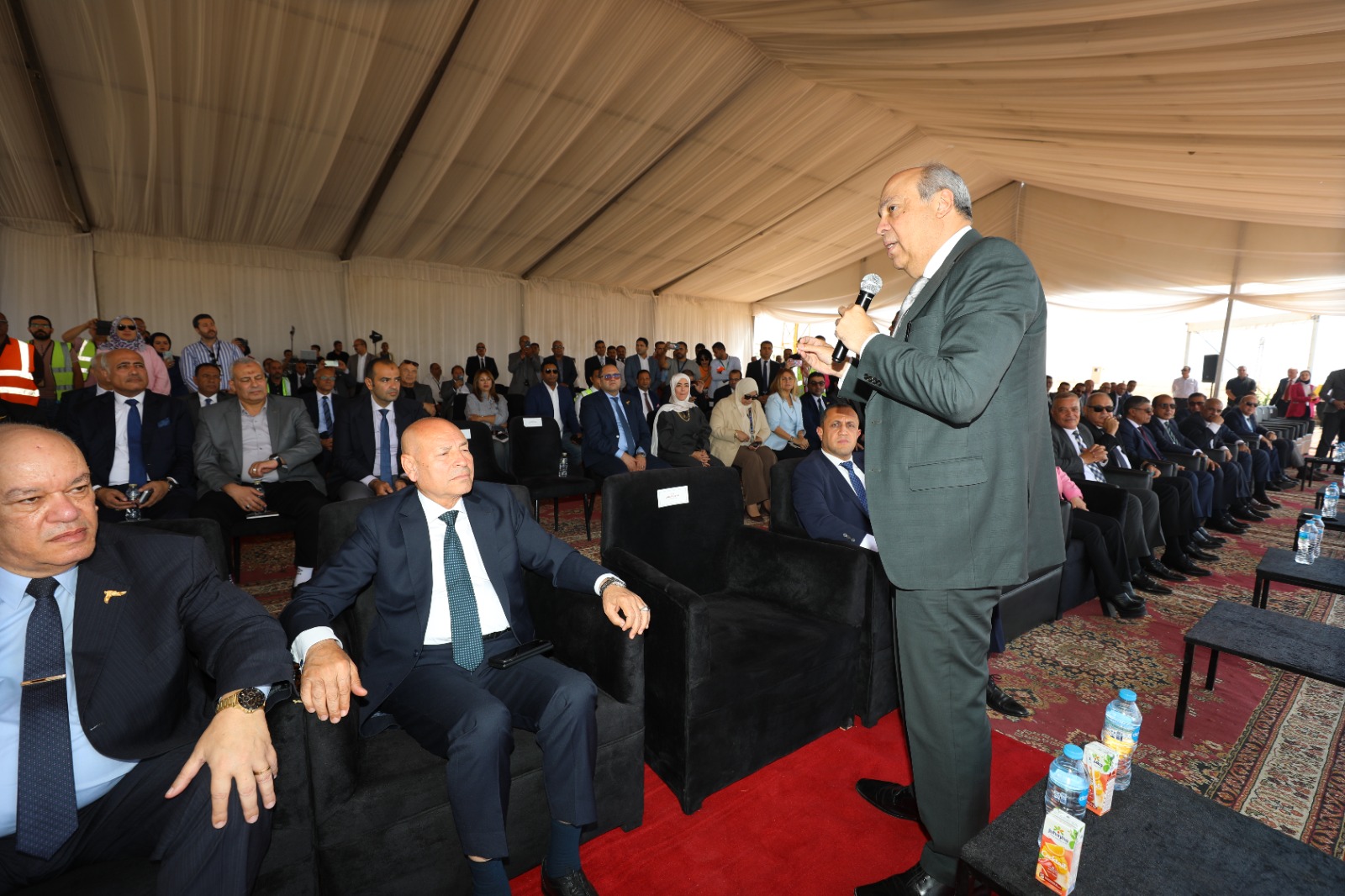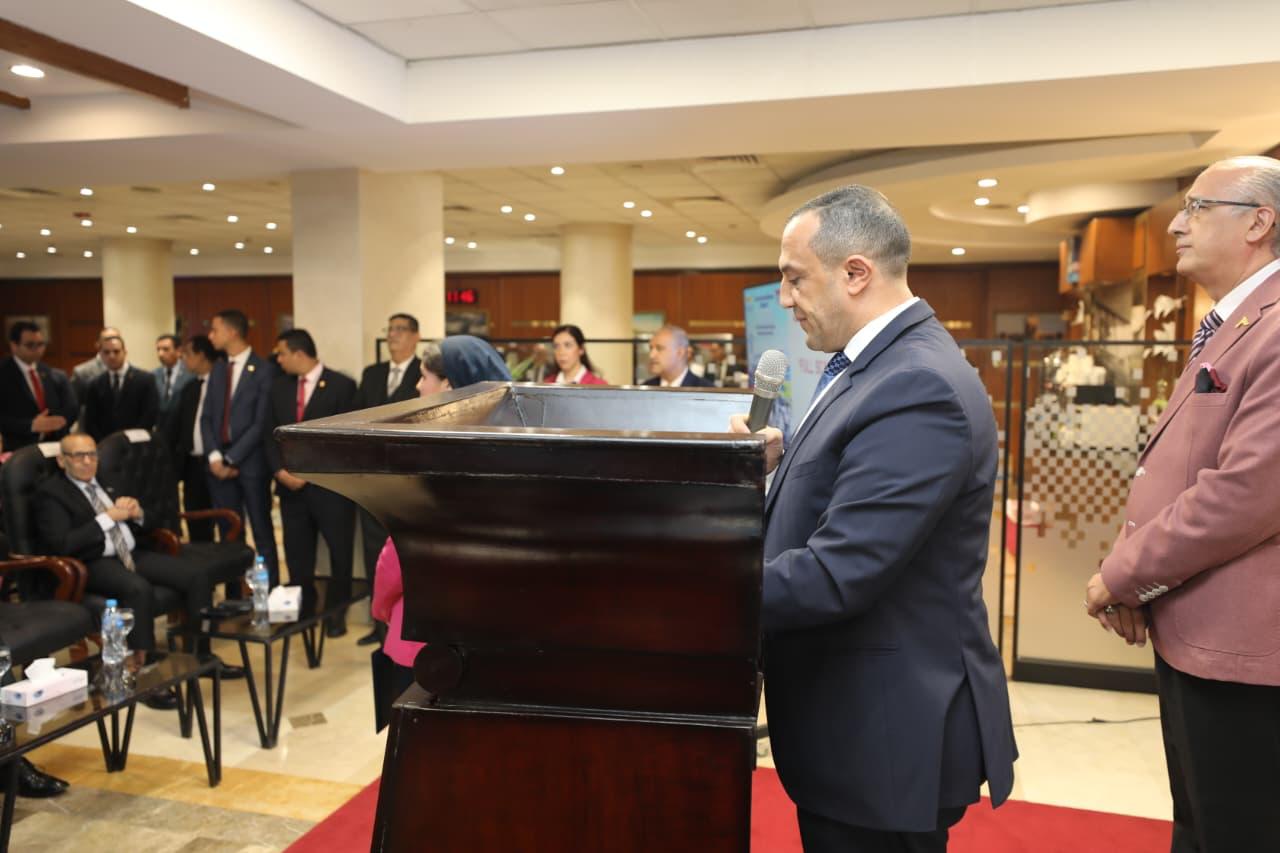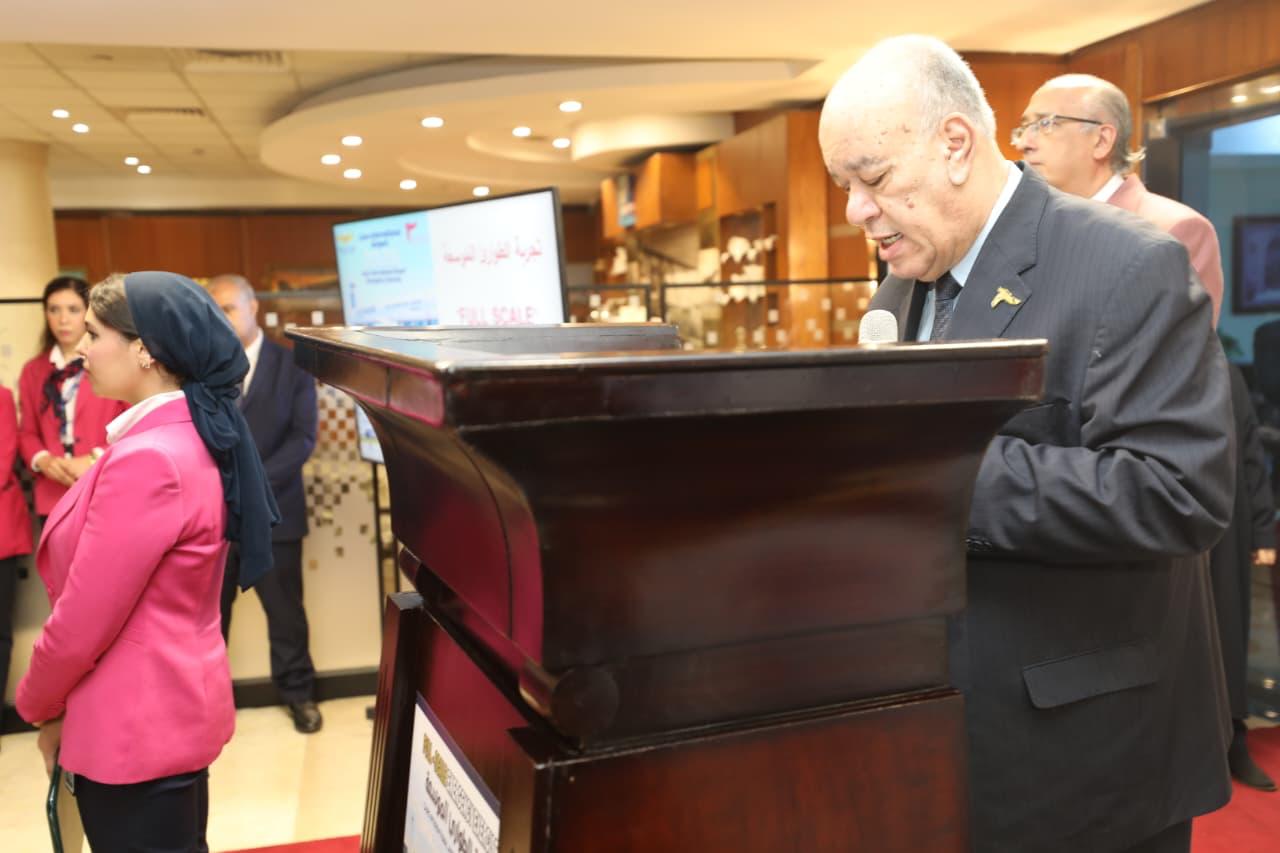
Civil Aviation Minister Dr. Sameh El-Hefny and Cairo Governor Dr. Ibrahim Saber attended a full-scale emergency exercise conducted by Cairo Airport Company at Cairo International Airport. Implemented under ICAO requirements and Egyptian Civil Aviation Authority instructions, it was described as the first of its kind at Egyptian airports, combining security and operational scenarios with broad stakeholder participation.
Captain Gamal Abdel Salam El-Gendy, adviser to the company chairman and head of operations, presented preparations, objectives, the simulated scenario, participants’ responsibilities and procedures for each phase.
In the simulation, air traffic control received a report from the captain of a Boeing 737 on an international flight crossing Egyptian airspace about 50 miles from Cairo. The airline had been notified of a bomb in the baggage hold.
The scenario involved panic onboard after a passenger overheard cabin crew discussing the report. The captain requested an emergency landing at Cairo with 100 passengers and five crew members.
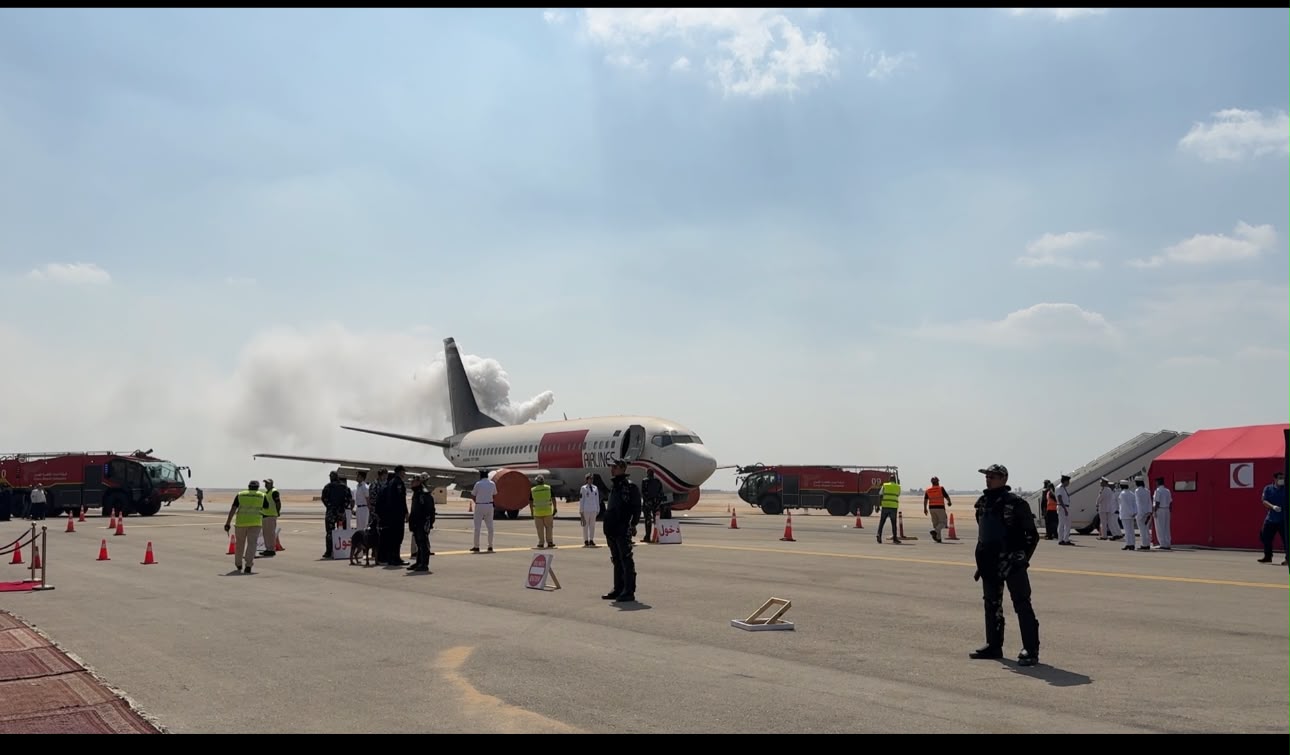
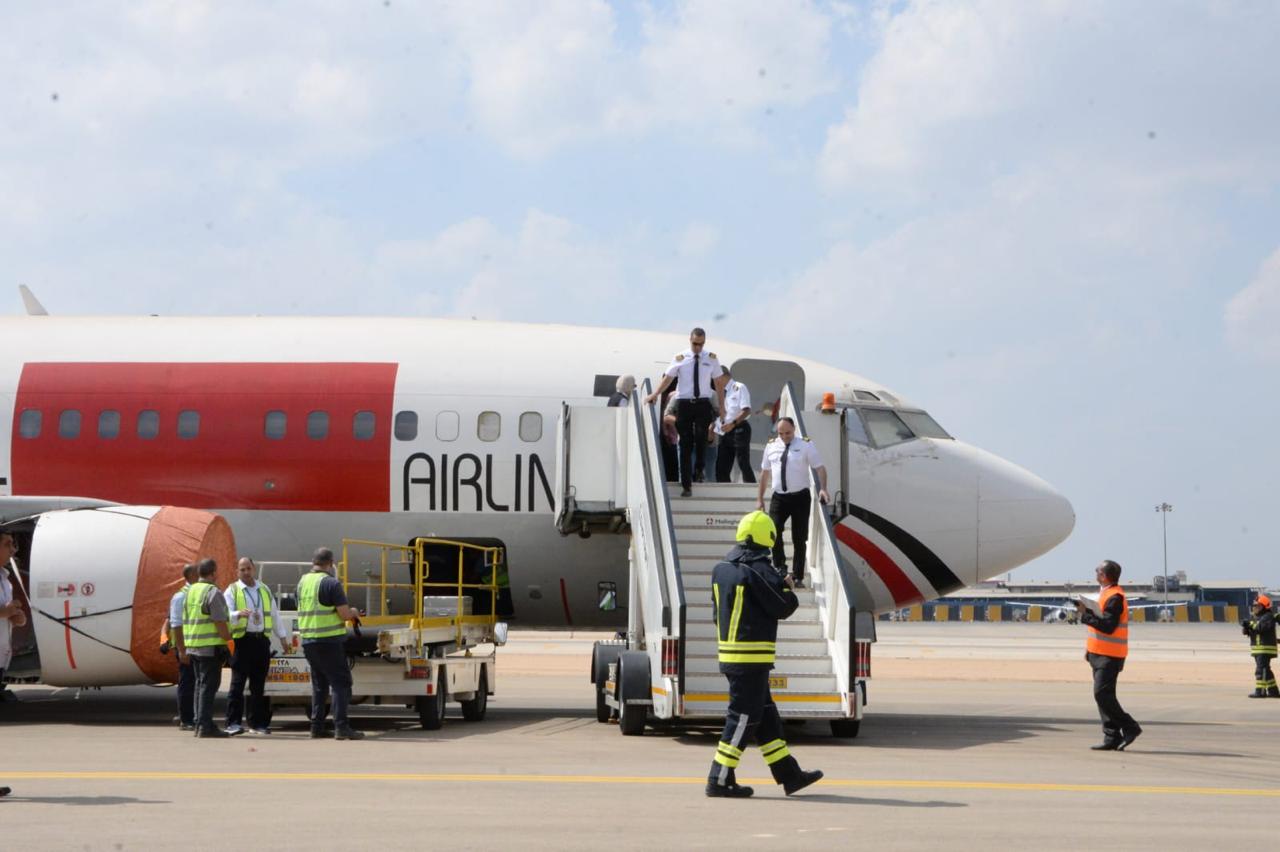
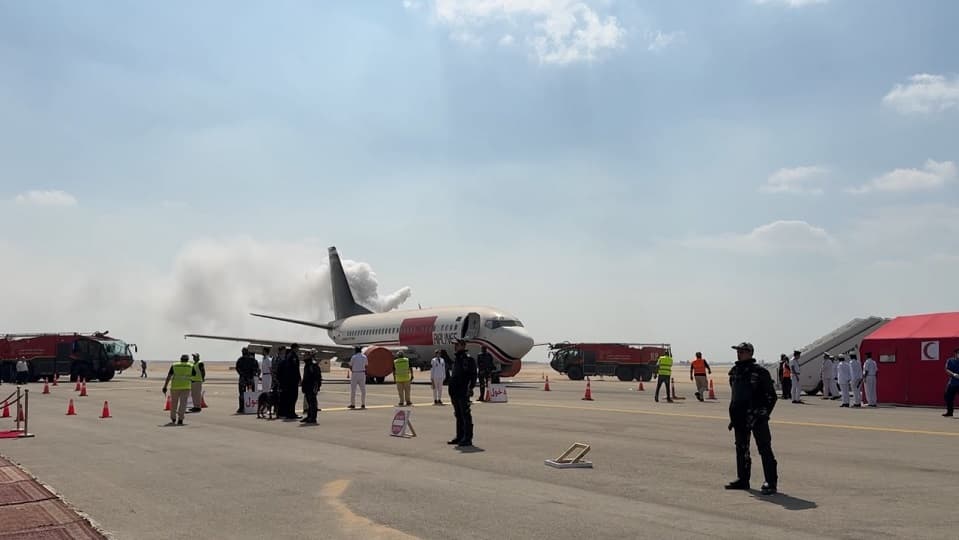
After landing on runway R05, the aircraft was directed to the H.J area, accompanied by a follow-me vehicle and Civil Protection vehicles. Teams secured the aircraft and surrounding area.
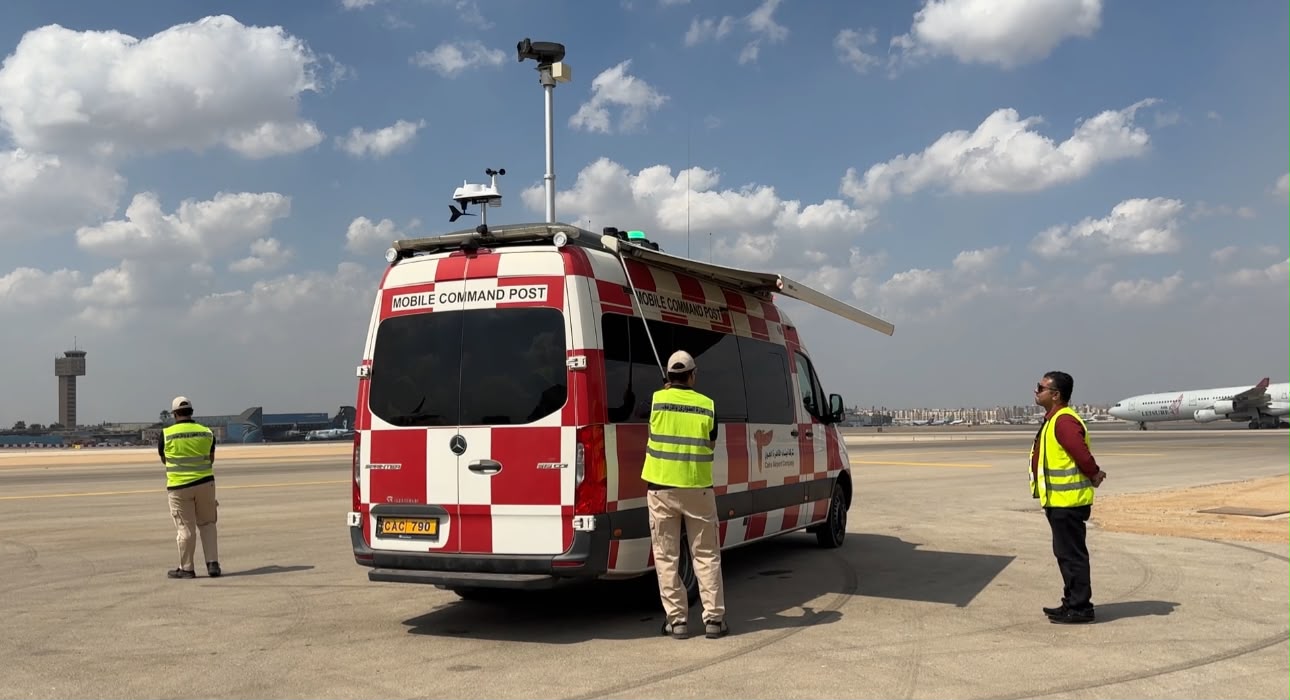
Once the report was confirmed within the exercise, Civil Protection and other relevant authorities were notified. A mobile command vehicle was deployed, using onboard cameras to relay live developments to the crisis management room and support rapid information flow to decision-makers.
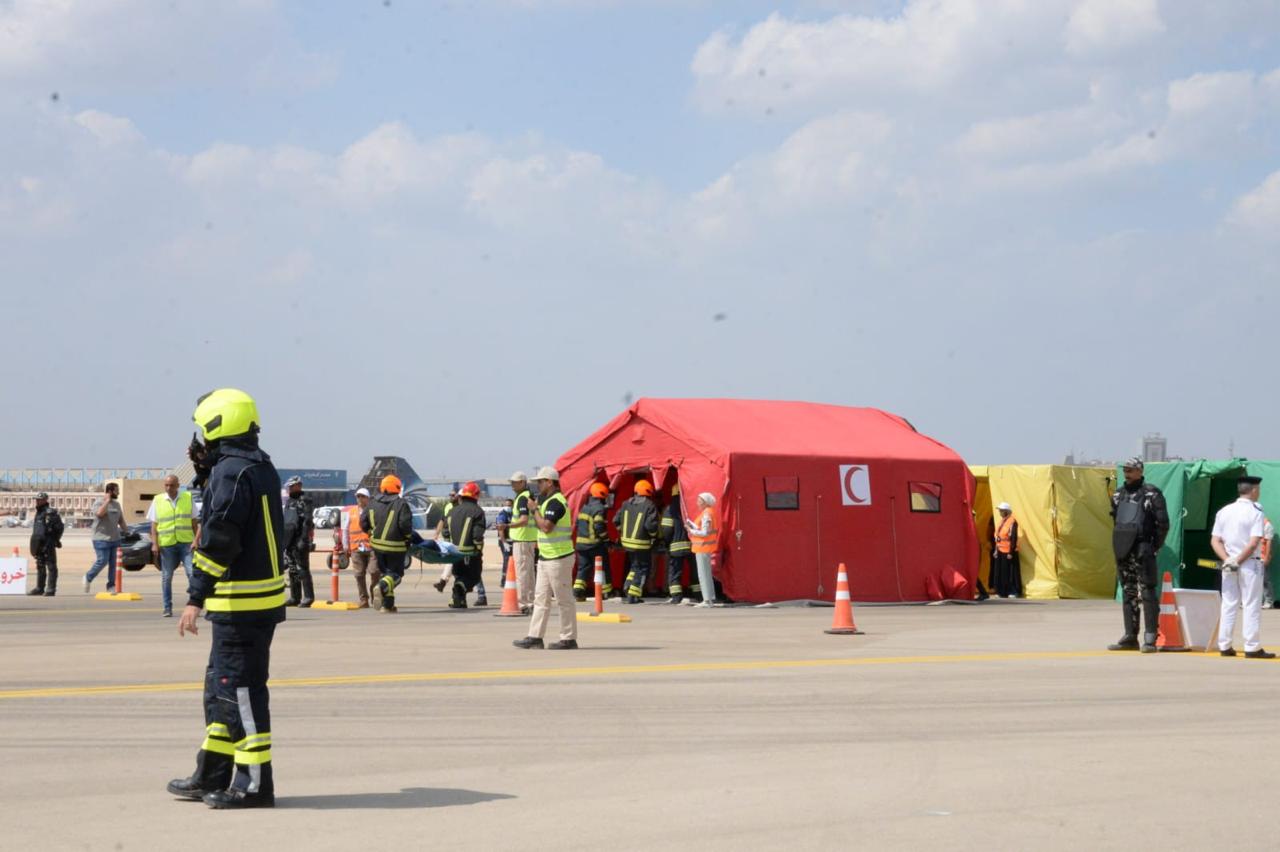
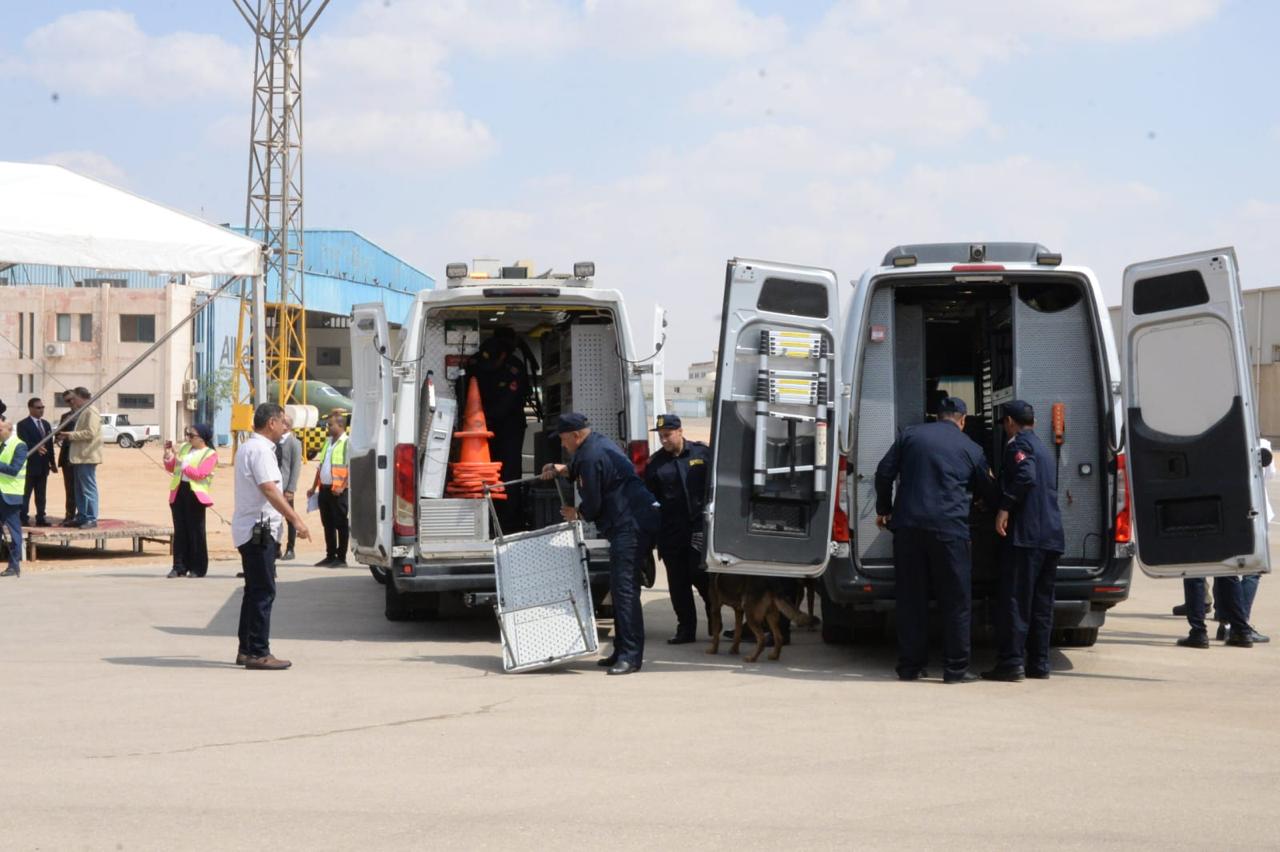
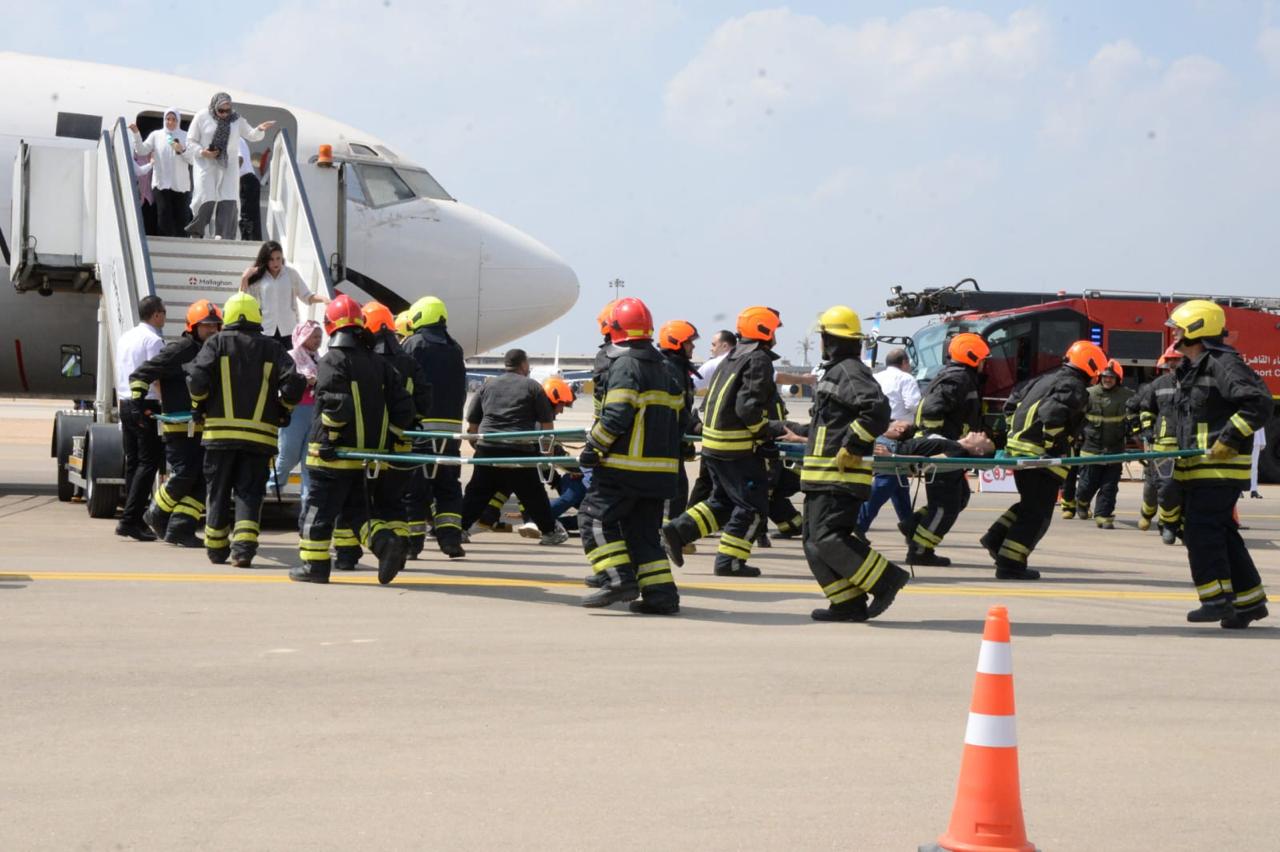
Ambulance, explosives, Civil Protection and rescue vehicles arrived. Teams erected tents and established a security cordon, while EgyptAir Ground Services supplied equipment to support passenger disembarkation and baggage removal.
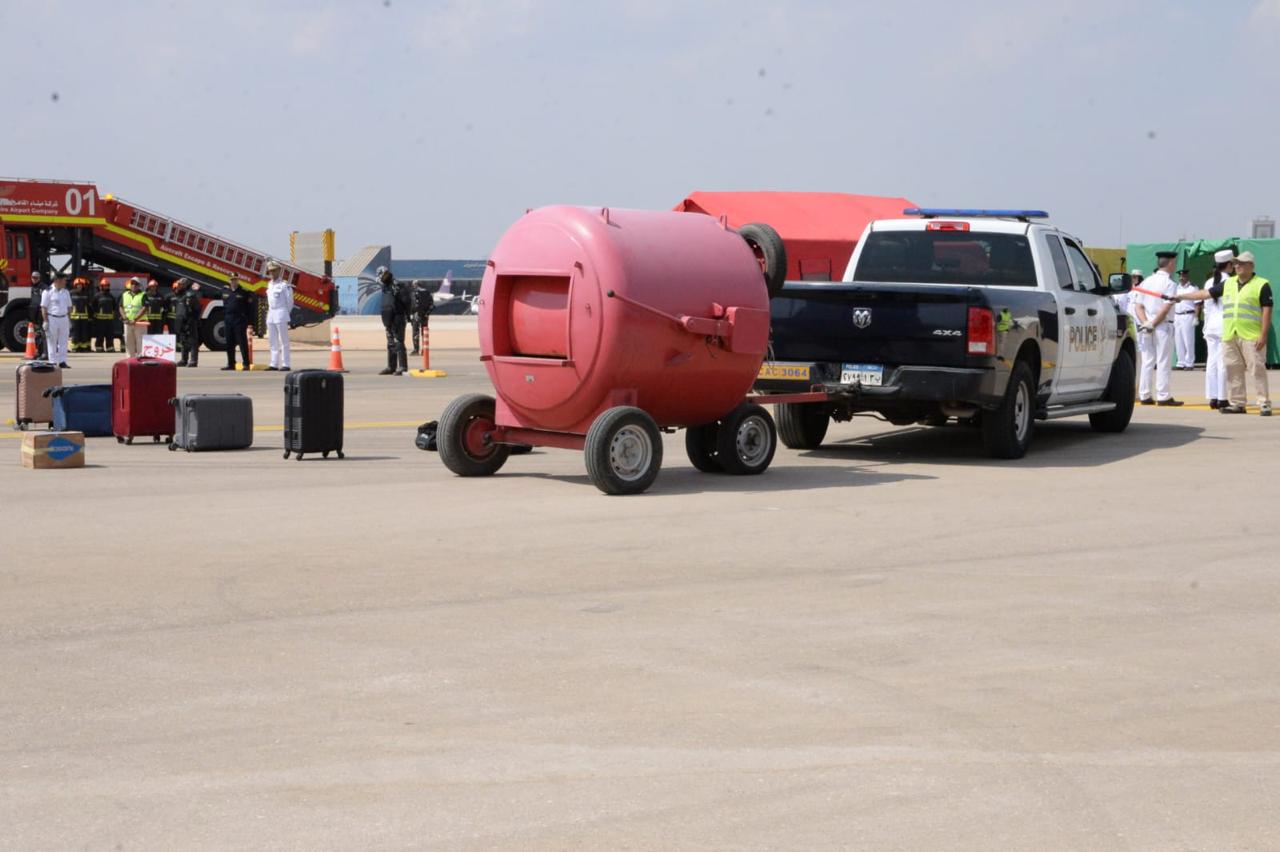
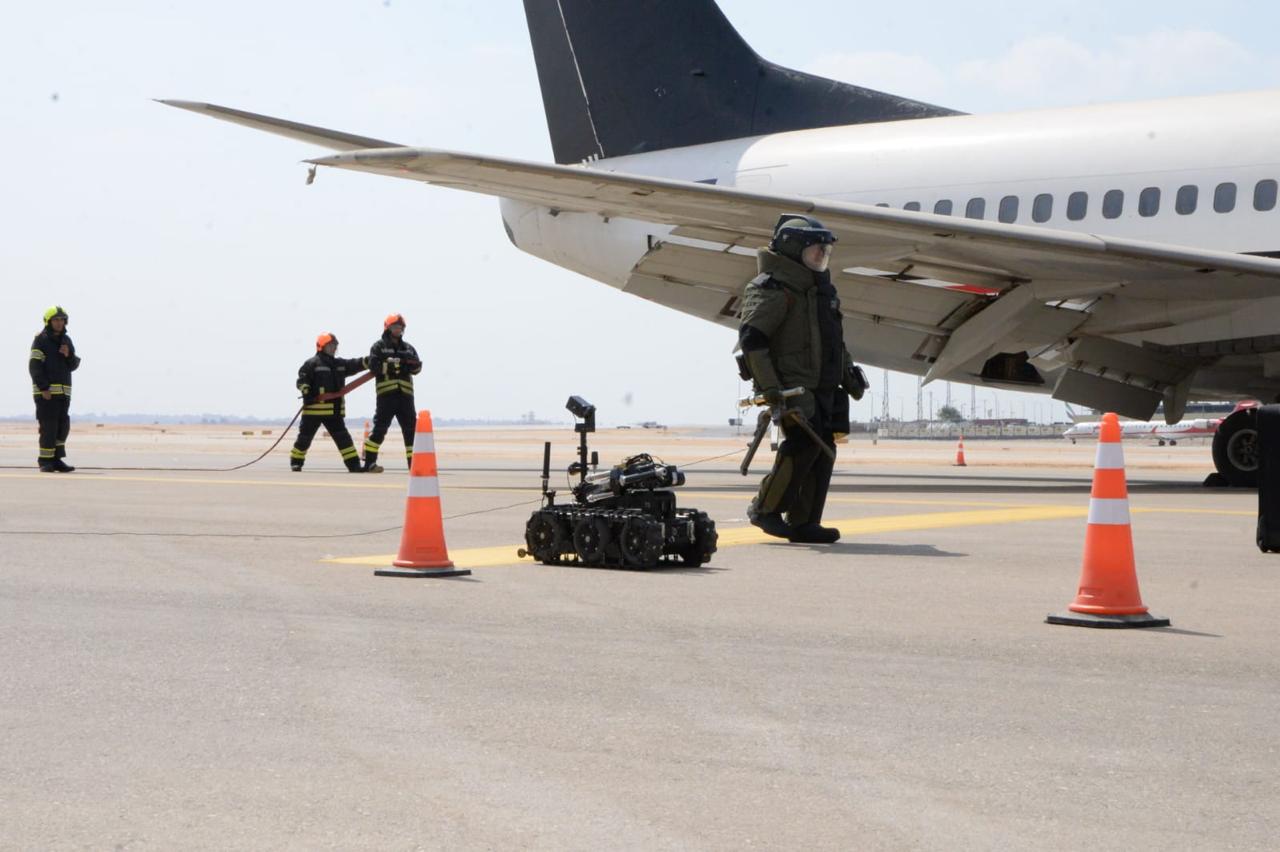
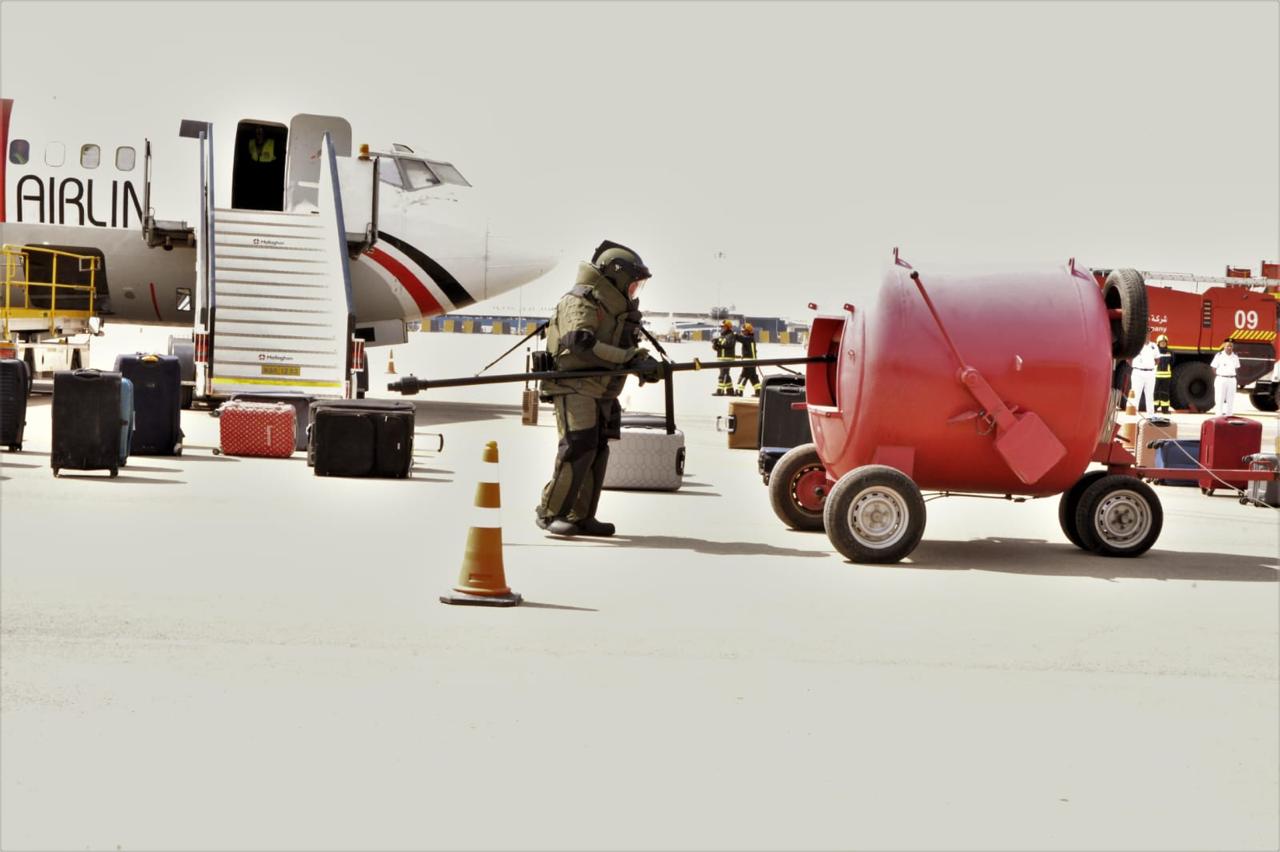
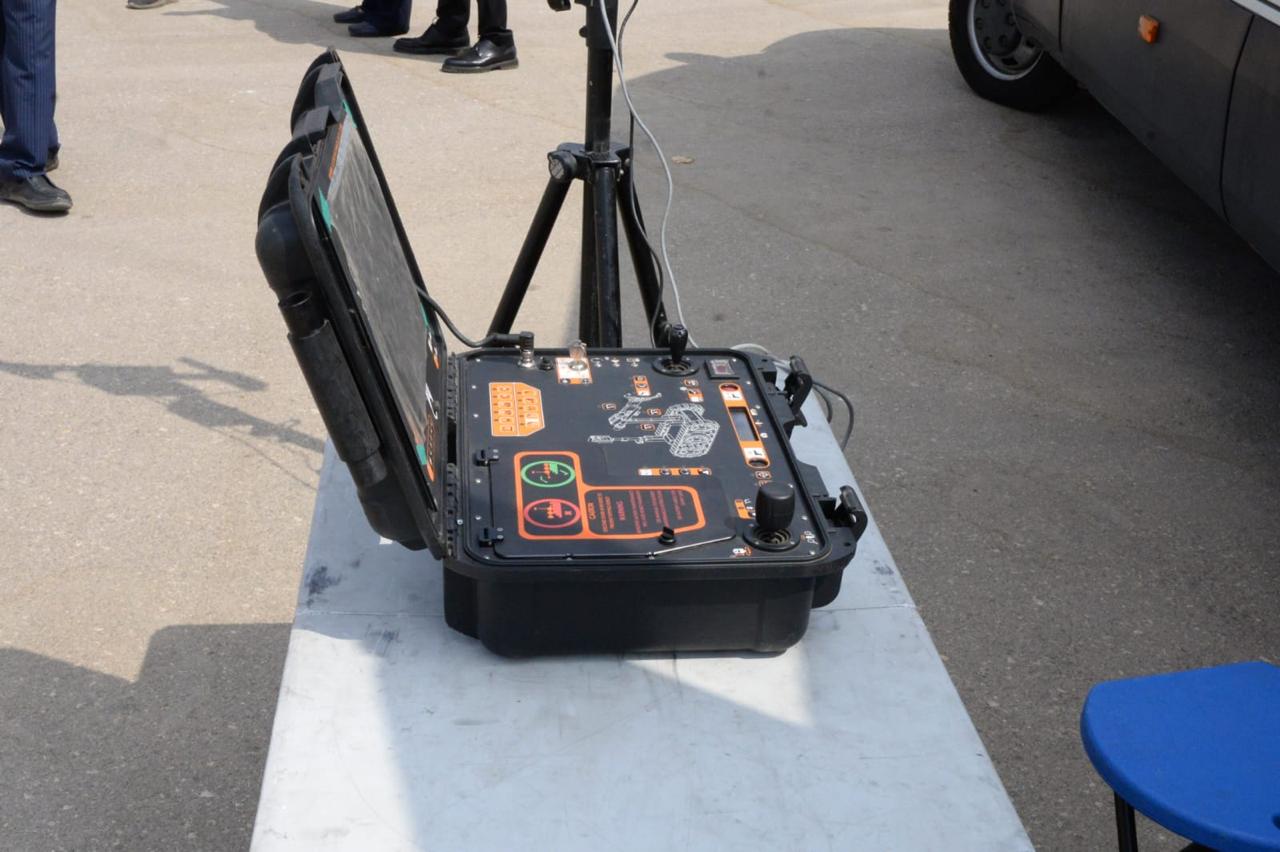
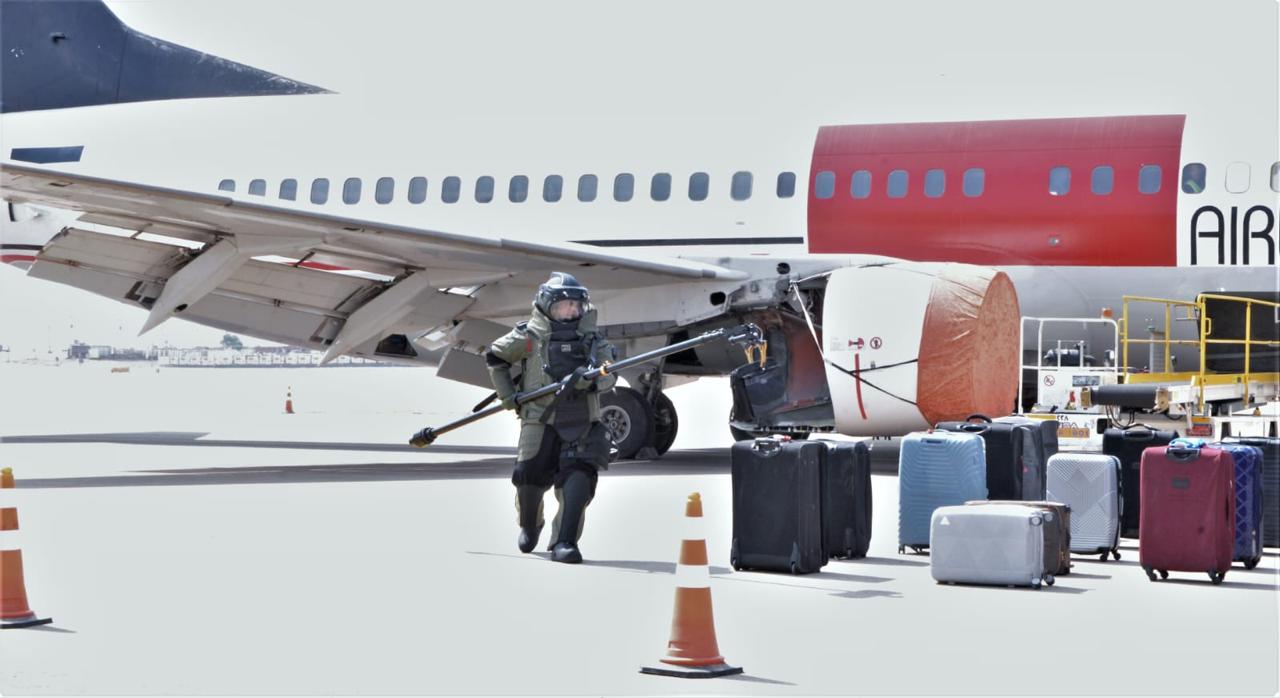
The simulated bomb threat response included securing a suspicious object, placing it in a blast-resistant containment vessel and moving it to a safe area outside the airport. During robotic inspection, a device was identified inside a bag and dealt with remotely using a water disruptor under approved explosives-unit procedures.
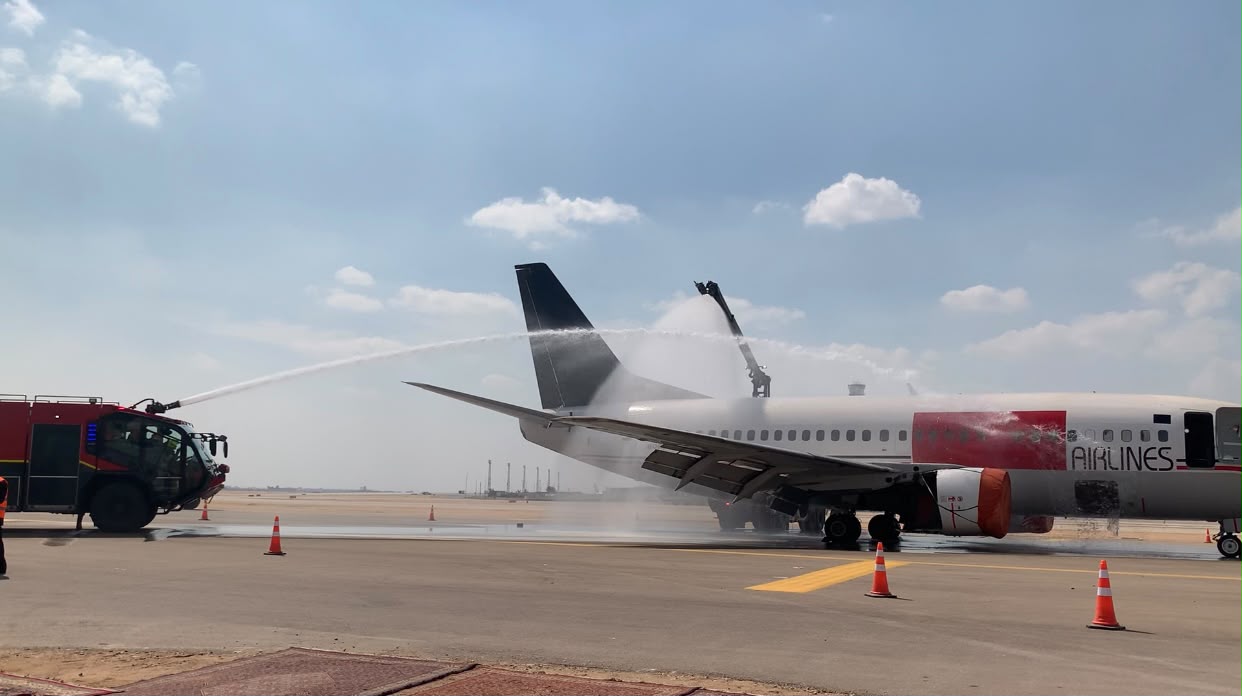
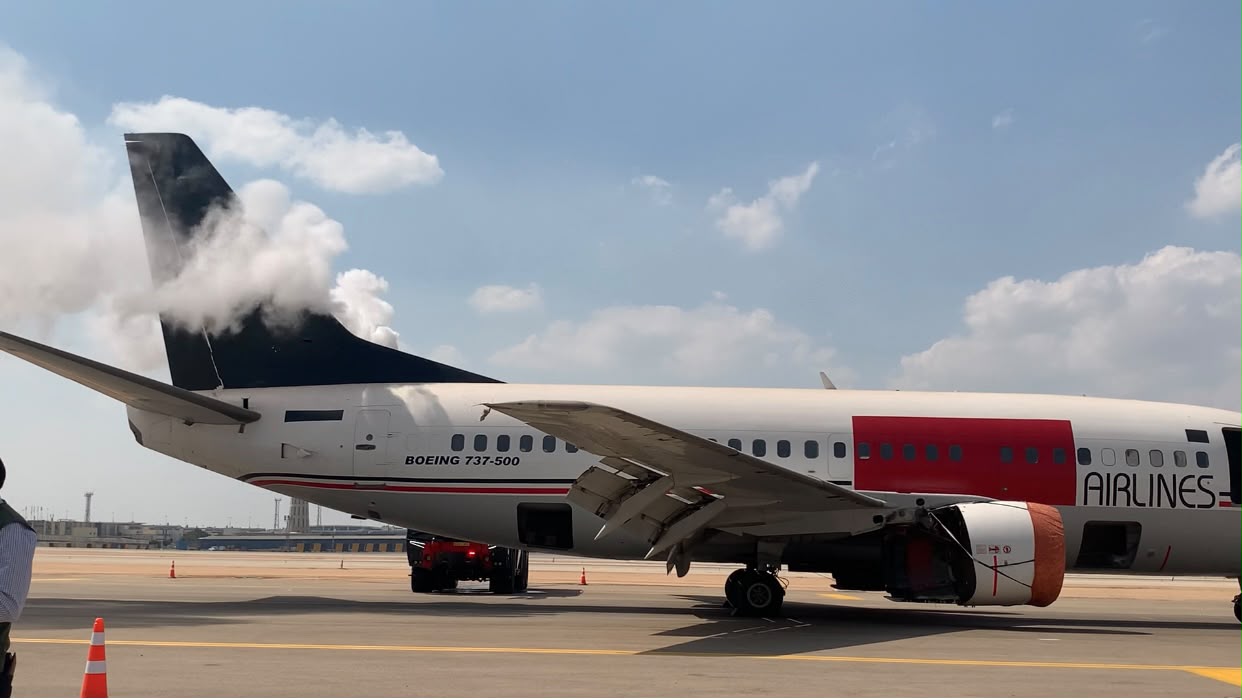
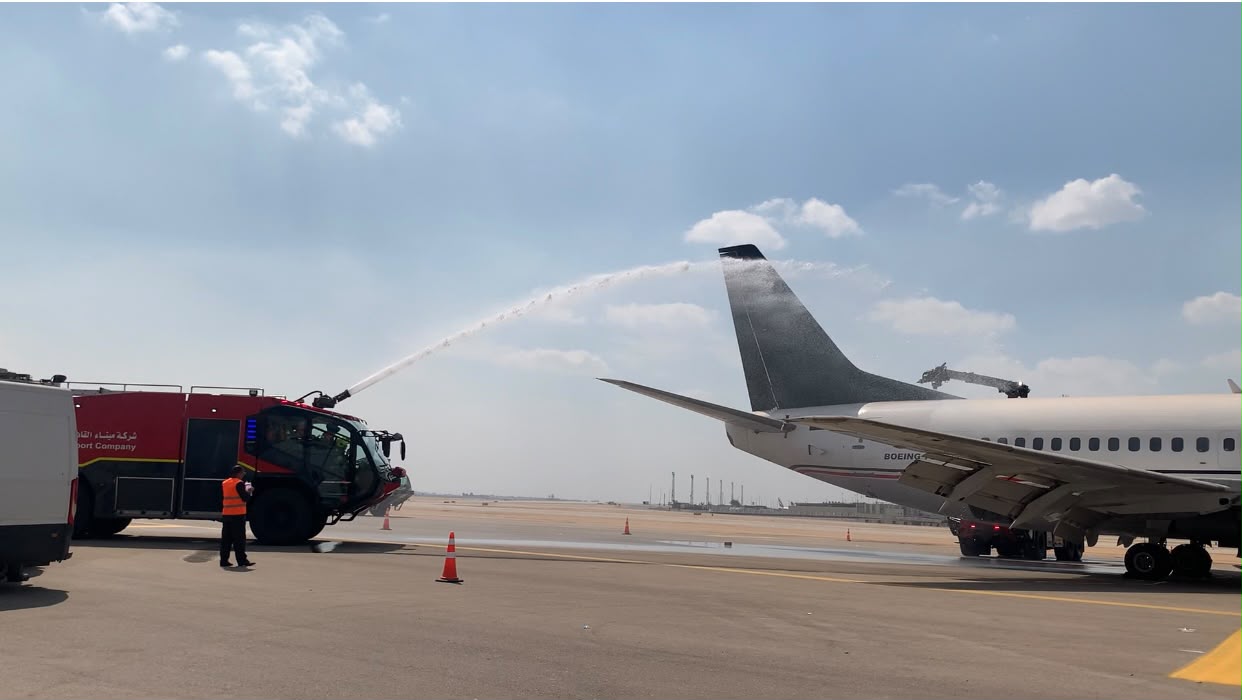
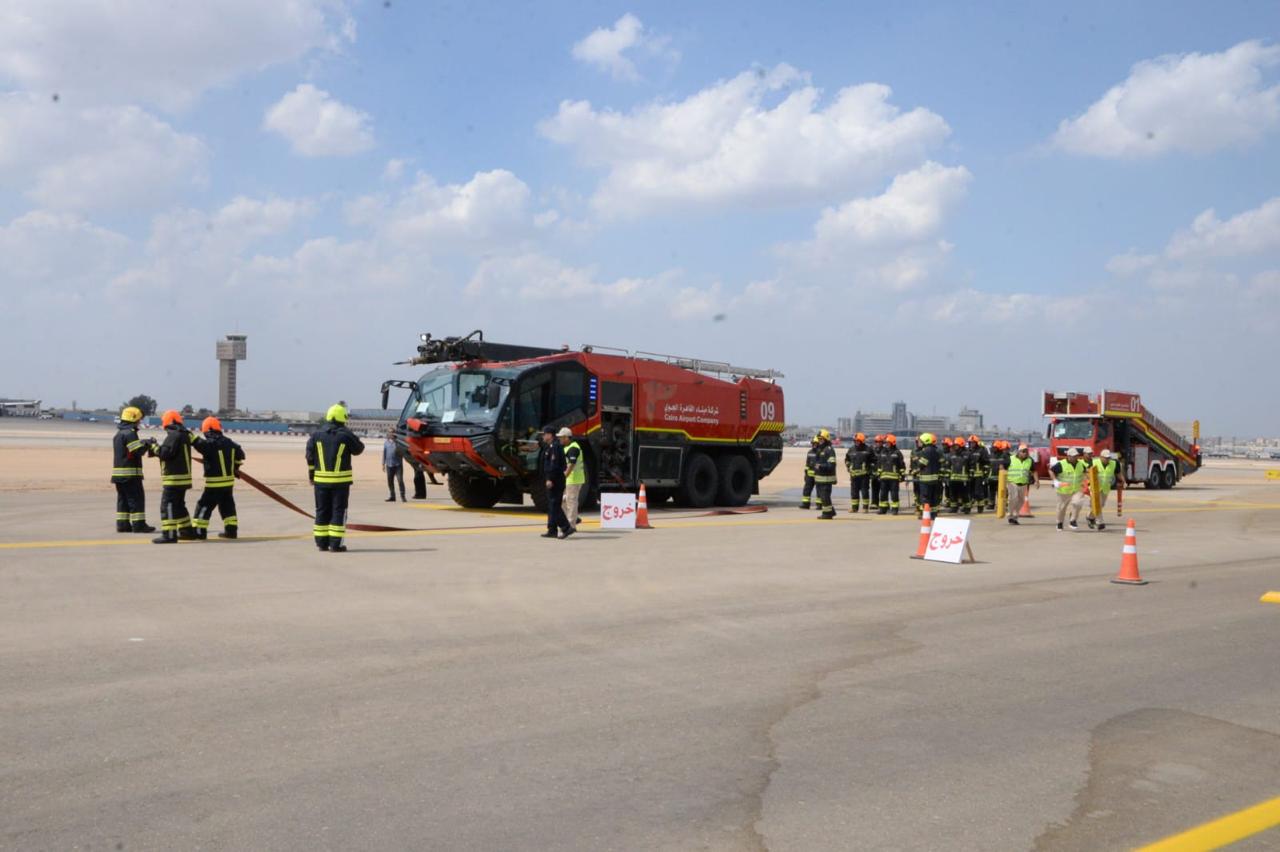
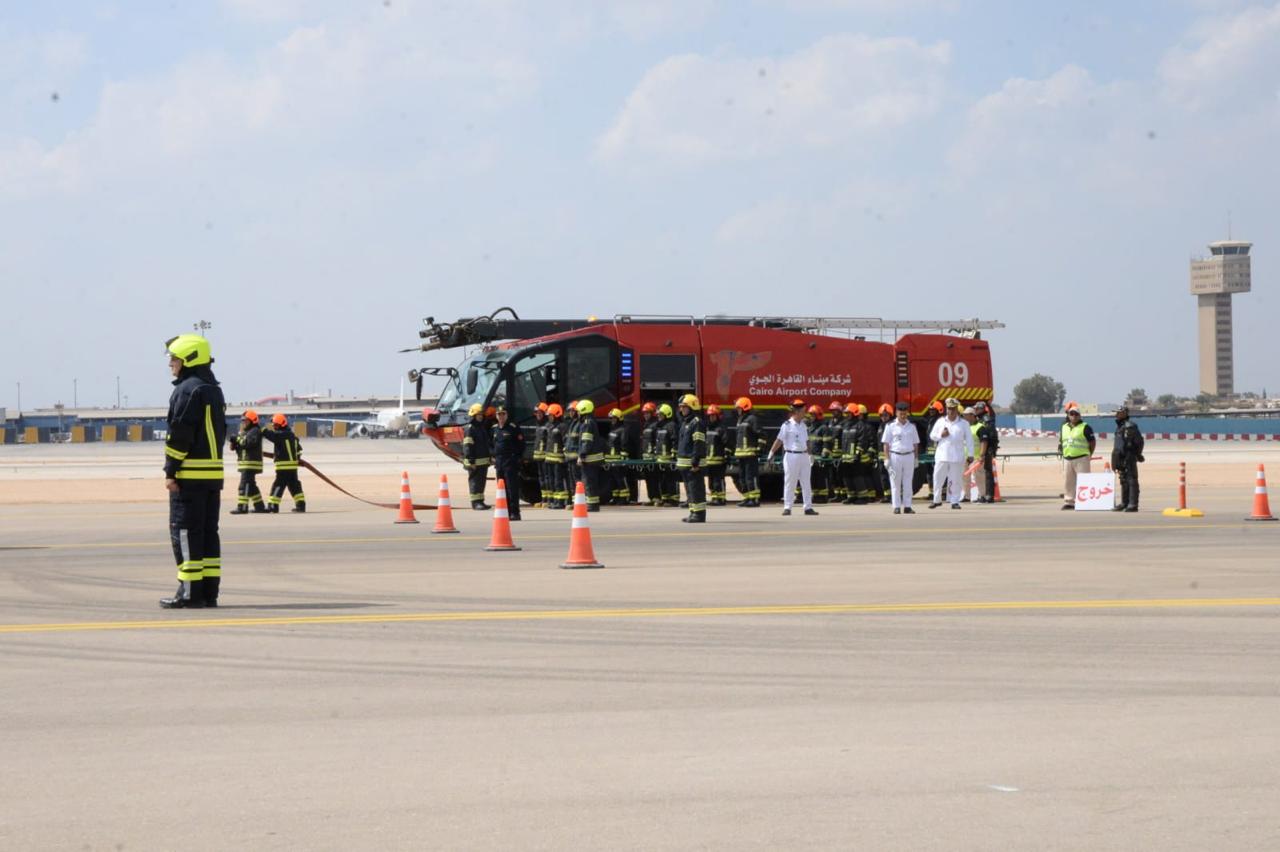
The scenario then introduced a fire in the aircraft’s auxiliary power unit (APU). Fire crews contained and extinguished it while securing the aircraft and preventing further effects.
Other procedures covered passenger and crew movement, coordinated rescue and medical response, and testing communications, information flows and decision-making across participating agencies.
El-Hefny said field exercises were essential to assessing emergency plans, response speed, task execution and timely decision-making. A combined scenario provides a practical test of security, operational, medical and rescue capabilities.
He said cooperation among the participating bodies reflected Egypt’s readiness to handle exceptional situations through advance planning, practical training and swift decisions, protecting lives and facilities and maintaining operational continuity.
The minister added that evaluating performance, identifying lessons and addressing observations were important outcomes, improving personnel capabilities and readiness in line with international standards.
Eng. Ayman Arab, chairman of the Egyptian Holding Company for Airports and Air Navigation, said the exercise demonstrated Cairo Airport’s preparedness and immediate response capability. He stressed that aviation safety and security were fundamental and their highest standards must be applied without compromise.
Arab said it was a practical test of the airport’s entire emergency system, measuring response speed and coordination across relevant sectors to ensure a rapid, integrated response.
He highlighted the airport’s Public Health and Safety Readiness Accreditation (PHSRA), renewed by Airports Council International for three years through 2029. He described it as international recognition of readiness and compliance, supporting passengers, staff, facilities and continuity.
Cairo Airport Company Chairman Magdy Ishak said the full-scale exercise genuinely tested readiness, coordination and response. Safety, he stressed, was a national and professional responsibility.
The exercise evaluated the effectiveness of emergency plans and the ability of relevant bodies to respond immediately and systematically under ICAO standards and Egyptian Civil Aviation Authority requirements.
Ishak said airport efficiency was measured not only by traffic, flight numbers and service quality, but also by crisis management and emergency response. The exercise assessed inter-agency coordination, personnel, equipment, communications and the speed and accuracy of decisions, strengthening protection of lives and property and operational continuity.
Preparations took around four months and included 10 coordination meetings, training and rehearsals using a retired aircraft. Participants included EgyptAir departments, domestic and foreign airlines, security and oversight bodies, the Ministry of Health, quarantine, ambulance, Civil Protection and rescue teams, the Civil Aviation Authority, the National Air Navigation Services Company, the Meteorological Authority, Customs and Cairo Airport Company departments.
Photos from the emergency exercise