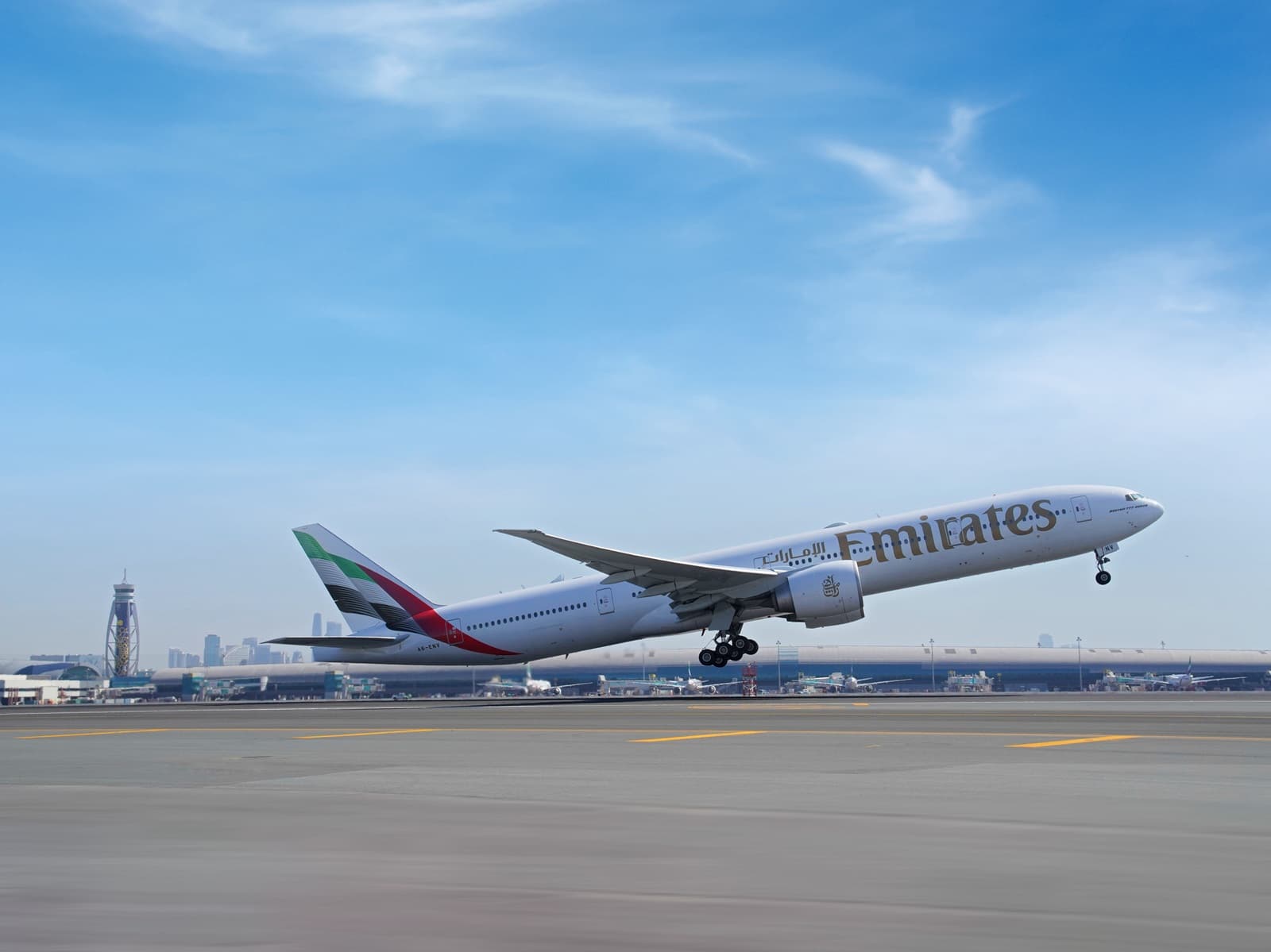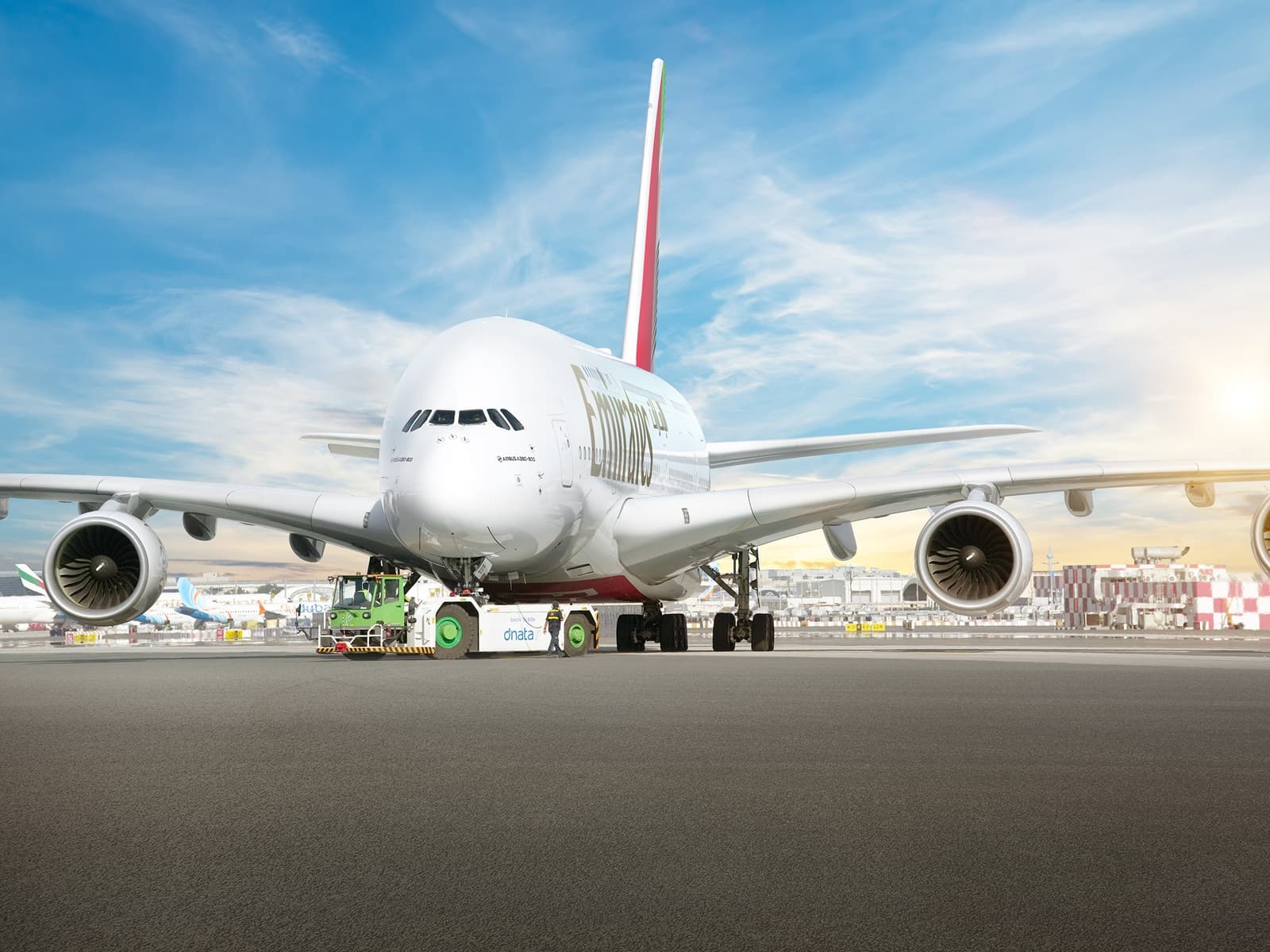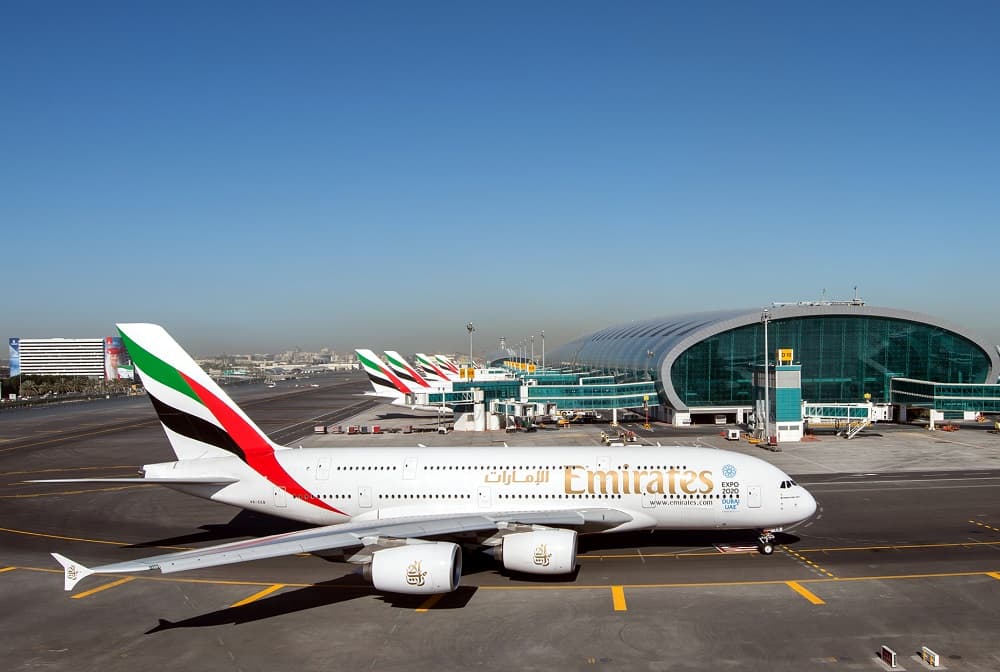
Emirates carried 29.6 million passengers in 6 months... and its aircraft achieved an 81% load factor
Emirates Group revenue reached AED 53.3 billion from April to the end of September 2019, down 2%, while profit rose 8%
Emirates Group chief executive: lower fuel prices had a positive impact
The 45-day closure of Dubai International Airport's southern runway caused the decline in revenue
Thomas Cook's bankruptcy and currency exchange rate fluctuations negatively affected the group's activity
Emirates Group announced its results for the first half of the 2019/2020 financial year, during which it achieved revenue of AED 53.3 billion (US$14.5 billion) in the period from April 1 to September 30, 2019, a decrease of 2% from the same period of the last financial year, which recorded AED 54.4 billion (US$14.8 billion).
The group attributed this slight decline in revenue mainly to the planned reduction in seat capacity during the 45-day closure of Dubai International Airport's southern runway, along with unfavorable currency fluctuations in Europe, Australia, South Africa, India and Pakistan, as well as the bankruptcy of global company Thomas Cook.
Meanwhile, the group's profit rose 8% compared with the same period last year, as the group achieved a net profit of AED 1.2 billion (US$320 million) in the first half of the 2019/2020 financial year. The improvement in profit is mainly due to a 9% drop in fuel prices compared with the same period last year, although the gains from lower fuel costs were partly eroded by adverse currency movements.
Emirates accounts for the largest share of the group's revenue, recording AED 47.3 billion (US$12.9 billion), down 3%, while its profit grew 282% to AED 862 million (US$235 million), due to greater flexibility in the use of seat capacity and an improved load factor, which reached 81.1% compared with 78.8% last year, despite higher ticket prices, reflecting high levels of customer demand for Emirates' products.
Emirates carried 29.6 million passengers, down 2%, while the volume of cargo carried fell 8% to 1.2 million tonnes and yield declined 3%, reflecting the difficult operating environment for air cargo amid global trade tensions and disruptions in some key cargo markets.

The report also stated that Emirates' operating costs fell 8%, mainly due to a 13% drop in fuel costs compared with the same period of the last financial year, after crude oil prices fell 9%, in addition to lower fuel volumes consumed as a result of the 45-day runway closure at Dubai International Airport. Fuel remained the largest share of Emirates' total operating costs at 32%, compared with 33% in the first half of last year.
For his part, Sheikh Ahmed bin Saeed Al Maktoum, Chairman and Chief Executive of Emirates Airline and Group, said the positive performance in the first half of the 2019/2020 financial year came as a result of the group adapting its strategies to overcome difficult business conditions and social and political unrest in many global markets, and that both Emirates and dnata made great efforts to limit the impact of the Dubai International Airport runway maintenance on our business and customers. He added that strict controls were imposed on controllable costs while improving efficiency and ensuring that resources were directed the right way to take advantage of various opportunities.
He explained that lower oil prices were a positive factor, as the fuel bill fell by about AED 2 billion, but unfavorable currency changes ate up about AED 1.2 billion of the group's profit.
The Emirates Group chief executive stressed that it is difficult to predict global developments, but the aviation and travel industry is expected to continue to face headwinds over the next six months, in addition to intense competition that will add further pressure on yields and profit margins, noting that the group is always focused on developing its business and continuing to invest in new capabilities that enhance the performance of its employees and allow it to keep offering better products, services and experiences to customers.
Over the past six months, the Emirates Group's workforce remained stable at 105,315 employees, in line with the group's plans and business activities, also reflecting various internal efficiency programs through the adoption and application of new, advanced technologies and methodologies in many of the group's departments, which helped raise operational efficiency and redistribute available resources.
In a related context, Emirates received 3 new Airbus A380 aircraft in the first six months of the 2019/2020 financial year, and will receive 3 more of the same type before the end of the current financial year. It also retired 6 aircraft, with two more scheduled to be retired by March 31, 2020. The long-term strategy of investing in the latest wide-body aircraft has made it possible to improve overall efficiency, minimize emissions and provide outstanding customer experiences.

Emirates continues to offer its customers the best options for traveling around the world with just one stop in Dubai, as Emirates' global network covers 158 destinations in 84 countries across six continents, with a fleet of 267 aircraft including freighters.
Emirates pressed ahead with developing its partnership with flydubai, as the two carriers continued to benefit from the integration of their networks to improve schedules and connect more cities worldwide via Dubai, in addition to opening new routes including Naples (Italy) and Tashkent (Uzbekistan) in the first half of the 2019/2020 financial year. Customers also enjoy more benefits through a single loyalty program, "Emirates Skywards", and passengers continuing their journeys with Emirates or flydubai via Dubai International Airport can now connect to their flights quickly and smoothly, as flydubai currently operates 22 flights from Terminal (3), which is dedicated to Emirates flights.
On the other hand, revenue of the dnata companies, part of the Emirates Group, reached AED 7.4 billion (US$2.0 billion) in the first half of the current financial year, up 5% on the same period of the last financial year, as a result of strong business growth and global expansion, especially in in-flight catering.
dnata continued to strengthen its global capabilities in ground handling, catering and travel services, with operations in more than 35 countries, and in the first half of the 2019/2020 financial year, dnata's international operations contributed more than 72% of its total revenue.
Meanwhile, dnata's total profit fell 64% to AED 311 million (US$85 million) compared with last year's results, with profit affected by the bankruptcy of Thomas Cook, one of the main customers of dnata's travel and tourism business in the United Kingdom, which led to a loss of business and intangible assets worth AED 84 million.
dnata's airport services maintained their position as the largest contributor to the dnata group's revenue, reaching AED 3.6 billion (US$983 million), a slight increase compared with revenue in the first six months of the last financial year. The total number of aircraft handled by dnata across all its locations exceeded 351 aircraft, and cargo handled amounted to 1.5 million tonnes, down 6% from the same period last year.
dnata's in-flight catering operations contributed revenue of AED 1.8 billion (US$479 million), up 54%, and the number of meals provided in the first six months reached 51.9 million, up 67% compared with the first half of last year.