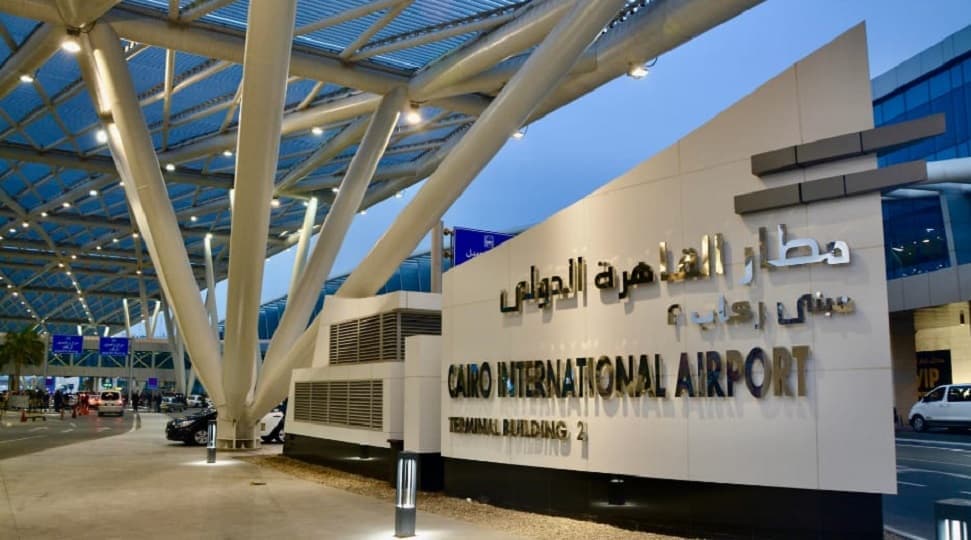
Cairo International Airport continued to post growth in August and September 2026, handling more than six million passengers on over 42,000 flights. The figures reflect rising travel demand and the importance of continued modernization and capacity expansion.
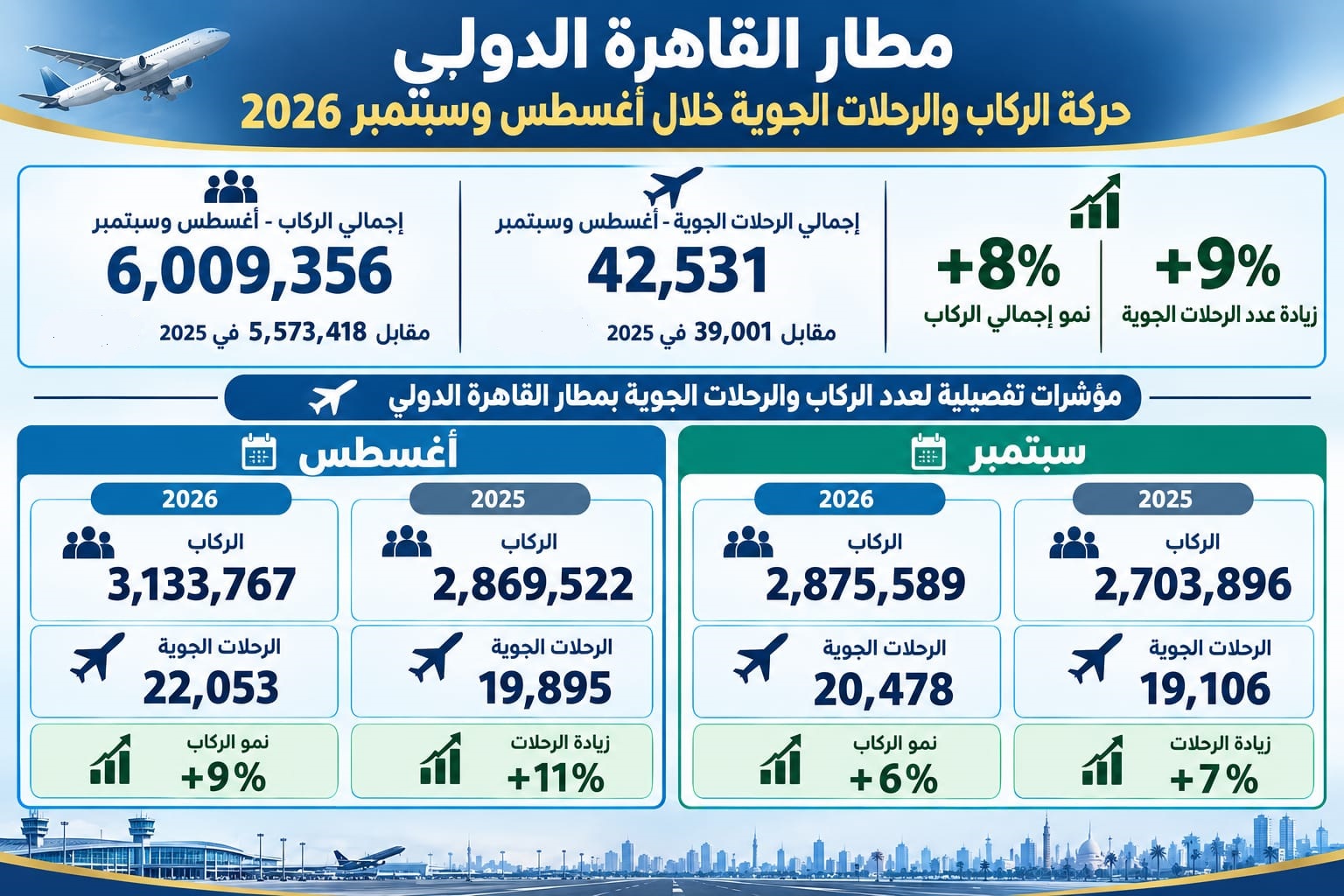
Operational statistics show 6,009,356 passengers and 42,531 flights across the two months, compared with 5,573,418 passengers and around 39,000 flights in the same period of 2025. The reported increases were 7.3% in passengers and 7.7% in flights.
In August 2026, the airport handled 3,133,767 passengers on 22,053 flights, compared with 2,869,522 passengers and 19,895 flights in August 2025, representing growth of approximately 9% and 11%, respectively.
September 2026 traffic reached 2,875,589 passengers on 20,478 flights, versus 2,703,896 passengers and 19,106 flights in September 2025, an increase of around 6% in passengers and 7% in flights.
Civil Aviation Minister Dr. Sameh El-Hefny described Cairo Airport as Egypt’s main air gateway and a major international and regional hub. Rising passenger and flight numbers, he said, highlighted the need to develop capacity and operations to accommodate current growth and future demand.
The ministry is working on a new Terminal 4 with capacity for 40 million passengers annually, raising total airport capacity to approximately 70 million. The project will accommodate growth in passengers, flights and airlines and support future connectivity, strengthening Cairo’s role between Africa, Asia and Europe and Egypt’s position as a regional transport and logistics centre.
El-Hefny said expansion complemented ongoing infrastructure development, operational improvements, wider use of digital technology, environmental sustainability, energy efficiency and emissions reduction. These measures improve passenger experience and readiness for future growth.
Cairo Airport Company Chairman Magdy Ishak said rising traffic reflected operational readiness and the airport’s ability to handle increased activity. Teams were focused on smooth movement, regular operations and better passenger services in line with safety and quality standards.
The airport also led Africa in scheduled seat capacity in September 2026, according to aviation analytics provider OAG, with approximately 1.79 million seats, up 11.2% from September 2025. This reflected growing operations and connectivity.