By Akram Medhat
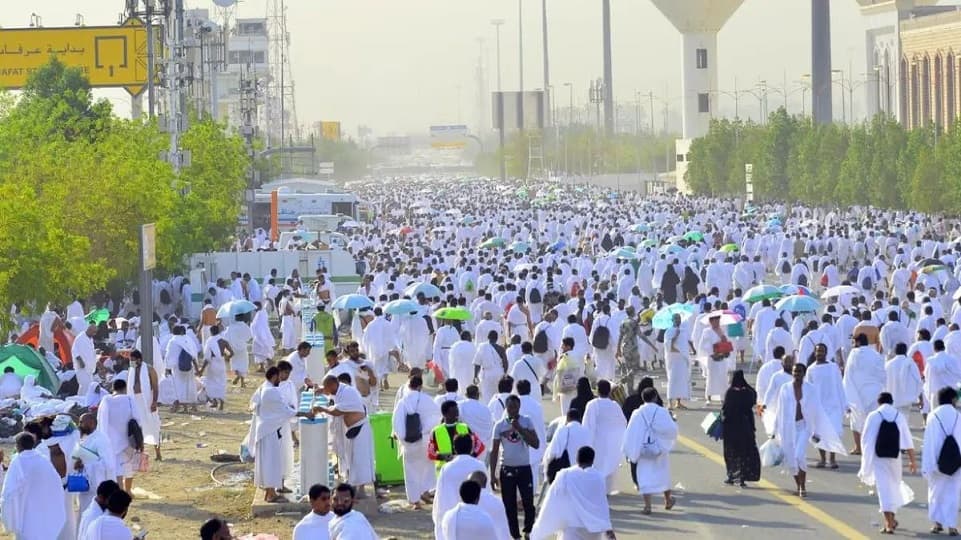
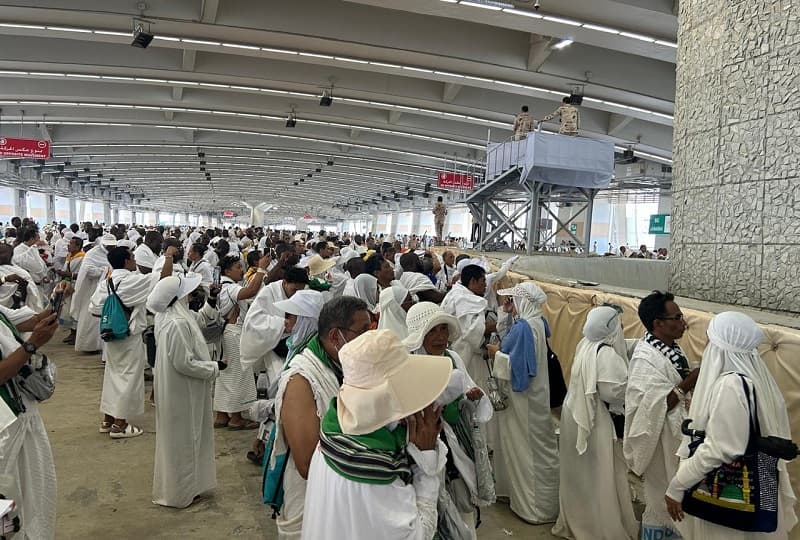
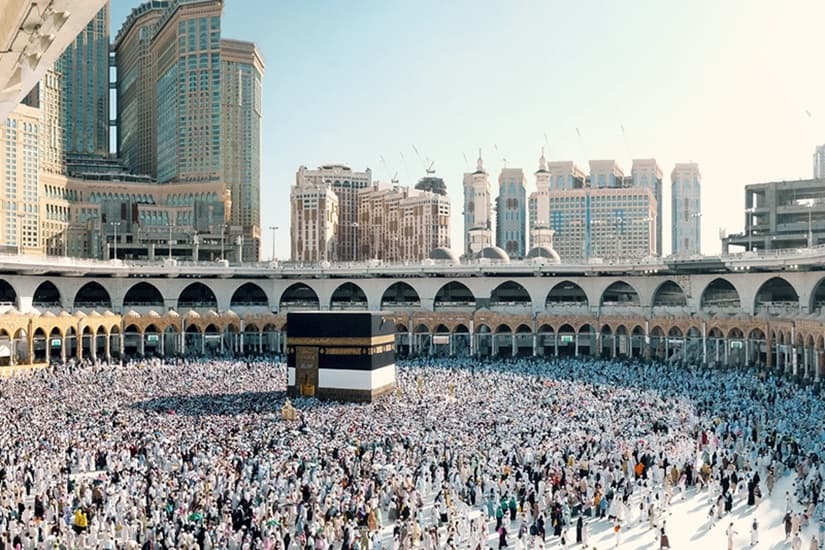
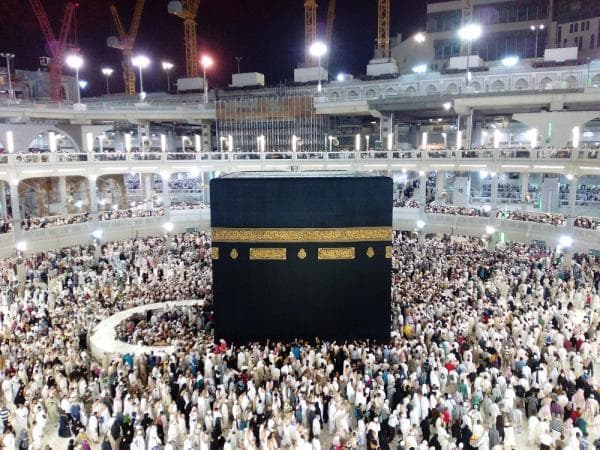
About 2.4 million pilgrims completed their rituals this year amid a sense of equality, brotherhood and unity, during the world's largest annual religious gathering, in Islam's holiest city, Mecca. Saudi Arabia welcomed its visitors from around the world to perform the Hajj, whose rituals lasted 5 days, receiving pilgrims from 100 countries who headed to Mecca to perform the pilgrimage.
Detailed Breakdown of Pilgrims' Nationalities
A total of 2,352,122 pilgrims headed to Mecca, 1.8 million of them from outside the Kingdom, divided into one million pilgrims from Asia (excluding Arab countries) and about 400,000 from Arab countries (excluding Gulf Cooperation Council countries).
About 200,000 pilgrims came from Africa (excluding Arab countries), while pilgrims from European countries numbered 100,000, with about 25,000 pilgrims from the United States and Australia. The number of pilgrims from Gulf Cooperation Council countries reached 33,000.
For his part, Dr. Awwad Alawwad, Minister of Culture and Information, said that hosting the pilgrims to the Sacred House of God every year is a great honor and a great responsibility undertaken by the Kingdom of Saudi Arabia and followed by the Custodian of the Two Holy Mosques, King Salman bin Abdulaziz, and His Royal Highness Crown Prince Mohammed bin Salman. The Kingdom provides all means of assistance and harnesses its capabilities to make the Hajj rituals easy for all pilgrims coming from all over the world, whether by providing accommodation tents in Mina and numerous health facilities, or by providing electronic bracelets that offer information and data to the pilgrim and the responsible authorities.
Hajj Season Logistics
Preparing a temporary city to receive more than two million people means making exceptional efforts to preserve the health and safety of all pilgrims. The Saudi Ministry of Health deployed 15 health centers in Mecca and the other holy sites near it, as well as 30,000 health sector workers trained to provide health care and deal with emergencies. During the Hajj rituals, doctors performed about 2,600 free surgeries for pilgrims, in addition to providing the necessary medical treatment to about 60,000 pilgrims.
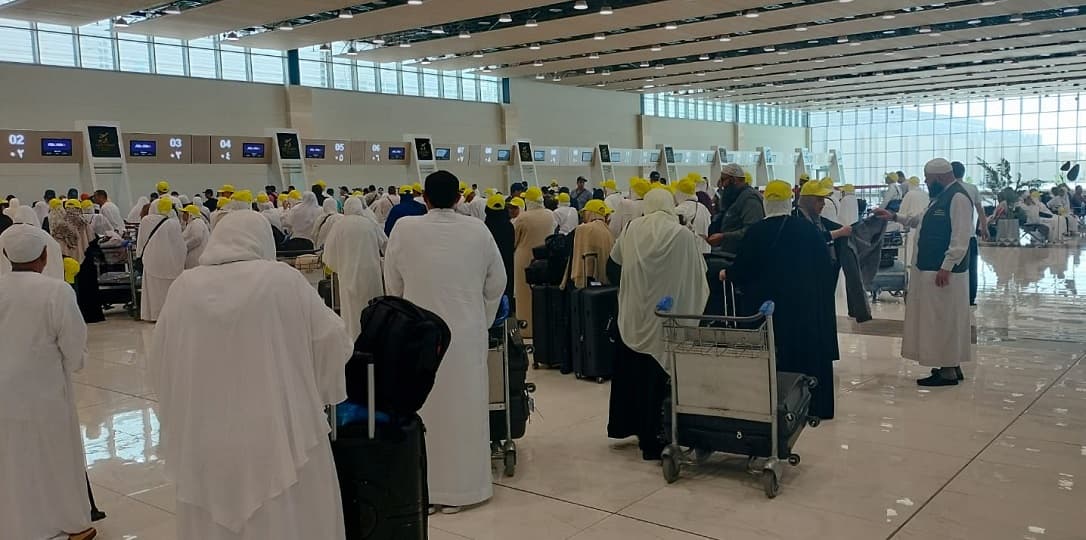
To facilitate pilgrims' arrivals and departures, the Kingdom allocated special halls for them at Jeddah and Medina airports, and the two airports received 1.6 million of the 1.8 million pilgrims who came to the Kingdom to perform the Hajj.
The security and safety of pilgrims are at the top of the Kingdom's priorities. The pilgrims' tents in Mina are among the pivotal pillars for ensuring their safety; they were made of non-flammable materials and equipped with air conditioners to cool the air, and pilgrims were distributed in the camps according to their nationalities.
An event of this size requires safe and modern technologies to ensure pilgrims' safety. For the second year in a row, the Kingdom distributed an electronic identification bracelet to every pilgrim, containing all of their personal and medical information. The bracelet is water-resistant, equipped with GPS, alerts pilgrims to prayer times and provides detailed information on the Hajj rituals, and it also contains a multilingual help platform to guide millions of non-Arabic-speaking pilgrims during the Hajj rituals.
In addition to the electronic bracelets, the Saudi authorities sent regular text messages to pilgrims' mobile phones with all updates and announcements, while the two online platforms Hajj2017.org and SaudiWelcomesTheWorld.org, launched by the Saudi Ministry of Culture and Information specifically for the Hajj, provide continuous updates to pilgrims, the public and media around the world.
How Saudi Arabia Prepared for This Year's Hajj Season
Huge manpower representing all government bodies and agencies was deployed to serve and secure pilgrims, whether in Mecca, Medina or the holy sites, as well as at the land and air ports of arrival and departure for pilgrims.
As pilgrims begin returning to their home countries, Saudi Arabia is starting to plan for next year's Hajj season, as the tireless work of organizing and hosting the world's largest annual gathering never stops.
The following are details of these preparations:
122,000 employees representing 20 government agencies, working around the clock
14,000 employees of the Makkah Region Development Authority, working to facilitate pedestrian movement at the holy sites and to operate and maintain the Holy Sites train
6,300 employees of the General Presidency for the Affairs of the Grand Mosque and the Prophet's Mosque, providing pilgrims with cold Zamzam water at prayer sites
4,480 employees providing municipal services to pilgrims, citizens and residents in Mecca and the holy sites
4,470 employees of the General Directorate of Passports preparing and equipping ports of arrival to receive pilgrims
3,706 scouts providing a wide range of services, such as guiding lost pilgrims
2,935 volunteers of various nationalities with the Ministry of Hajj and Umrah
2,280 Civil Defense personnel for firefighting and rescue in emergencies, supervising safety measures and contributing to medical evacuations
1,650 media professionals providing media services and live coverage for more than 104 television channels and 19 radio stations
1,500 technicians, and 1,307 employees and technicians from the National Water Company
279 employees of the Saudi Food and Drug Authority to ensure the safety of what is served to pilgrims
240 inspectors from the Ministry of Labor and Social Development to inspect facilities
130 help desks at the Ministry of Islamic Affairs, Dawah and Guidance to answer pilgrims' inquiries in all languages
67 Civil Defense centers in Mecca, Medina and the holy sites
Interesting Facts and Figures About Pilgrims
Indonesian Maria Marghani Muhammad, aged 104, was the oldest pilgrim this year. She arrived in Mecca on August 28, saying that she will never forget the Hajj experience.
Young Indonesian Mohamad Khamim Setiawan arrived in the Kingdom to perform the Hajj this year after a year-long spiritual journey on foot covering 9,000 km, which highlights the importance of the Hajj to Muslims around the world.
The Spirit of Hajj in the Day of Arafat Sermon
Perhaps the words of Sheikh Dr. Saad bin Nasser Al-Shathri, a member of the Council of Senior Scholars, in his Day of Arafat sermon best express the spirit of the Hajj. He said that one of the main purposes of Hajj is "planting goodness in people's hearts", warned against "envy and hatred among people", and noted that "Hajj is not a place for partisan slogans or sectarian movements".