By Akram Medhat
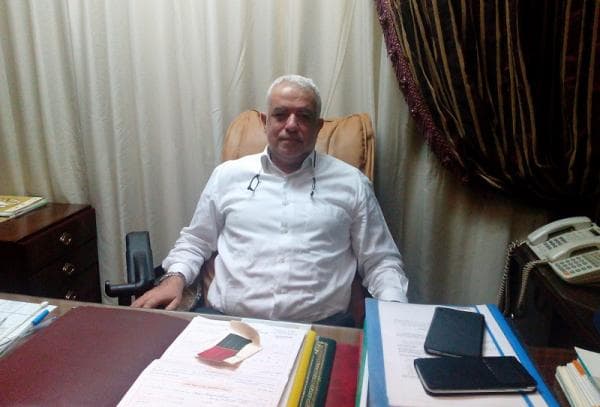
Nasser Turky, a member of the Higher Committee for Tourist Hajj, submitted his resignation to Minister of Tourism Yehia Rashed yesterday, and also sent an official letter to that effect to Deputy Minister Mohamed Shaalan, head of the tourism companies sector, in his capacity as chairman of the committee.
According to its content, the resignation came in protest at the Hajj rules announced by the minister without consulting the committee responsible for the file, despite the many meetings and discussions the committee held to produce the best possible Hajj season in light of the economic changes in Egypt and Saudi Arabia.
In his reasoned resignation, Turky said he hoped for a safe, successful and smooth Hajj season for all Egyptian pilgrims in general, and tourist Hajj pilgrims in particular, who have become accustomed to receiving the best pilgrim service in the Islamic world, not just in Egypt, thanks to competition among companies to provide the best services and the meeting of the ideas and efforts of the administrative authority, the Chamber of Tourism Companies, and company owners and supervisors in a single melting pot in which differences dissolve, ultimately producing one collective vision whose aim is to please God and serve His guests.
He added: “I was honored to be an integral part of the system serving tourist Hajj pilgrims for many years, considered the golden age of tourist Hajj. Of course there were many disagreements, as is human nature, but dialogue, coordination and a strong will to put the public interest first were enough to end any disagreements and to turn fruitful discussions into the best solutions and ideas, which were a main reason for reaching the peak of success.” He noted that although he is no longer a member of the Chamber of Tourism Companies' board of directors, he was keen to take part in public work to help solve any problems in serving pilgrims.
Turky continued in his resignation letter to the Minister of Tourism: “You will remember the end of last Hajj season, when Your Excellency formed the Higher Hajj Committee and honored me by choosing me as a member. Its aim was to address many of the negatives that emerged as a result of the way the rules were set and Hajj prices were determined, negatives that were enough to threaten the season and spoil its joy for pilgrims and companies. The committee made a double effort to address those negatives and even turn them into positives, and the report of Dr. Ashraf El-Araby, head of last year's Egyptian Hajj mission, revealed to you the effort, thought and work we put in to preserve the reputation of tourist Hajj.”
He explained that a large part of last season's negatives was caused by a lack of coordination from the start of the season, and there was hope that it would be a passing issue, so that the Higher Hajj Committee would play an important and effective role in restoring coordination and communication; and although, quite frankly, he hesitated to accept remaining a member of the committee, his sense of responsibility toward the guests of God and the owners of tourism companies led him to stay on.
Turky denounced what he discovered about the true nature of the committee's formation, saying many people had alerted him that the committee was mere decoration to complete the picture and had no real role. The proof of that, he said, lies in two important points: first, the committee's recommendations and ideas are usually not adopted and are not even considered in the first place; and second, the committee's opinion is not sought on most important and fundamental decisions, which it learns of after they are published in the newspapers. The biggest example of this is the Hajj rules and program prices, for which the committee met several times to set out an ideal vision, only to be surprised that what was approved and announced was completely and totally different from what the committee had drawn up.
Accordingly, Turky said: “I ask Your Excellency to accept my resignation from membership of the Higher Hajj Committee, praying to God that I can carry out my mission effectively from any real platform for collective thinking, communication and fruitful coordination, as my history, my name and my aim of serving the public interest compel me to refuse to be on a committee that is mere decoration to complete the picture, without a real role in serving the guests of God.”
Below is a copy of the text of the resignation:


Tourism Sector on Edge
The resignation coincided with demands by a large number of tourism companies and members of tourism investors' associations to President El-Sisi to dismiss Minister of Tourism Yehia Rashed, in protest at his policy in managing this vital and important file. They stressed that the sector is sinking and that there is no hope of saving it while Rashed remains minister, after all attempts failed to get any decisions or measures taken that would help improve the tourism situation, or to have decisions that severely harm tourism, and therefore the national economy, abandoned.
At a well-attended meeting last Sunday evening, Turky stressed that tourism workers do not have a personal problem with the minister, but that they reject all of his decisions that have inflicted losses on Egyptian tourism and its workers since he took office.
Those present issued a statement to be sent to President Abdel Fattah El-Sisi containing an appeal to save the tourism sector, demanding that responsibility for tourism be entrusted to someone able to put it on the right track to help revive the national economy.
The meeting showed, with facts, that all tourism fields are facing numerous problems because of the minister's wrong policies, which it described as behavior alien to the tourism sector and to the Egyptian state's policy in general.