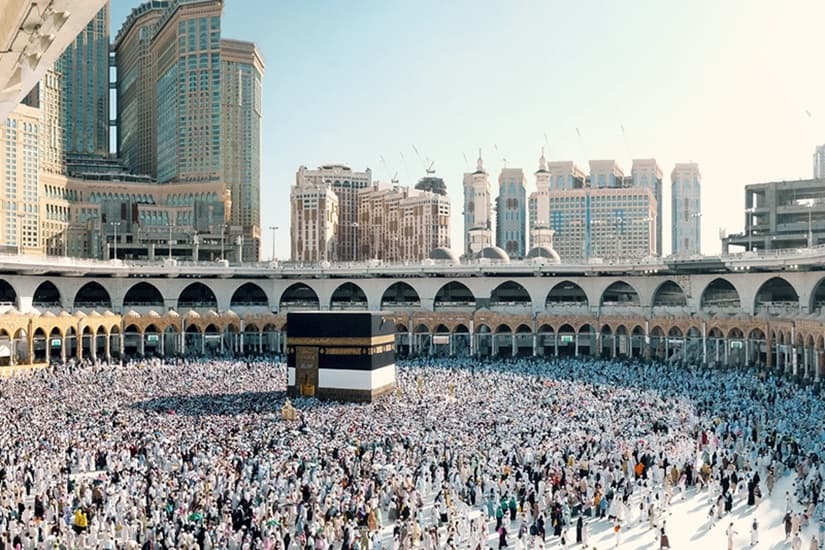
The public electronic lottery for tourist Hajj levels will be held on 30 September
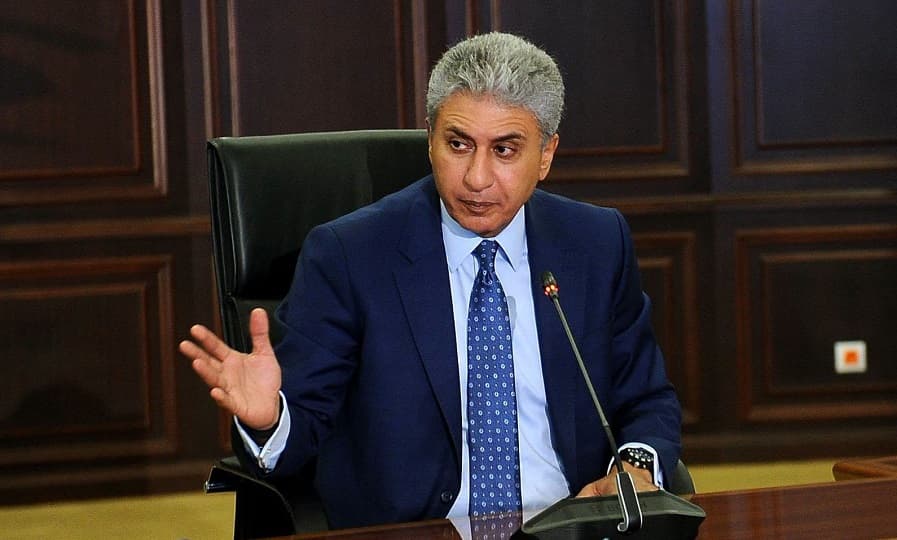
Egypt's Minister of Tourism and Antiquities Sherif Fathy has approved the regulations, rules and procedures governing tourist Hajj for the 1448 AH-2027 season, as part of the ministry's commitment to preparing early for the season and its continued efforts to develop the tourist Hajj system, ensuring outstanding services for tourist pilgrims while protecting their rights as well as those of travel companies.
Registration of citizens wishing to apply for the tourist Hajj lottery through Egyptian travel companies on the Unified Egyptian Hajj Portal will begin on Friday 4 September and continue until 27 September, coinciding with the opening of applications from travel companies to organize Hajj. The public electronic lottery for all tourist Hajj levels will be held and the results announced on 30 September.
The regulations are based on the provisions of Law No. 84 of 2022 on regulating Hajj and establishing the Unified Egyptian Hajj Portal, and Law No. 38 of 1977 regulating travel companies, as amended, and its executive regulations.
In the approved regulations, the ministry has provided various levels of tourist Hajj programs offering quality services suited to different economic segments of Egyptian citizens, while tightening monitoring and oversight of travel companies' performance, particularly by increasing reliance on digital solutions and raising service quality. This ensures the protection of tourist pilgrims' rights inside and outside Egypt, confirms they receive all the services agreed in their contracted programs, and provides a more organized and safer experience for pilgrims from registration and contracting until their return home.
Sherif Fathy said the regulations for the new season aim to build on the expertise and experience gained in previous seasons, putting the interests of tourist pilgrims and the quality of services provided to them at the top of the priorities, while striking a balance between protecting pilgrims' rights and enabling travel companies to deliver their programs within a clear and disciplined regulatory framework.
The tourism minister also directed close monitoring of all stages of the tourist Hajj season, from registration and contracting until pilgrims return home, and immediate handling of any issues that may arise during implementation, while ensuring full compliance with the contracted programs and services.
For her part, Samia Samy, Assistant Minister of Tourism and Antiquities for Travel Company Affairs and Head of the Supreme Committee for Umrah and Hajj, explained that the new season's regulations include a number of new measures aimed at developing the tourist Hajj system and strengthening governance and oversight at all stages of the trip, along with expanding the use of digital tools, allowing more accurate monitoring of the performance of companies and supervisors and the level of services provided to tourist pilgrims.
Highlights of the tourist Hajj regulations for the 1448 AH-2027 season
Affirming the contractual nature of the relationship between the company and the tourist pilgrim, and binding all contracting parties, whether the lead company, the partner company or the pilgrim, to the agreed services, programs, prices, dates, accommodation levels, transport and other elements of the Hajj program, strengthening the protection of all parties' rights.
Establishing a mechanism to regulate additional services offered to tourist pilgrims, to be provided under a contract between the company and the pilgrim that sets out the nature, description and agreed price of the service, and included in the final program before it is approved by the ministry. No agreements on upgrading services at the holy sites or accommodation may be concluded without notifying the ministry and obtaining the necessary approval, protecting the rights of both company and pilgrim and preventing any additional services or costs being imposed outside the contract.
The regulations place great emphasis on the "Rafiq" app, launched by the ministry last Hajj season to serve Egyptian tourist pilgrims. Travel companies must inform their pilgrims about the app, create login accounts for them during contracting and direct them to upload proof of contracting, including the trip contract and payment receipt. Company supervisors must also use the app and respond to reports and notifications from the ministry or pilgrims.
The app makes it possible to track the key points of the pilgrim's journey, including recording departure from the Egyptian port of travel, arrival at accommodation in Makkah and Madinah, and return to Egyptian ports, as well as immediate reporting of illness, deaths and missing persons, strengthening direct communication between the pilgrim, the supervisor and the ministry and raising the efficiency of the system for receiving reports and complaints.
Companies must put the pilgrim's name, passport number, flight number, Makkah and Madinah hotels, and the supervisor's name and phone number on pilgrims' bags, and advise them to carry a backpack with basic items sufficient for 24 hours, to limit the impact of delayed or lost baggage and make it easier to retrieve.
Booking pilgrims' camps at the holy sites early to secure distinctive locations for them, and giving travel companies greater flexibility in choosing accommodation for their pilgrims in Makkah. The maximum permitted distance for accommodation has been set at 4,000 meters from the Grand Mosque, in addition to areas approved in previous seasons, with the possibility of adding new areas after inspection, confirmation that the necessary services are available and approval by ministry committees.
Launching, for the first time, a system for measuring and evaluating the quality of services provided to tourist pilgrims, available to pilgrims through the "Rafiq" app. It is based on 3 pillars totaling 100%: evaluation of the travel company (50%), evaluation of the company's supervisors (30%) and pilgrims' overall rating of the level of services (20%).
The evaluation criteria include:
Data accuracy.
Punctuality and adherence to schedules.
Conformity of implementation with the program.
Monitoring pilgrims' travel and return.
Responsiveness to reports and notifications via the app.
Criteria related to supervisors' performance.
Tourist Hajj levels
The regulations offer a variety of programs to meet citizens' different needs and means, including:
Tourist level (towers).
Tourist level (camps), in categories A, B and C.
Economy level (by air), in categories A, B and C.
Overland Hajj level, in categories A, B and C.
The prices in the regulations are the maximum prices allowed for each level of tourist Hajj program, allowing travel companies to offer their programs at prices below these limits, while companies must deliver programs at the prices, specifications and services they advertise and contract with pilgrims. The prices do not include airfare, or the ferry ticket for overland tourist Hajj programs. The regulations also set the booking deposits required when applying for the tourist Hajj lottery according to the chosen level.
Overland tourist Hajj
For overland tourist Hajj programs, the regulations include a set of requirements and procedures aimed at increasing safety during the pilgrim's journey. Travel companies must run trips along the overland Hajj routes set by Saudi Arabia, with pilgrims arriving and departing by land through the Halat Ammar crossing on the Saudi-Jordanian border in line with Saudi instructions, adhering to the set ferry schedules at the ports of Nuweiba and Aqaba, and contracting with one of the transport companies of the General Car Syndicate in the Kingdom to transport pilgrims within Saudi territory.
The regulations also require that buses used for overland Hajj be no older than the 2023 model, with a capacity of at least 40 passengers, that they pass the tourism and technical inspection set by the ministry, and that a reserve driver be provided for each bus throughout the program. International roaming must be activated on the tracking device's SIM card, and the validity and efficiency of the tracking device and speed limiter must be ensured throughout the trip.
The requirements also include providing safety and protection equipment on buses, including wheelchairs, fire extinguishers, first aid kits and the supplies and spare parts needed to deal with emergency breakdowns. The regulations also set a number of requirements for drivers, including that both the main and reserve drivers be registered with the ministry and pass the required training courses and medical examination, with a ban on tampering with, disconnecting or disabling the GPS tracking device or speed limiter in any way, ensuring pilgrims' safety and the regularity of overland Hajj trips on both the outbound and return journeys.