Air fares between Asia and Europe jumped by an unprecedented 560% in March
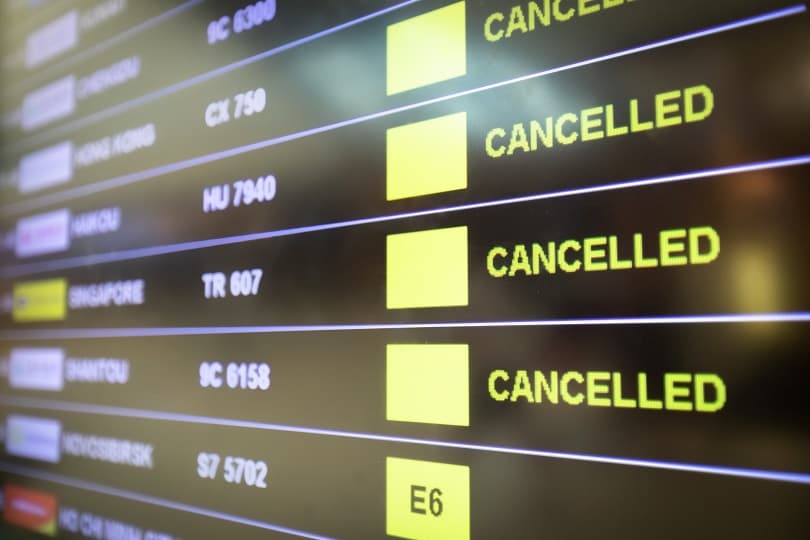
An analytical report has warned that escalating geopolitical tensions in the Middle East have brought air traffic in the region to a widespread standstill, with an unprecedented mass cancellation of more than 8,100 flights across the Gulf and Middle East in March 2026 alone, while some markets and airports in the region have lost about 50% of their immediate capacity since the conflict broke out on 28 February.
The report said the aviation sector was the hardest hit in the first days of the escalation, with direct threats to the airspace over the Arabian Gulf, Yemen and Iran, followed by the partial closure of some routes or the diversion of flights onto longer and more expensive alternative routes, raising fuel consumption, flight times and operating costs, according to a post on the Arab Tourism Organization's website.
The report noted that cancellations were concentrated at the major hub airports in the Gulf, as a result of exchanges of military strikes and escalating attacks, as well as the sensitivity of some air corridors over Syria, Iraq and Iran. This prompted major airlines to suspend or cut flights abruptly, with some airlines recording their lowest operating levels in months, according to navigation data cited in the report through late March 2026.
It explained that the disruption of Gulf air hubs, which handle between 10% and 14% of total international passenger traffic, affected not only the region but also global schedules and connecting networks between Asia, Europe and Africa, with an estimated 4 million international travelers affected, either stranded or forced to reroute via longer and more expensive flights.
The report noted that air fares between Asia and Europe jumped by an unprecedented margin, with increases of up to 560% in March, due to rerouting, pressure on alternative capacity and higher insurance and fuel costs.
On airline performance, the report showed that some Gulf carriers recorded sharp declines in flight numbers compared with pre-crisis levels. According to the table in the study, Emirates' operations fell to 309 flights at the peak of the crisis on 30 March 2026, compared with 527 before the crisis, a decline of 41%.
Etihad Airways' flights fell to 56 from 325, a drop of 83%, while Qatar Airways' flights fell to 66 compared with 563 before the crisis, a decline of 88%.
The report added that the crisis's impact on aviation was not limited to passenger transport but also extended to supply chains and air cargo, with disrupted shipping schedules and higher operating costs at airports and regional hubs, which in turn affected the cost of trade and services linked to air transport.
It also warned that continued airspace closures or long-term restrictions on some routes could force airlines to adopt new operating networks less dependent on Gulf hubs, threatening the standing of some of the region's airports as global connecting hubs and opening the way for the rise of alternative airports and hubs outside the Gulf, such as Istanbul, Singapore and some airports in India.
The report set out 3 scenarios for the future of the region's aviation sector. The first is a rapid recovery if tensions ease before the end of April 2026 and direct air routes gradually return, which could allow fares to fall by about 30% from crisis levels.
The second scenario assumes a slow recovery with partial airspace closures continuing into the first half of 2027, forcing airlines to operate longer and more expensive flights. The third scenario foresees an extended contraction that could exceed 45% if the crisis drags on, with some of the region's hubs shifting from global connecting centers to limited operating markets focused on local and domestic demand.
The report concluded that aviation in the Middle East faces one of its most sensitive phases, not only because of flight cancellations and airspace closures, but also because of the way the crisis is reshaping air connectivity maps, the cost of travel and the competitiveness of regional airports, making the speed of restoring stability in the skies the decisive factor in the region's ability to regain its position in global air traffic.
To view the post on the Arab Tourism Organization website, click here.