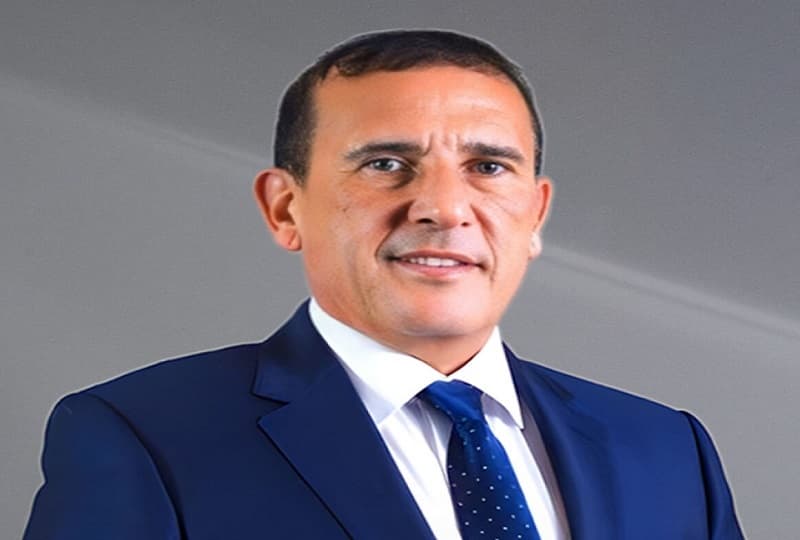
Hany Youssef: The shortage of tourist moorings and the multiple licensing bodies paralyze the boats
Return to the south tied to winter, with strong indicators of Japanese, Chinese and Indian tourist arrivals
New marketing mechanisms to use the hotel for accommodation and a short Nile cruise instead of treating it as merely a restaurant
By Akram Medhat
A number of floating hotels that fled the stagnation of tourist traffic in Luxor and Aswan, particularly during the summer season, are sailing the Nile in Cairo, where they find the oxygen of life, as their marketing options are many and open the way to a variety of activities compared with the southern cities at present.
But they run into the obstacles and challenges of bureaucracy and the absence of a one-stop shop for dealing with tourism investors, especially with regard to renewing the licenses required for operation, and the multiplicity of bodies that must be dealt with, otherwise the boat's operation is halted.
In this context, Hany Youssef, chairman of Planet Tours, which owns a group of floating hotels, said the phenomenon of boats coming from Luxor to Cairo grew when Luxor and Aswan went dark due to the absence of tourist traffic after the January 2011 revolution. Some hotel owners began bringing them to Cairo and operating them as floating restaurants, which found an opportunity for continuous operation. Coming from the south, they stopped at Maadi, which became the mooring area for all the boats, because of the clearance heights allowed under Abbas Bridge or University Bridge, which must be opened for a boat to pass at a high cost, in addition to disrupting traffic.

Youssef told "Travel Yalla News" that the obstacle to more boats coming is the shortage of moorings in Cairo, "and the first thing we ran into was that the Ministry of Tourism said activity would be halted if a boat was not moored at a licensed mooring." He explained that most of the moorings belong to tourism companies operating in Luxor and Aswan, which used to bring boats to Cairo for repair and maintenance and did not bother renewing the licenses because all the hotels were operating well before 2011, adding that relicensing any mooring is "a pipe dream," in his words.
The Tourist Moorings Crisis and Administrative Closure
He pointed out that meeting all the requirements and paperwork does not mean the matter is settled, as an obstacle always appears. Naturally, therefore, all the boats that came to Cairo were issued administrative closure orders by the Ministry of Tourism because they moor in unlicensed places, he said, calling on officials to speed up the completion of these procedures to help investors operate.
He continued: "The arrival of floating hotels in Cairo from Luxor requires the approval of the Ministry of Tourism, as there is no license for long Nile cruises from Cairo to Aswan, which is like an isolated island, since licenses issued by the other bodies neither count for anything nor make it easier. After obtaining all the approvals, we run into the Ministry of Tourism itself because there is no licensed tourist mooring, so I cannot work and the boats are paralyzed."
He explained that there are currently about 7 or 8 floating hotels in Cairo, and many boats have been unable to come for lack of space, except for one mooring in Tora that takes two boats, but the relevant authorities do not allow that and the boats incur many fines, even though the Tora mooring is very far from the targeted public activity.
He noted that floating hotels coming to Cairo are economically feasible, but the returns are neither high nor as expected because of the problems and obstacles in the Ministry of Tourism's application of the regulations.
"Granada" Awaits Operation
The chairman of "Planet Tours" said the Granada hotel, one of the floating hotels owned by the company, which came to Cairo in 2013, has had its activity halted despite obtaining approval for a change of activity, which former minister Hesham Zaazou had encouraged, "because we ran into the administrative closure order, as the licensing procedures of any one body coincide with the renewal of another body's license, since the license period is very short, ranging between two and six months, because government bodies are not linked in a single system." He pointed out that the hotel is moored in the Agouza area of Giza at one of the licensed moorings, and its arrival required the bridges to be opened because the boat is 10 meters high.
Winter Is the Season of Return
Youssef stressed that the recovery of tourist traffic to Luxor and Aswan and its continuation next winter in line with expectations and bookings, as seen last season, is a good indicator that floating hotels will return to their core peak operation in the south, especially 5-star deluxe, 5-star and 4-star hotels, particularly with high bookings from the Japanese market and the operation of EgyptAir's direct route to Cairo, in addition to the American, Chinese and Indian markets and some European markets.
He said that "the fire of Luxor and Aswan is better than the paradise of Cairo" with the boats idle on the Nile, since in Cairo the boats do not operate primarily as floating hotels but merely as restaurants relying solely on the local market.
On the other hand, Youssef explained that marketing floating hotels in Cairo competes on the length of the Nile cruise, which lasts up to 3 hours, compared with Cairo's moving floating restaurants, which make a two-hour Nile cruise, while the stationary restaurants in the downtown areas of Tahrir and Zamalek are not considered competitors. Programs that include accommodation and extend to Beni Suef governorate, with entertainment segments, are also being promoted at a reasonable cost of only EGP 600 per person.