
By Akram Medhat
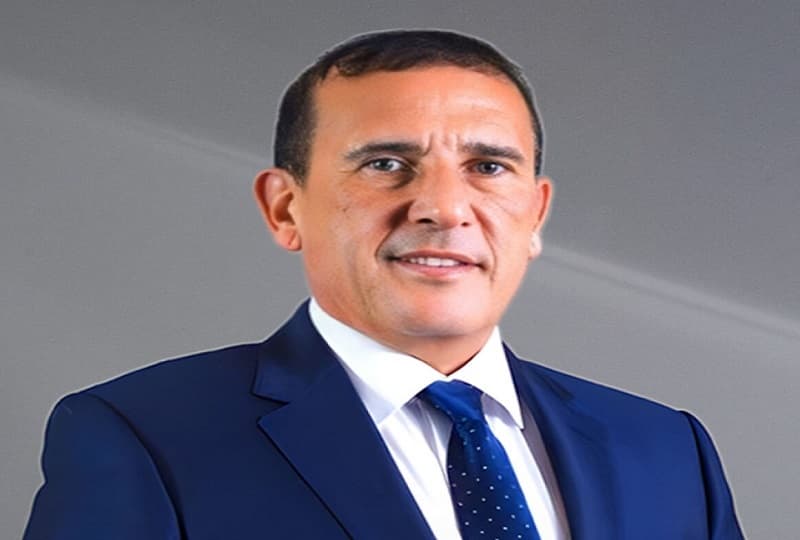
Hesham El-Demery, head of the Egyptian Tourism Promotion Authority, said the authority works within a scientific strategy based on thoroughly studying target markets and promotional plans before moving in those markets, in order to achieve optimal results.
He said in a statement today that rumors that Egypt's international advertising campaign is worth $40 million a year are untrue, as the allocation is $22 million a year. He added that this amount was allocated to cover 26 markets, under the contract signed with JWT, the company responsible for the campaign, stressing that the amount is not excessive as some believe, since each market's share does not exceed $800,000. He noted that many new and promising markets were not included in the 26 markets, among them countries in Latin America and some southern European countries, and allocating part of the amount to them consequently reduced each market's share.
El-Demery explained that only $19 million was used in the first year since the contract began at the end of September 2015, in line with market studies and the travel bans imposed by many countries on Egyptian tourist destinations after the Russian plane incident in 2015, and in application of the state's general policy of rationalizing spending.
In the statement, which aims to defend the authority and the international marketing policy contracted with JWT, El-Demery revealed that since the start of the campaign's second year the authority has spent only $9 million, in line with market studies and prior estimates, all of which pointed to the need to focus on the winter season, the most important and largest season for Egyptian tourism, which is expected to see a large and tangible increase in air traffic to Egypt, especially from the main source markets.
He pointed to the major development of marketing techniques, with the world moving toward e-marketing, adding that the ministry has succeeded in organizing the launch of campaigns according to each market and its receptiveness to Egyptian campaigns.
He noted that the advertising campaign launched from September 2016 in 11 markets had a major impact in improving Egypt's image abroad, which led to the lifting of the travel bans imposed by many of the main source markets in Europe, Asia and the United States, except for Russia and the partial ban imposed by Britain on Sharm El-Sheikh, as well as a significant improvement in tourist traffic indicators since last December after the campaign was launched in the target markets.
El-Demery added that, according to statistics, the first four months of 2017 saw a notable increase in inbound tourism to Egypt from most markets, reaching 51% overall compared with the same period last year.
He continued: "The Arab market recorded its highest rates in the first four months of 2017 compared with the last eight years, up 30% on 2010, while the German market rose 50% and the Italian market 30% compared with the same period last year. As for the British market, despite the continued flight ban to Sharm El-Sheikh, it recorded a 20% increase, while promising markets such as Ukraine, the Czech Republic, Poland and Eastern Europe saw a big jump exceeding 100% in some markets."