Dr. Adela Ragab reveals, in an exclusive interview with Travel Yalla News, the main features of the new 2018 program, most importantly easier disbursement of dues
Review of flight documents cut to just one week, with disbursement within 6 months
Tour operators understand the reason for the delay in paying what they are owed under the old 2016 system
TUI is late in submitting some required documents... because of WTM London
Prime Minister gives the Tourism Ministry a deadline to finish the old file... and the new one by the end of January
Interview by Akram Medhat
Although a full year has passed since the new flight incentive program, it is still surrounded by controversy due to the lack of clarity on many hidden points and on the behind-the-scenes mechanism of its implementation, which were raised after the delay in disbursing airlines' dues, and the situation extended to the non-payment of tour operators' dues under the support program that preceded it, which has made the file as a whole the subject of great debate.
All of these matters were detailed by Dr. Adela Ragab, Deputy Minister of Tourism, in the second part of the special interview published exclusively by Travel Yalla News, her first press interview since taking office in mid-September. She also brought the Egyptian tourism sector a great deal of important positive news for airlines and foreign tour operators, most importantly the date by which payment of dues for flights in 2016 and 2017 will be completed in full.
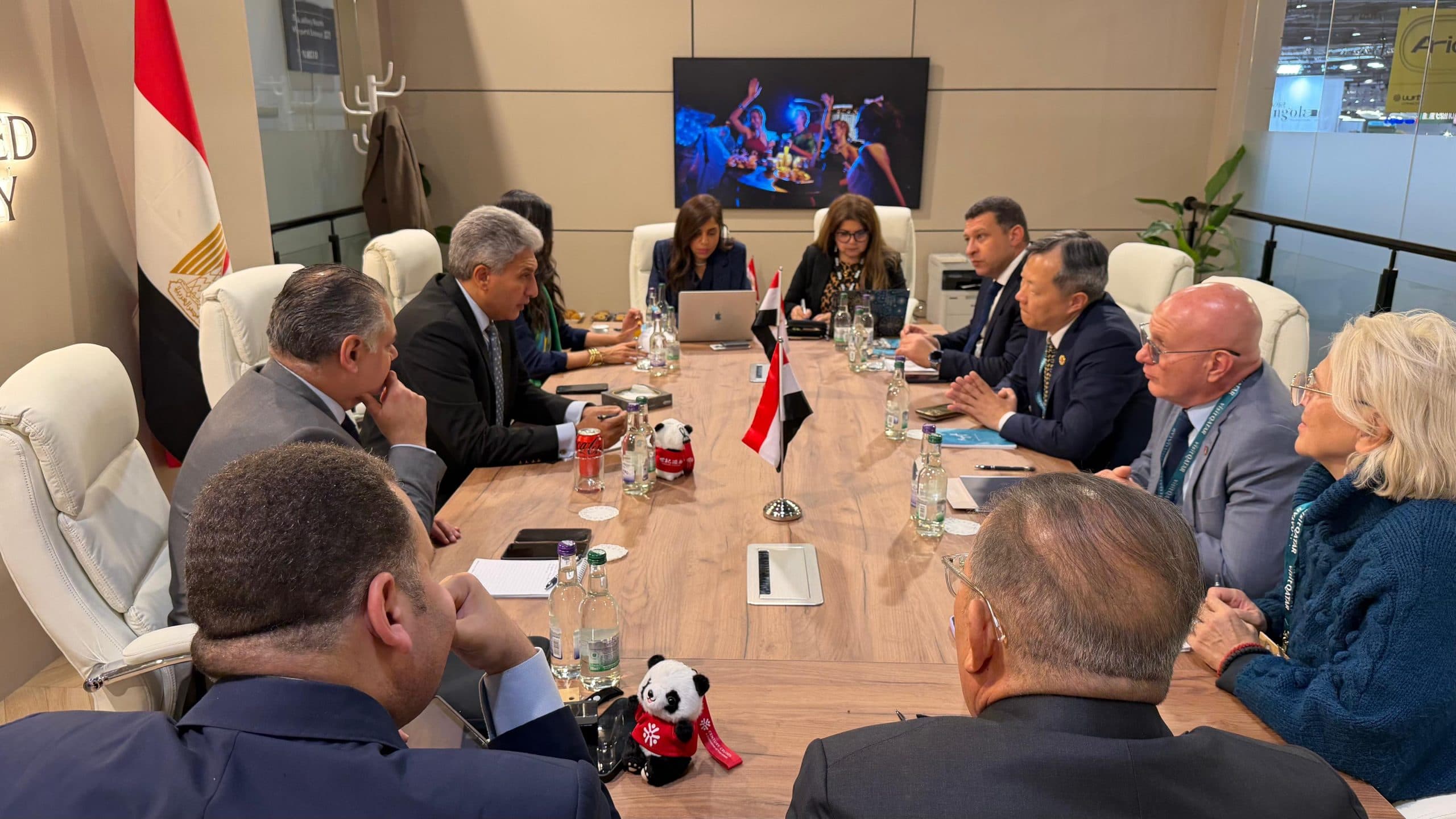
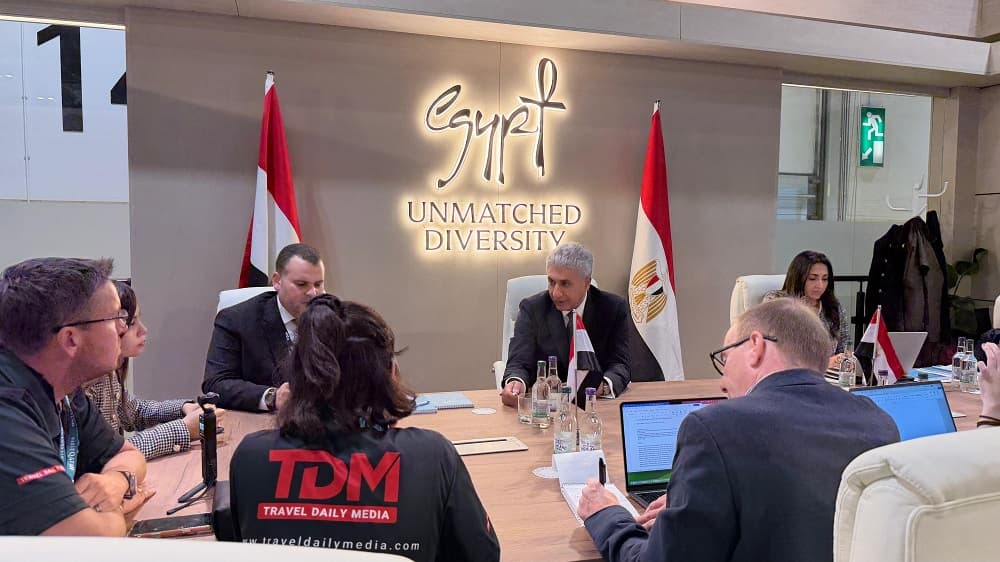
This was also one of the topics of discussion during meetings with tour operators and airlines on the sidelines of WTM London at the beginning of November.

The Reason for the Delay in Disbursing Airlines' Dues
Ragab stated that disbursement of funds for the program that ended in October 2017 began at the end of July, explaining that the delay was due to the change of the system and its components from the Egyptian Tourism Federation, which represents the private sector, to the Egyptian Tourism Promotion Authority, which signed a protocol with the Egyptian Airports Company to confirm cooperation with the Ministry of Civil Aviation, with the Ministry of Finance acting as a monitor of public funds.

She continued: "When financial dealings came to be between the Ministry of Tourism and the Egyptian Airports Company, this required the approval of the Central Bank, because payment is made in foreign currency (dollars) inside Egypt, which is an exception, and all these approvals and the design of a mechanism to implement them took some time."
Dr. Adela Ragab pointed to the misconception held by some that competing tourist destinations such as Tunisia or Turkey give an airline $6,000 per flight as soon as the plane lands, whereas Tunisia requires documents to start being submitted only after the end of the season, that is, after at least six months.
She explained that the program in Egypt has addressed these matters and obstacles, because we ask companies to submit the required flight documents directly, so that their dues are paid within a specified period, under the new 2018 program, which is awaiting approval by the Minister of Tourism; this was not stipulated in the previous program.
The Deputy Minister of Tourism reviewed the problems faced by the expired 2017 flight incentive program, most notably the novelty of the mechanism for the employees working on the program, along with government bureaucracy and the small number of staff qualified to handle this file, which led to the long time taken by the documentary cycle, from the moment the airline submits its flight file and it is reviewed according to the required documents, without looking at the internal data.
The file is sent to the Civil Aviation Authority to review the part concerning the type of flights, charter or scheduled, to determine the system under which the airline will receive its dues, with the specified amounts and load factors. She noted that errors are possible, and this is an important responsibility, especially as the difference between the incentive values allocated to each is large, reaching $4,000 per flight. Therefore, the file is sent to the Egyptian Airports Company to verify the specified load factors in accordance with the regulations, as well as the names of the aircraft crew, because they may be included in the passenger list and thus affect the aircraft's load factor, which determines whether the company is entitled to the incentive amount.
The file is then referred to a committee at the Ministry of Tourism to review all documents and data, which has the authority to approve the disbursement of incentive amounts to airlines.

Positive News on Procedures for Disbursing the Incentive
The Deputy Minister of Tourism revealed the main features of the development of the anticipated new flight incentive program, which is due to be approved by the Minister of Tourism soon and covers the period from November 1 this year to October 31, 2018, stressing that it avoids many of the obstacles and problems of the previous 2017 program by shortening the documentary cycle and reducing the number of papers required from airlines.
She added that reviewing flight files used to take three weeks and has been cut to just one week, which will ease and speed up procedures, with dues to be disbursed within six months, and she stressed that they are ready to approve checks within a period not exceeding a month.
Accuracy in Reviewing Flight Data and Attention to Any Airline's Complaint
Dr. Adela Ragab explained that the airline submits several copies of the flight file, so that there is a copy at the Tourism Fund, which is responsible for disbursing its incentive dues, another at the Egyptian Tourism Promotion Authority and a copy at the Ministry of Tourism, noting that this is a precautionary measure to make it easy to review the data should any company wish to do so, and indeed some have reported receiving less than they are entitled to.
A dispute resolution committee has been formed to review companies' flight data. The committee is chaired by Dr. Adela Ragab, with two advisers as members, one legal and the other financial, to review all complaints.
She revealed that SunExpress was among the companies that filed complaints, saying it was entitled to larger amounts than those actually disbursed, after the Ministry of Tourism excluded some flights that did not meet the conditions for the incentive amount, having recorded a load factor of only 78%, while the company stated it had achieved 98%. The file of these flights is being reviewed, she said, noting that so far SunExpress, with which we will begin, and Niki ("formerly Air Berlin") have filed complaints, and the matter will be considered this week.

An Incentive Program Without Problems
The Deputy Minister of Tourism stressed that airlines are not dissatisfied with the incentive program; rather, it is the agents in Egypt who are upset, as the amounts are not handed to the foreign companies but are deducted from the credits due to the Egyptian Airports Company, noting that the aviation sector works on a deferred-payment basis rather than paying as it goes, and once payment begins things are stable, whereas the approach was different with tour operators, who demanded quick payment of incentive amounts.
She noted that airlines were dissatisfied at the beginning of the implementation of the new incentive program, which was applied last year, as they had received promises that their dues would be paid last November, and several months passed without them receiving anything, but the situation was remedied and the tour operators understood it, though statements by their agents in Egypt stir up confusion for no reason.
She explained that the main goal of the flight incentive system is to try to reduce the price of air tickets to Egypt and attract tourism, as some tour operators had criticized their high prices compared with competing tourist countries, and none of them spoke about hotels because they control them. Their argument was that the cost of a trip to Turkey is lower than to Egypt, and thus, through the incentive program, the ticket price was reduced indirectly.
End of the Incentive Payment Crisis... and the Deadline for Paying Dues in Full
She stated that the Ministry of Tourism is currently working to close the file of the crisis over payment of overdue flight incentive amounts, whether under the old 2016 program or the new 2017 program, as the Prime Minister has assigned it to finish this within a month. She asked for the deadline to be extended to three months, given the difficulty of completing the task in that period, and the Prime Minister agreed to only two months, stressing that work is proceeding diligently and in full swing to finish as soon as possible.

She added that we have begun paying large amounts for forms in committees that have been carefully reviewed, which had been held up because of the stalling of the charter flights committee at the Egyptian Tourism Federation, and not because of the government, as the funds were at the federation's disposal, and the change of its board of directors affected the system. Despite this, the state intervened even though it is not responsible for payments under this system, and the review is now being conducted in accordance with the regulations set for the 2015/2016 incentive program, but with a different mechanism, through members from the Ministry of Tourism and the Tourism Fund, the ministry's legal adviser and the financial controller.
She continued: "We formed a new committee including members of the federation to pay tour operators' dues under the 2015/2016 program, and we approved the first check on October 15, but we lack authorization from these companies, as some of them no longer exist and some agents have changed, so there must be an official authorization from the tour operator to the tour company acting as its agent in Egypt."
She said the first month of the set period has in fact ended, resulting in the work of 19 committees, which submitted about 1,700 tour operator forms that were carefully reviewed; a number of checks were disbursed and another number approved for flights awaiting authorization, which must be recent and valid. Coordination has been made with the Ministry of Finance to expedite and facilitate the disbursement of these dues and to review all financial credits, and she noted that the total amounts allocated to the previous program reached EGP 120 million.

She stressed the government's keenness to disburse these dues to the Egyptian partners so that they can transfer them to the foreign tour operators, in order to preserve the relationship between them and Egypt's image, noting that FTI's agent in Egypt, Meeting Point, was the first company to bring the authorization, and it received the dues for the forms that had been fully reviewed.
She stressed that the transfer and opening of the envelopes containing the tour operators' original forms, which are reviewed in order to disburse companies' dues, are carried out under the supervision of legal advisers from the Egyptian Tourism Promotion Authority and the Egyptian Tourism Federation, and that we were keen to protect them so that none would be lost, given the difficulty of obtaining this data again.
She pointed out that the value of the dues was affected by the flotation of the pound, as their actual value that was to be transferred to the foreign partner decreased, and some tour operators commented on this. The ministry's response was that the flotation is a state decision, and that their objection would be correct in the case of an investment entering at a dollar value, which therefore should not be calculated at the old rate, but in the case of the incentive, the Egyptian government transfers foreign currency abroad, which in the end is an agreed value, and the tour operators and airlines understood the matter well.
Date for Disbursing the 2017 Program Dues
In a related context, Dr. Adela Ragab, Deputy Minister of Tourism, revealed that disbursement of airlines' dues in full for 2017 flights up to October 31 will be completed by the end of January 2018.
She stressed that the amounts due under the current 2016/2017 program have been paid to all companies for last November and December, and that some companies have received payment for the flights they operated in January of this year.


She explained that work will proceed in parallel on the mechanism for disbursing the incentive for companies' flights under the new 2018 program from this November, and she praised the role of the staff who reviewed the old and current incentive programs without receiving any additional pay.
Ragab noted that despite the change in the mechanism for handling the file and the resolution of the crisis over the delayed disbursement of dues, there are 10 committees that have not yet received authorization from tour companies and tour operators, even though the checks for their dues under the 2015/2016 program have been approved, most notably for TUI, which said the authorization exists but is pending its stamping, and WTM London was a reason for the delay in this procedure. The purpose of this is to prove to the Egyptian agent that the ministry has not been remiss in ending this crisis.
She stressed that no foreign tour operator is dissatisfied with the flight incentive system; only the Ukrainian companies had reservations, because this market does not operate scheduled flights and relies on charter flights, so a special program was created.
Reasons for Raising the Incentive to $6,000
On another note, some may wonder why the value of the incentive rose from $1,450 to $6,000. In her interview with Travel Yalla News, the Deputy Minister of Tourism explained that the first amount was for charter flights only and required nothing but a load factor for the aircraft, and under the new incentive system it has become $2,000.
She added that the second amount, worth $6,000, is new to the system and targets scheduled flights; its cost represents 6% of the return, and it requires the airline to operate a certain number of weekly flights to be entitled to it. Thus the first and biggest beneficiary is the tourism sector, and not only the tour operator, as under the old "flight support" system.

She said that the incentive values, whether $2,000 for charter or $6,000 for scheduled flights, were set after studying competing destinations, most notably Turkey, which pays $6,000, in addition to the higher airport fees and fuel costs in Egypt compared with Turkey; thus we compensate the airline for part of the difference in costs with the competing neighboring tourist countries.
She noted that the incentive amount for charter flights to Sharm El-Sheikh has been raised to $3,000 instead of $2,000 under the previous program, in addition to lowering the aircraft load factor, which since June has been 65% instead of 80%, and these amendments will continue in the 2018 program to encourage airlines to increase their number of flights.
Dr. Adela Ragab pointed out that the Ministry of Tourism pays the Ministry of Civil Aviation, represented by the Egyptian Airports Company, so the incentive value, or foreign currency, did not leave the country, and the beneficiaries are tour operators, airlines and tourists, stressing that there is no desire to reduce airport fees, which are used for development, expansions and modern security equipment at a high cost.
Details of the Incentive Value
The Deputy Minister of Tourism reviewed the details of the incentive value, which covers passenger departure fees of $20 at all airports and $25 at Cairo International Airport, and a development fee of about EGP 50 per passenger, in addition to aircraft landing and parking fees ranging between $200 and $400 per flight depending on its arrival time and the aircraft's waiting period, plus an additional $100 in parking fees if the aircraft stays overnight at the airport. Added to that are aircraft services, which include passenger stairs and boarding bridges, catering and baggage handling, ranging from $1,500 to $3,000 depending on the agreement concluded with the service providers.
She continued: "In addition, there is the price of fuel, which differs depending on the supplier, as the Ministry of Petroleum gives suppliers the same price and sets a small profit margin, but each airport differs according to the transport distance. That is why Marsa Alam airport has the highest price, as the supplier there is Total and not Misr Petroleum, and it sets a profit margin that it agrees with the airline, which varies with the number of flights; for example, EgyptAir gets a relatively better price because its number of flights is large."
Therefore, the Ministry of Tourism bears part of this cost for airlines by paying the amounts specified in the incentive program, from $2,000 up to $6,000 depending on the type of flight.
Read also: