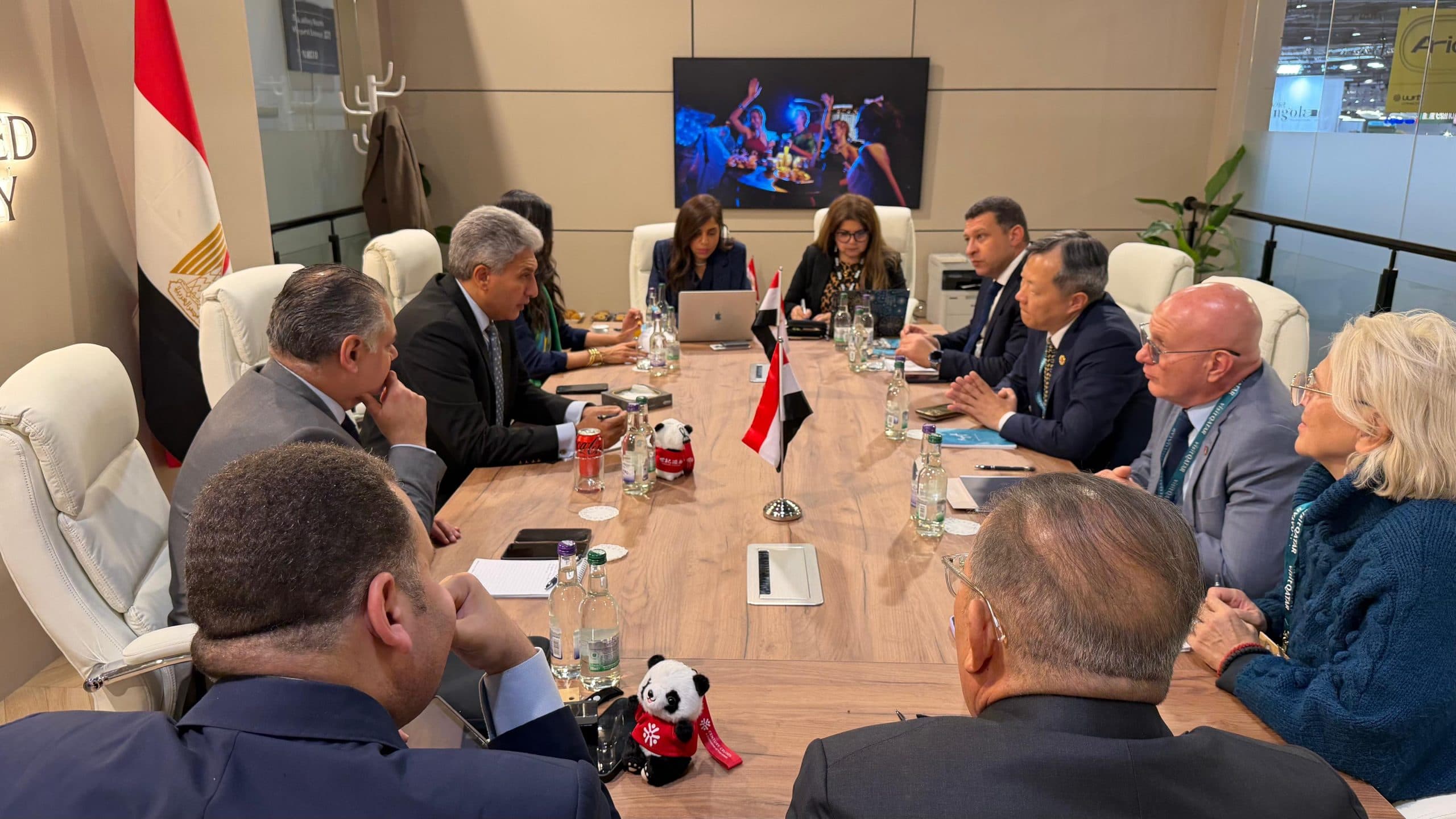
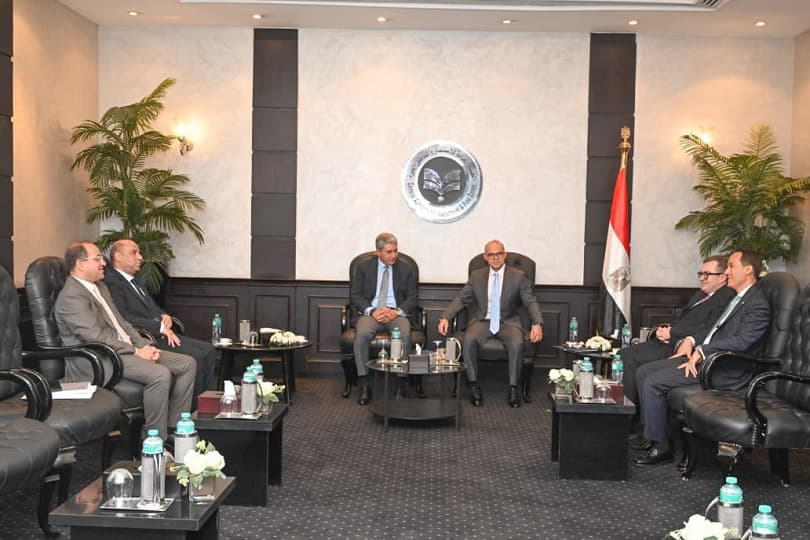
The Ministry of Investment and Foreign Trade hosted a meeting to discuss the implementation plan for the foreign direct investment (FDI) strategy, reflecting the state's drive toward integrated, practical implementation and stronger coordination between economic and sectoral policies, serving sustainable development goals and increasing the competitiveness of the Egyptian economy.
The meeting was attended by Minister of Investment and Foreign Trade Dr. Mohamed Farid, Minister of Tourism and Antiquities Sherif Fathy, Minister of Industry Eng. Khaled Hashem, Minister of Finance Ahmed Kouchouk, Minister of Planning and Economic Development Dr. Ahmed Rostom and Minister of Labor Hassan Radad, along with a number of representatives of the relevant ministries and a high-level delegation from the World Bank Group.


At the start of the meeting, Minister of Investment and Foreign Trade Dr. Mohamed Farid stressed that the strategy itself is a comprehensive framework reflecting extensive work over the past period with the participation of various ministries and relevant authorities, praising the extent of government cooperation and integration in preparing its outputs.
He added that the current phase requires government coordination and integration to identify the sectors that should be prioritized for promotion and to improve policies for attracting FDI, moving from the theoretical framework to practical implementation by setting a clear path for monitoring, evaluation and continuous coordination with all authorities, led by the Information and Decision Support Center, ensuring sectors and competitiveness methodologies are verified and matched in an integrated way.
He explained that the ministry has sought to prepare the final wording of the implementation action plan in cooperation with the World Bank Group and the relevant national authorities, with intensive technical meetings to be held in the coming period to review the proposed sectors, discuss their strategic opportunities and mechanisms for activating them within an integrated framework linking policies, reforms and promotion tools.

He stressed that the goal is to reach an updated implementation document that can be applied in practice, on the basis of which two versions will be prepared, one in Arabic and the other for the official publication and announcement of the strategy.
The minister stressed that the preparation of the FDI strategy and its implementation plan is in line with the requirements of the Supreme Council for Investment chaired by President Abdel Fattah El-Sisi.
For their part, representatives of the World Bank Group presented the strategy's implementation plan, explaining that it is based on an integrated methodology combining economic data analysis, FDI indicators and global value chain studies, as well as extensive consultations with the government, the private sector and international bodies.
They explained that the preparation of the plan went through 3 main pillars:
Setting strategic objectives.
Building clear, measurable implementation pillars.
Identifying priority sectors according to a methodology combining the sector's attractiveness, its competitive feasibility and its alignment with the state's development goals.

They noted that the work relied on a mix of quantitative and qualitative data, including investment indicators, economic complexity analysis and trade and investment data, as well as extensive consultations with various ministries and the business community, to ensure the realism and accuracy of the results.
The World Bank delegation added that the proposed sectors were presented on an "including but not limited to" basis and include high value-added sectors with strong export opportunities, stressing that the list is still subject to ongoing consultation with the Egyptian government before being finalized, to ensure it aligns with the state's priorities and development plans.
They noted that the coming period will see intensive moves by World Bank teams in cooperation with a number of Egyptian ministries to complete technical consultations, set implementation frameworks and link them to supporting policies and reforms, as well as monitoring and impact measurement mechanisms to ensure effective implementation.
The World Bank delegation stressed the importance of focusing on building institutional capacity, developing data systems, strengthening targeted investment promotion and linking investment to structural reforms in the business environment, helping to strengthen the global competitiveness of the Egyptian economy.

For his part, Minister of Tourism and Antiquities Sherif Fathy stressed the importance of a unified and clear architecture for the data collection system from the earliest stages, including the methodologies, models and systems on which data collection and management are based, and the need to develop them gradually and continuously to suit the nature of each sector.
He noted that assessing sectors' resilience should take into account Egypt's experience of rapid recovery from crises, especially in tourism, which has shown a strong ability to restore growth and maintain its investment appeal despite exceptional global and regional fluctuations and conditions.
He stressed that sectors' resilience depends not only on their nature but also on having an effective system for identifying, managing and mitigating risks, strengthening their ability to respond to various changes.
The minister also explained that Egypt's tourism sector has unique competitive assets supporting its sustainable growth, stressing that integrating advanced analytics and artificial intelligence into Egypt's tourism promotion strategy, along with modern means of distributing and marketing content, has strengthened Egypt's competitiveness in international markets, ensuring the most suitable markets are targeted, target segments are reached efficiently, returns from promotional campaigns are maximized and sustainable growth in tourist numbers and revenue is supported.
Sherif Fathy added that expanding hotel capacity is a priority for achieving the Egyptian state's target of welcoming 30 million tourists a year by 2030, through expanding various types of accommodation, including introducing holiday homes, as well as developing investment incentives and linking them to speed of implementation and commitment to national priorities, along with strengthening environmental and energy sustainability, stressing the need to attract more investment and develop the business environment to support the growth of tourism and its contribution to the national economy.

Minister of Industry Eng. Khaled Hashem explained that the ministry recently updated Egypt's industrial strategy, which aims to increase industrial exports to $100 billion by 2030. The strategy identified 7 priority industries according to comprehensive principles and criteria, as well as a number of enabling industries, strategic sectors and complementary industries.
The minister stressed the importance of basing the FDI strategy on genuine integration between industrial and investment policies, ensuring investment is directed toward high value-added productive sectors and strengthening the competitiveness of Egyptian industry in regional and international markets. He noted that successfully attracting investment depends not only on identifying target sectors but also on the readiness of the supporting industrial environment, including the availability of industrial land, simplified procedures and the development of local supply chains, helping to deepen local manufacturing and increase local content in production.
Hashem added that the coming period requires more coordination between the relevant authorities to ensure industrial policies are consistent with the strategy's targets, with a focus on attracting quality investment in technological and advanced industries, supporting the state's plans for industrial transformation, increasing exports and promoting sustainable growth.

For his part, Minister of Finance Ahmed Kouchouk stressed the importance of improving the quality of economic data and expanding its scope to reflect the true size of the Egyptian economy, stressing the need to develop the financial disclosure system and improve data collection mechanisms to ensure the accuracy of FDI indicators.
He explained that making the most of data requires raising the efficiency of the institutional system and linking it to fiscal policies, allowing more accurate and effective decisions, noting the importance of integration between government bodies to ensure policy consistency and improve the efficiency of resource allocation.

In a related context, Minister of Planning and Economic Development Dr. Ahmed Rostom stressed the importance of developing the institutional structure of the data collection system and analysis methodologies, ensuring the system's sustainability and its capacity for continuous development.
He noted the importance of integrating risk management into the design of the strategy and linking sector assessments to their ability to adapt to crises, while supporting sectors with high competitiveness. He stressed the importance of strengthening integration between different sectoral policies and linking them to the investment and planning system in a way that makes the most of available resources.

Meanwhile, Minister of Labor Hassan Radad stressed that the implementation plan for the FDI strategy being discussed with World Bank representatives is of great importance amid global economic changes, stressing the need for it to be integrated with the National Employment Strategy recently launched by the ministry as a national framework linking training, employment and economic and social development.
The minister explained that the ministry supports investment and investors through capacity building, employment and incentives, and by creating a decent work environment that encourages investment, while ensuring job security for workers and compliance with international labor standards.
He noted that the National Employment Strategy to 2030 aims to create around 1.4 million jobs a year by creating a work environment attractive to investment, directing investment to labor-intensive sectors, developing young people's skills and linking education and training with labor market needs.
He added that successful investment is linked to an organized labor market and a supportive legislative environment, stressing that training, employment, capacity building and investment are integrated paths that help attract investment and turn it into real jobs, supporting sustainable development and improving citizens' quality of life.

In a related context, representatives of a number of ministries stressed the importance of partnership and government integration in coordinating economic policies, strengthening the competitiveness of the Egyptian economy and increasing its ability to attract investment.
They stressed the importance of redefining the concept of investment promotion to make it more closely linked to Egypt's development vision and more consistent with the targets of the various ministries, helping to improve the investment environment and direct it toward priority sectors.
They noted the importance of identifying priority sectors according to scientific methodologies that take sustainable development goals into account, while providing a supportive environment of integrated policies and reforms in which all government bodies take part.
It was also stressed that the World Bank has proposed a set of priority sectors, with consultations with the government continuing to finalize the list, paving the way for drafting supporting policies and reforms, as well as launching promotion, monitoring and impact measurement programs.
The interventions added that the coming period will see joint moves between the World Bank and a number of ministries to complete the implementation framework, ensuring the strategy is quickly turned into practical results on the ground.
Dr. Mohamed Farid concluded the meeting by stressing the importance of the extensive discussions between the various ministries and the World Bank Group, adding that the coming phase will see intensive work on technical review and institutional coordination, ensuring the final document reflects the vision of the Egyptian state and strengthens its position as a competitive investment destination regionally and internationally.