Wael Aboul-Soud: Cairo, Luxor and Aswan hotels and Nile cruises hardest hit; US and Canadian tours halted
March and April itineraries cancelled or amended; Gulf tourism less affected as the period coincides with Ramadan
Prepaid bookings treated as future credit to protect travel companies and hotels from losses
Mohamed Othman: China, India, Japan, South Korea and Australia have seen a complete halt
Crisis coincides with cultural tourism season; unaffected European markets maintain arrivals and healthy occupancy
Yasser Sultan: 80% of Asian tours postponed until further notice, some for two months; hotels and domestic airlines urged to cooperate on cancelled bookings
Karim Mohsen: A limited number of tours cancelled as some families hesitate to travel
Nader Ayad: Changes or postponements account for no more than 10%; tourism airports maintain normal group arrivals, while visitors report feeling completely safe
For the first time in Egyptian tourism’s history, arrivals from East Asian countries have halted because airspace closures in the UAE, Qatar and Kuwait have disrupted the connecting route between Asian travellers and Egypt. The closures follow escalating regional events surrounding the US-Israeli war with Iran, adversely affecting cultural tourism during its main season. Arab tourism from these countries has also been significantly affected.
Nevertheless, overall inbound tourism to Egypt has not been markedly affected, and there is optimism that normal rates will soon return. Egypt is not a party to the events, making the interruption in these markets temporary. Tourism experts said trips have largely been postponed rather than cancelled, with a limited overall impact.
Wael Aboul-Soud, board member and treasurer of the Egyptian Hotel Association, said hotels in Cairo, Luxor and Aswan, including Nile cruise vessels, are most affected by the halt in East Asian arrivals following Gulf airspace closures, alongside the suspension of US and Canadian tours.
Speaking to TravelYalla News, he said the main impact concerns March and April bookings, with decisions still being held back in the hope that conditions will calm. Gulf Arab tourism is less affected because the period coincides with Ramadan, traditionally a quieter time for Arab travel, and because families are tied to school schedules.
On existing hotel bookings, Aboul-Soud said Egyptian hotels and travel companies are cooperating closely, commonly treating prepaid amounts as credit for future bookings so neither side loses out. Hotels are entitled to apply cancellation policies where no travel warnings affect the relevant markets or Egypt, he said, but exceptions are being made for travel companies as partners in their success. In some cases, companies receive full refunds to pass on to customers.

Hotel decisions depend on factors including the volume of business a company brings, personal relationships and the source market. As an example, he said US visitors’ bookings are being refunded because their country is directly involved in the war.
Mohamed Othman, chairman of the Cultural Tourism Marketing Committee, said arrivals from China, India, Japan, South Korea and Australia have stopped completely following Gulf airspace closures. However, most bookings through the end of April have been postponed rather than cancelled, offering some optimism. Travellers with no alternative options are largely waiting for the regional crisis to ease rather than lose money on booked trips.
Othman told TravelYalla News that US tour cancellations have reached 60%, a significant impact during Egypt’s cultural tourism season. European arrivals, by contrast, remain unaffected, maintaining visitor flows and healthy occupancy because Egypt is not a party to the crisis. He expects the disruption to be short-lived and conditions to improve.
Hotel arrangements during such crises depend on business volumes and relationships with travel companies, helping both sides avoid financial losses. Hotels and cruise vessels have shown understanding of the exceptional circumstances: some have agreed to full refunds for confirmed bookings or to hold payments as future credit. Airlines applying cancellation charges remain a challenge, he said.
Yasser Sultan, a member of the Egyptian Council for Tourism Affairs, said the difficulty for East Asian markets is that flights from countries without direct Egypt services cross Gulf airspace or connect primarily through the UAE and Qatar.
He told TravelYalla News that around 80% of tours from these markets have been postponed until further notice, some for approximately two months. He called on Egyptian hotels and domestic airlines to cooperate more on payments and refunds during these exceptional circumstances, as Gulf international flights are interrupted by airspace closures. This would prevent Egyptian travel companies from facing difficulties with tour operators and tourists. He urged the hotel association and the travel agents association’s aviation committee to intervene promptly and coordinate support.
Meanwhile, cautious anticipation is accompanied by optimism that positive inbound tourism trends will continue, particularly as visitors report feeling safe in Egypt’s tourism cities and major core markets have not recorded booking cancellations.
Global tourism waits cautiously as Egypt’s market remains optimistic
Karim Mohsen, deputy chairman of the Egyptian Travel Agents Association, said the global tourism industry is taking a cautious, wait-and-see approach to recent geopolitical developments in the Middle East. The issue featured in discussions among tour operators and travel companies at ITB Berlin, held in Germany earlier in March.
The impact is not confined to one market, he said, with signs that travel caution is affecting markets in Türkiye, Spain and other European, Asian and African destinations.
International tourism market assessments suggest the crisis may not last long, but the industry needs a short period to monitor developments and assess their actual effect on travel.

Some tours have already been affected, with a limited number of itineraries cancelled because families are concerned about travelling now, particularly the risk of prolonged aviation disruption in affected countries or sudden flight changes. Mohsen said this has not reached a level that constitutes a material impact on tourism to Egypt.
Egypt’s tourism sector has extensive experience in handling crises and volatility, he said. Such circumstances typically require time before the market’s true direction becomes clear.
The clearest impact at this year’s ITB concerns booking decisions for the upcoming summer season, with some tour operators delaying payments or booking confirmations until geopolitical developments become clearer.
Insurers have imposed no additional charges for travel to Egypt
Nader Ayad, board member and treasurer of the Egyptian Travel Agents Association, said Egypt’s participation at ITB Berlin demonstrated the sector’s strength and cohesion, attracting strong interest from visitors, tour operators and international travel companies despite current regional challenges.
Egypt had the largest Arab presence and representation at the exhibition, reflecting the sector’s confidence in domestic stability and its ability to continue operating and promoting the country, he added.
Cairo International Airport played an important role by receiving foreign nationals evacuated from areas of tension. Some visitors spent short periods in Cairo before continuing home.
Ayad said all Egyptian airports, particularly Hurghada, Sharm El Sheikh, Marsa Alam, Luxor and Aswan, are operating at full capacity and receiving tour groups at their normal rates.
International confidence in Egypt’s stability is reflected in insurers’ decisions not to impose additional insurance charges on Egyptian airports, while higher charges have been applied to some regional airports due to geopolitical developments.
Cancellations remain very limited, he said, while changes or postponements account for no more than approximately 10%, mostly adjustments to travel dates rather than actual tour cancellations.
Many European countries have issued no travel warnings for Egypt, and some European foreign ministries have described it as a safe destination on their official websites. Foreign insurers also continue to provide standard cover for visitors travelling to Egypt.
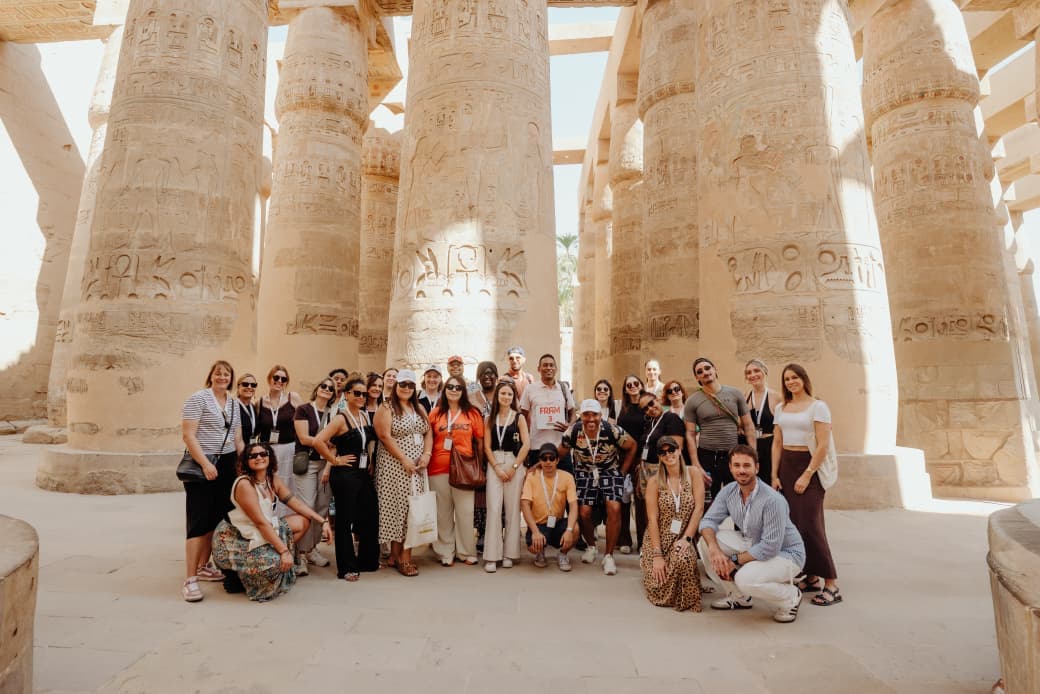
Ayad said tourists have recorded video messages during their visits confirming that they feel completely safe and expressing a wish to return to explore more Egyptian destinations.
Responses to these messages and images on social media were rapid and highly positive, with followers in different countries expressing interest in visiting Egypt and enjoying its diverse destinations in a safe environment.