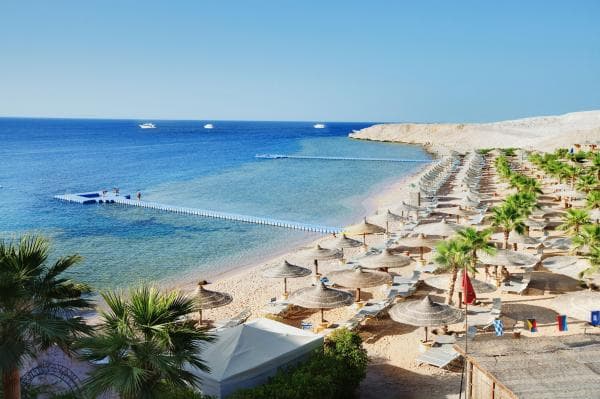
Antalya and Cyprus a temporary alternative to Sharm El-Sheikh and Hurghada for Russians... most of them are getting their money back from companies
Russians look for alternative ways to travel to Egypt until flights resume
Christmas and New Year bookings canceled... and the last Russian leaves Sharm El-Sheikh on November 27
Russia's snow sends its citizens to Egypt's tourist beaches in the winter season
By Akram Medhat - Travel Yalla journalist
Tourism sector experts working with the Russian market stressed that the impact of the suspension of flights from Russia to Egypt, which has halted Russian tourism, is a bigger disaster for Russian tour operators, with effects almost stronger than the economic crisis their country has been going through since July 2014 and that is still ongoing. Losses of Russian companies reached $10 million in just 4 days since Russian flights to Egypt were suspended on November 7, according to statements by Dmitry Gorin, vice president of the Association of Russian Travel Companies, especially as there is no real competing alternative to the resorts of Sharm El-Sheikh and Hurghada in the winter season.
In this context, Dr. Mostafa Khalil, director of "Royal Manta Travel", which works with the Russian market, said that inbound tourism from Russia is dominated by tour operators of Turkish origin, and that Egypt is the main and almost the only destination for Russian tourists in the winter season, while Turkey is the most in demand in the summer season, to the point of being "overbooked", meaning hotel occupancy reaches 100%, and the excess bookings go to the second choice, Egypt, because it is the cheapest for them and its climate is mild until the start of the summer season.
Khalil noted that Egypt's losses after the suspension of flights from Russia are not tourist traffic or numbers, but hard currency, in addition to a halt in creating more job opportunities.
He explained that from November to May Russians see nothing but snow in Russia, so this period sees the most intense demand for travel to Egypt, with November being the peak season along with the first half of January, for which all bookings have been canceled until further notice.
He continued: "The average spending of the Russian tourist has dropped markedly, reaching $20 at most outside hotel accommodation, and his average spending in Egypt, excluding flights, does not exceed $50 a night including accommodation and internal transfers. Russians love travel and shopping, but we have not benefited so far from this market, which sends 50 million tourists a year to the world."
He added that 70% of the trip package goes to flights and the rest to all-inclusive hotel accommodation, so the tourist spends nothing outside the hotel. Stays range from a week to 15 days, and the average trip price is $600. Russians are distinguished by being repeat visitors, two to three times a year, and by booking at the last minute.
Khalil pointed to very weak demand for optional excursions to archaeological sites in Cairo, namely the Pyramids and the Egyptian Museum, as well as Luxor given its proximity to Hurghada, with prices ranging from $60 to $80.
He stressed that the impact of the crisis is stronger on Russian tour operators "because they will go bankrupt, as there are no alternatives to Egypt in the winter season," since some either refund the value of the trip to the tourist or compensate him with another trip to Antalya in Turkey, though its weather is unsuitable because it is also snowy, or to Cyprus, or to Israel, whose trips are expensive and which cannot absorb the huge numbers of Russian tourists. He pointed out that scheduled flights by Russian airline Aeroflot have also been suspended until November 16.
For his part, Abdel Rahman Ibrahim, head of "Alf Tours", which works with the Russian market, said the peak season for Russians runs from November 1 to January 15, but there is a lull in December from Christmas until the Nativity holidays. All bookings have been canceled until the end of that period, and there is no alternative to make up for them. As soon as the security situation of the airports is officially announced, whether by Egypt or by the international inspection committees, and it is positive enough to convince the Russian government to resume flights, Russian tourism will return strongly.
He explained that Egypt is a cheap and suitable destination for Russians, who come from all age groups, with the most expensive trip programs costing $1,000 a week including flights and all-inclusive accommodation. Recently, the Russian tourist coming to Egypt has become poor. Optional day trips to archaeological sites were to Cairo at $100 and to Luxor at $80.
He noted that the alternatives to Sharm El-Sheikh and Hurghada are Antalya in Turkey, Cyprus and Israel, and Russian television has begun promoting trips to the Crimean Peninsula, but they are very expensive. After their trips to Egypt were canceled, most Russians prefer to get their money back from tour operators, which therefore bear huge losses, almost greater than what is happening in Egypt.
Russians' Amusing Attempts to Travel
In a related context, Adel Zaki, a member of the outbound tourism committee at the Chamber of Tourism Companies, stressed that Russians are opposing their government, insisting they are not afraid to travel to Sharm El-Sheikh, and saying: "Our relatives have just come back from there after the incident and the situation is safe."
Strikingly and amusingly, right on the day after the decision to suspend flights to Egypt, Russians were looking for alternative ways to travel to Egypt, to the point that Russia's popular search engine "Yandex" recorded "How do I get to Egypt by train" as one of the most common phrases.
Zaki added that in the first week of the flight suspension, 11,000 Russians traveled to Antalya in Turkey instead of Sharm El-Sheikh and Hurghada, especially as they enter without a visa, a measure to attract more tourists from this important market.
On the other hand, Walid Bakr, front office manager at Dreams Beach hotel in Sharm El-Sheikh, said the last Russian tourist will leave Sharm El-Sheikh on November 27, and that how quickly Russians return to Egypt depends on the good and close political relations between Presidents Sisi and Putin.
Bakr referred to one of his discussions with tourists of the nationalities being evacuated, most notably a Dutchman who was surprised by the evacuation decision and rejected it, saying: "The current security attention and the fact that Sharm El-Sheikh is under the spotlight make it safer than at any other time. As long as I will use the same airport, go through the same steps and procedures and board the plane, why should I leave before my travel date?"
For his part, Mohamed Fayez, owner of "Midland" tourism company, explained that Russian tour operators submit to political decisions despite their heavy losses because operating flights is criminalized until an official decision is issued by the relevant Russian security authorities. In addition, Russian travel companies will not risk booking indirect flights to Egypt, because the insurance cost per tourist rises sharply, up to threefold, which they cannot bear.