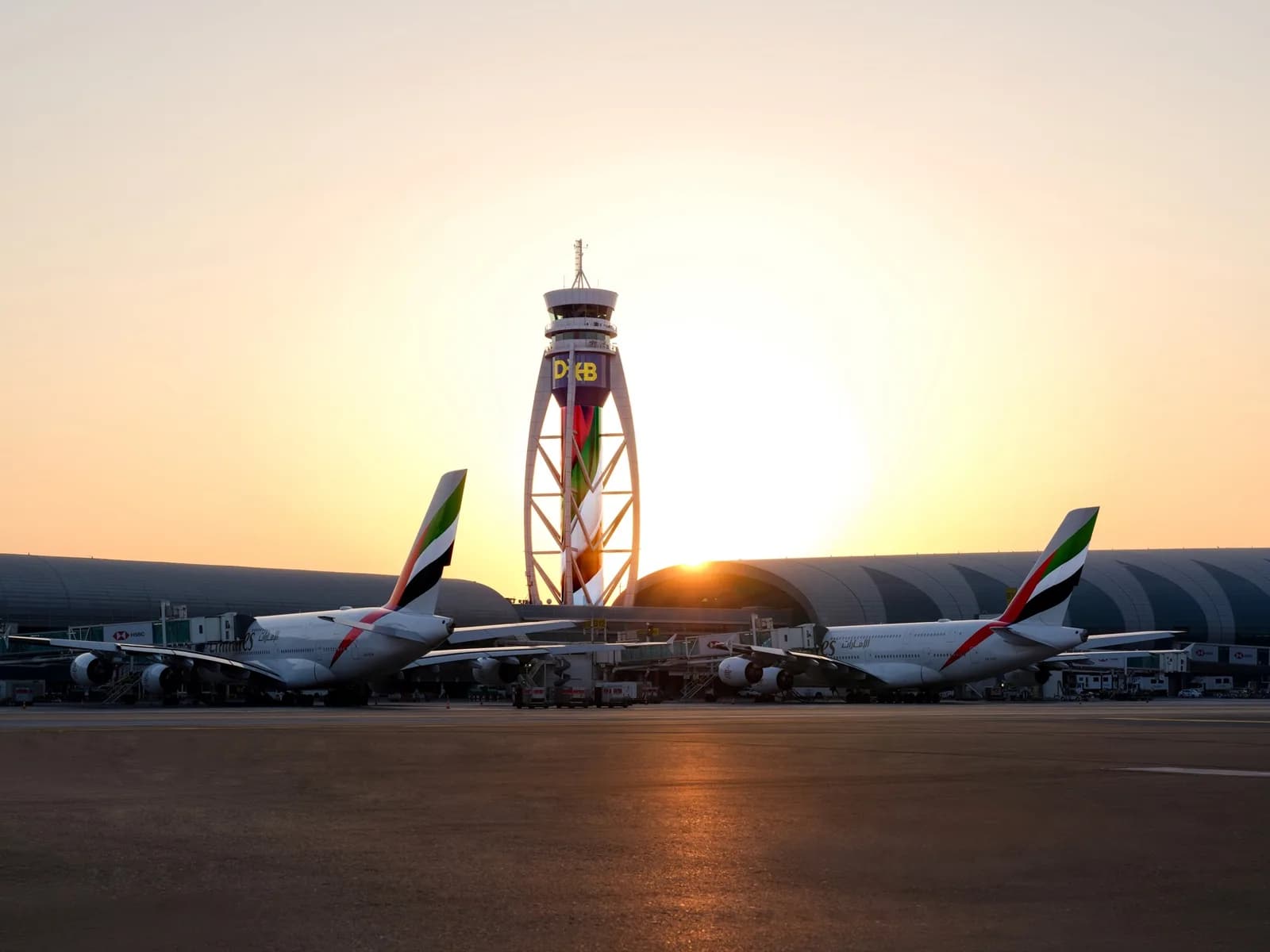
Dubai International Airport (DXB) handled 50.4 million passengers in the first nine months of 2026, down 28.1% from the same period last year, while third-quarter traffic declined 22.1% to 18.8 million, according to Dubai Airports.
The figures follow disruptions to air travel earlier in the year. August was the airport's busiest month of the third quarter, with 6.6 million passengers, Dubai Airports said in a statement published on 17 November 2026.
Despite the decline, Dubai Airports expects DXB to handle more than 70 million passengers for the full year as airlines continue to restore services and the airport strengthens its international connectivity.
Paul Griffiths, CEO of Dubai Airports, said the return of more airlines and expansion of the airport's global network were supporting preparations for future traffic growth.
He said Dubai Airports was focusing on improving operational efficiency through technology and streamlined processes, with the aim of increasing capacity without expanding the airport's existing physical footprint.
Network and Passenger Markets
Dubai International is currently served by 57 airlines connecting the airport to 235 destinations across 101 countries.
British Airways resumed flights to Dubai in early November 2026, joining other returning carriers, including Royal Air Maroc, SunExpress and Cebu Pacific. Additional airlines are expected to resume operations in the coming weeks.
India remained DXB's largest country market in the third quarter, with 2.6 million passengers, followed by Saudi Arabia with 1.4 million and the United Kingdom with 1.3 million.
Pakistan accounted for 800,000 passengers, while the United States recorded 640,000 and Germany 480,000.
London was the airport's busiest city destination, accounting for 784,000 passengers, followed by Mumbai with 528,000, New Delhi with 525,000, Riyadh with 500,000 and Jeddah with 490,000.
Traffic to several leisure destinations also increased during the quarter, led by Milan with 20% growth, Phuket with 17%, Cape Town with 14%, Barcelona with 13% and Denpasar with 11%.
In September, passengers travelling directly to or from Dubai accounted for 49% of total traffic, compared with 51% for connecting passengers.
The balance between direct and connecting traffic varies seasonally, with travel originating or ending in Dubai typically increasing during the winter tourism season.
Aircraft Movements and Cargo
Aircraft movements at Dubai International totalled 243,000 during the first nine months of 2026, a decline of 27.6% year-on-year. The third quarter accounted for 92,800 movements.
Air cargo volumes fell 23.2% to 1.215 million tonnes in the January–September period, including 464,000 tonnes handled during the third quarter.
The airport's average seat load factor was 74% in the first nine months, down three percentage points from the corresponding period of 2025.
Dubai Airports also reported an average of 211 passengers per aircraft movement, a decline of 0.8%.
AI and Operational Efficiency
Dubai Airports is expanding its use of artificial intelligence, predictive analytics and digital technologies to improve operational efficiency and make better use of existing airport infrastructure.
As part of its digital transformation initiatives, the airport operator is integrating operational information from different systems to create a continuously updated overview of passenger flows, aircraft activity and facility utilisation.
The initiative is intended to help airport teams anticipate demand, identify potential operational bottlenecks and respond more effectively to changing conditions.
AI and predictive analytics are being used to support earlier identification of operational pressure points, alongside expanded self-service options and the continued development of biometric passenger-processing systems.
Dubai Airports said these measures would help simplify procedures, improve passenger movement and support future capacity growth within the airport's existing infrastructure.
Passenger Processing and Baggage
Dubai International reported short passenger waiting times during the third quarter, with 99.9% of departing passengers waiting less than 10 minutes at passport control.
For arriving passengers, 99.9% experienced passport control waiting times of less than 15 minutes, while 99.7% of passengers waited under five minutes at security checkpoints.
The airport processed 48 million bags during the first nine months of 2026, with 91% delivered within 45 minutes of aircraft arrival.
Baggage handling accuracy reached 99.73%, while the reported mishandling rate stood at 2.67 bags per 1,000 passengers.
To view the original announcement on the Dubai Airports website, click here.